The interplay between large language models (LLMs) and knowledge graphs (KGs) is forging new pathways in artificial intelligence. Recent publications, primarily emerging in late 2025 and early 2026, highlight a sustained effort to integrate these two distinct but complementary domains. This synthesis aims to bolster the capabilities of LLMs, particularly in areas of factual accuracy and complex reasoning, by grounding them in the structured, verifiable information provided by KGs.
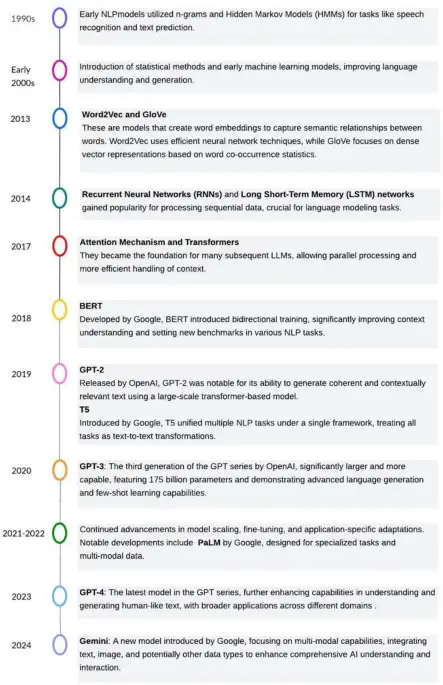
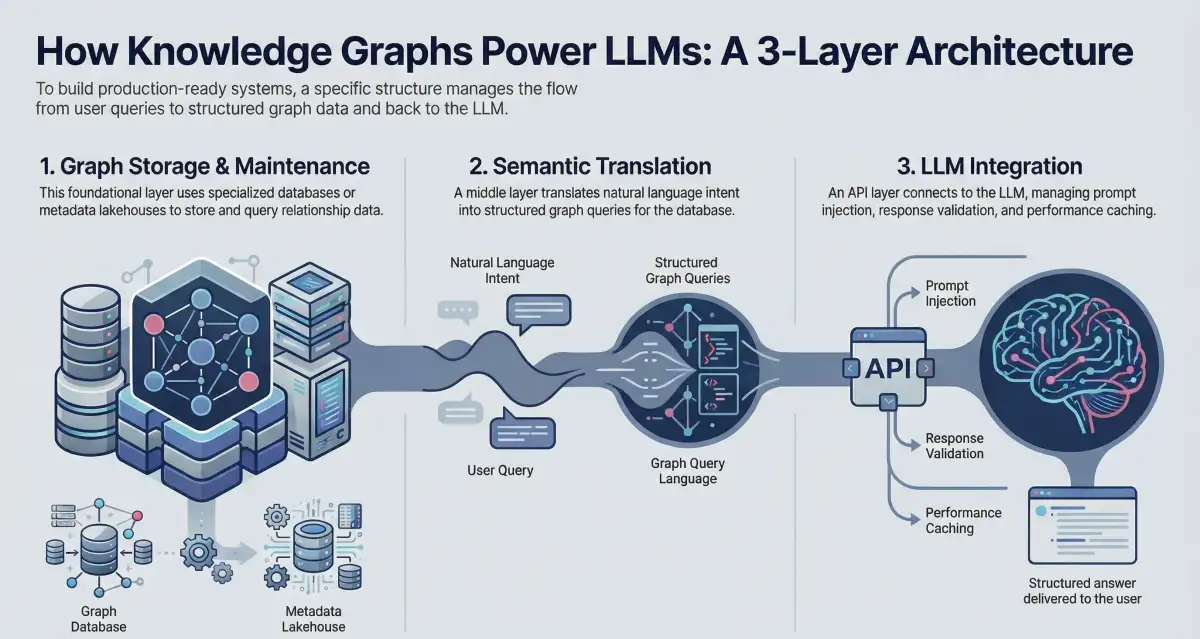
The core objective is to move beyond the standalone limitations of each technology. For LLMs, this means mitigating 'hallucinations'—instances where models produce inaccurate or fabricated information—by introducing a layer of factual validation. For KGs, the integration allows for more dynamic construction, completion, and querying, leveraging the natural language processing prowess of LLMs to make these structured datasets more accessible and robust.
Read More: Chrome mimeHandler API lets extensions handle file types

Two Primary Integration Currents
The research landscape reveals two fundamental directions of synergy:
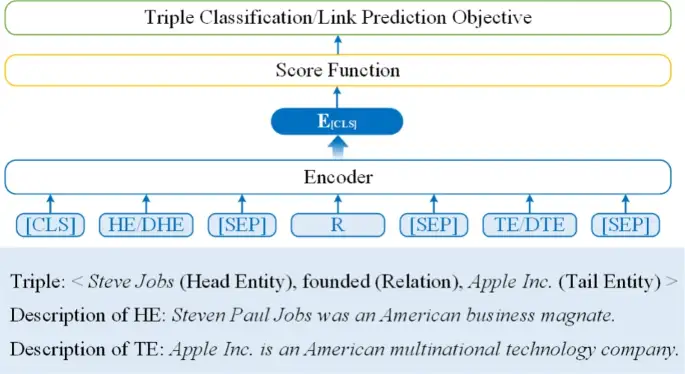
KG-Enhanced LLMs: This approach focuses on enriching LLMs with structured knowledge. Information from KGs is directly injected into or used to guide the LLM's training and inference processes. This improves reasoning, factual grounding, and domain-specific comprehension. Techniques include "chain-of-knowledge prompting" and deep bidirectional pretraining that explicitly links language and graph structures.
LLM-Augmented KGs: Conversely, this direction uses LLMs to improve KGs. LLMs assist in building, completing, or querying knowledge graphs, automating aspects of knowledge extraction and representation learning. This involves tasks like generating embeddings for entities and relations within the KG, and facilitating more nuanced graph completion.
Emerging Research Threads
Beyond these foundational patterns, several specific areas of investigation are surfacing:
Knowledge Representation Learning: Efforts are underway to unify how knowledge is represented across both modalities. This includes learning embeddings that capture the essence of both linguistic context and structured graph relationships, often utilizing techniques from both fields. Papers discuss methods like "Language Model Guided Knowledge Graph Embeddings" and the development of libraries for "Pre-trained Language Model-Based Knowledge Graph Embeddings."
Reasoning and Completion Tasks: A significant focus is on applying the combined power of LLMs and KGs to complex tasks such as knowledge graph completion and question answering. This involves enabling LLMs to "reason on knowledge graphs" and developing models that can perform multi-hop reasoning over structured data. Metrics like "Mean Rank" are used to evaluate performance in these KG completion tasks.
Fine-tuning and Adaptation: Researchers are exploring novel methods for fine-tuning LLMs using KG structures, moving beyond traditional fine-tuning approaches. This includes community-based methods and approaches that focus LLM training on specific KG substructures to enhance performance in KG completion metrics.
A Broadening Academic Landscape
The sheer volume of academic papers and repositories dedicated to this subject, particularly those published in 2023 and 2024, indicates a field in rapid expansion. Surveys and "roadmap" articles are appearing with increasing frequency, mapping out the evolving research directions, challenges, and evaluation benchmarks. These publications collectively suggest a trajectory towards more integrated AI systems that can both understand and generate language while adhering to verifiable factual frameworks.
Background:
The exploration of combining LLMs and KGs is not entirely new, with foundational work stretching back to earlier LLM developments. However, the recent surge in publications, particularly since late 2023, signifies a maturation of the field. Initial efforts, like those seen in the series "KG-enhanced LLM" and "LLM-augmented KG" published in October 2025, laid the groundwork by detailing unidirectional integration patterns. The ongoing work, often appearing on platforms like arXiv and in proceedings of major AI conferences (e.g., NeurIPS, ACL, ICLR), builds upon these earlier insights. The emphasis has shifted towards deeper synergy and practical application, addressing concerns like AI interpretability and performance enhancement through robust, fact-checked outputs.
Read More: New AI Method Maps API Logic for Safety by April 7, 2026