


The San Francisco 49ers are currently undergoing a period of intense roster contraction, marked by the departure of key starters and established contributors. Following a season that ended outside the playoff bracket for the first time in four years, the organization has aggressively cleared the balance sheet, effectively severing ties with nearly two dozen players through free agency, trades, and direct releases.

The core motivation for this exodus is financial preservation, specifically to mitigate the weight of bloated contracts while preparing for the fiscal demands of a future extension for quarterback Brock Purdy. Management has shifted toward a policy of non-retention for players whose production fails to align with current market valuations.
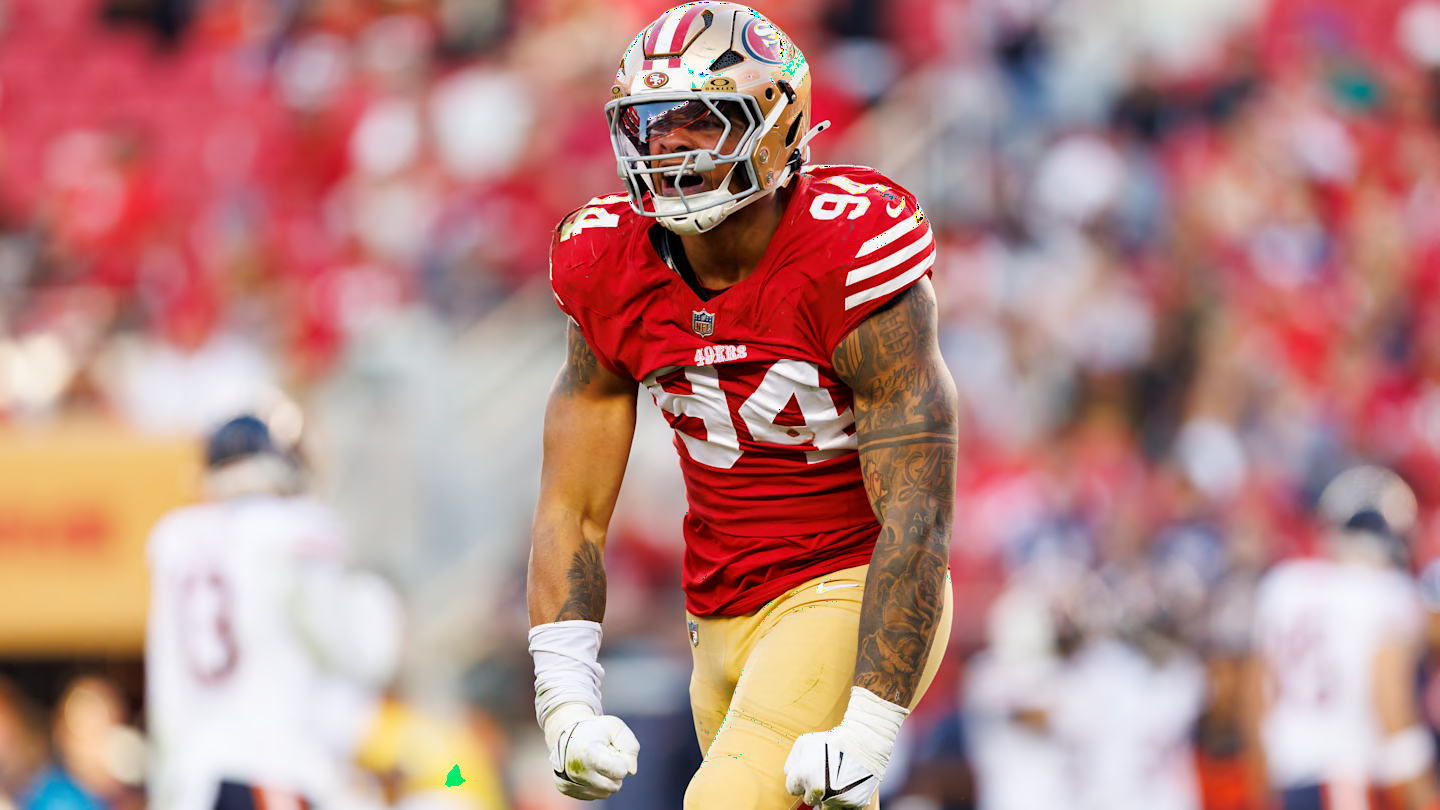
The Fiscal Shift
The scale of this transition is evidenced by the wide-reaching nature of the departures. Significant defensive assets and veteran contributors have vacated their roles, altering the identity of the unit:
Read More: 2026 March Madness Round 2: Where to Watch Games on CBS, TBS, truTV, and Streaming

| Category | Representative Departures |
|---|---|
| Defensive Front | Javon Hargrave, Maliek Collins, Leonard Floyd |
| Defensive Secondary | Charvarius Ward, Talanoa Hufanga |
| Linebacking Corps | Dre Greenlaw, Demetrius Flannigan-Fowles |
| Offensive Rotation | Deebo Samuel, Jaylon Moore, Aaron Banks |
The strategy prioritizes the retention of a select few "big-money" assets—namely Christian McCaffrey, Trent Williams, and Brandon Aiyuk—while abandoning the middle-class of the roster to satisfy salary cap constraints.
While the club maintains a high status in betting markets, the reliance on clearing space signifies a fundamental Roster Turnover that seeks to stabilize long-term liquidity at the expense of current roster continuity.
Investigative Perspective: A Managed Obsolescence
General Manager John Lynch and head coach Kyle Shanahan have characterized these moves as part of a calculated trajectory, framing the departures as necessary steps toward future viability. The term "plan" is frequently invoked to mask the turbulence of parting with nearly 20 contributors in a single cycle.
Critics note that the strategy reflects a cold economic reality: in the Salary Cap era of the NFL, sentimentality is secondary to contractual efficiency. The front office is essentially betting that they can replace high-priced, underperforming veteran output with lower-cost acquisitions or younger talent, maintaining competitive viability while hedging against the inflationary pressure of the quarterback market.
Whether this represents a masterstroke of Financial Discipline or a premature dismantling of a core group remains the central question for the organization’s upcoming campaign. For now, the narrative remains fixed on the "big things coming"—a rhetoric designed to soothe concerns regarding the disappearance of foundational roster pillars.
Read More: Las Vegas Raiders trade QB Geno Smith to New York Jets after one season


