

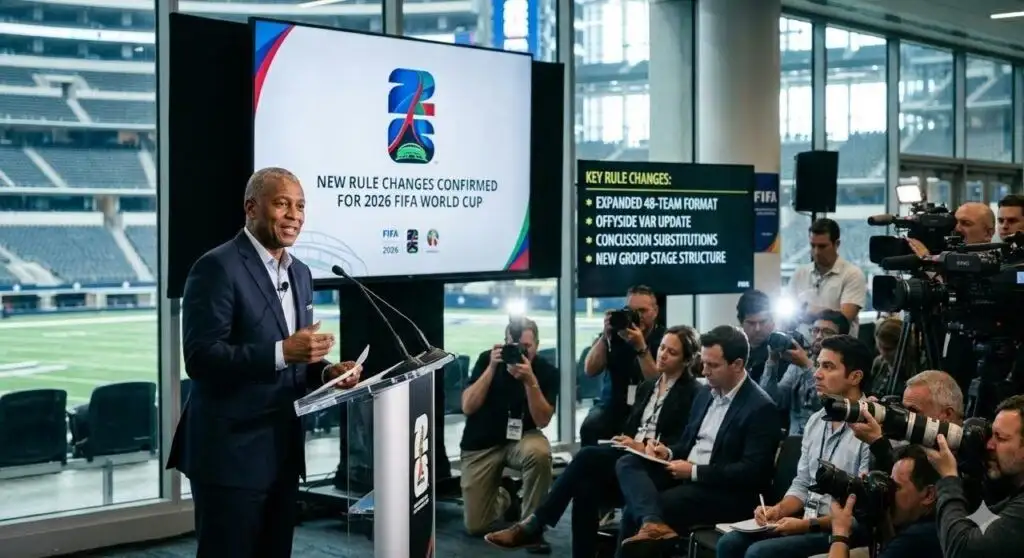
Football's governing body, FIFA, has enacted significant alterations to the Laws of the Game, slated for implementation at the 2026 World Cup. The changes appear largely focused on curtailing deliberate delays, aiming for a quicker, arguably more consistent, spectacle. The enforcement of strict time limits on restarts and substitutions, alongside an expanded role for Video Assistant Referees (VAR), signals a deliberate move to shape the game's tempo and perceived fairness.
Accelerated Pace Mandated on Restarts and Substitutions
The most pronounced shift involves a five-second countdown now mandated for both throw-ins and goal kicks. Furthermore, players being substituted must now exit the field of play within ten seconds of the substitution being signaled. Failure to comply with these temporal strictures will incur penalties, effectively penalizing teams for dragging out the process. These measures are explicitly targeted at eradicating perceived time-wasting tactics that have long been a point of contention.
Read More: Sofie Pedersen Urges Climate Action Ahead of World Football Giving Day
"The focus is no longer just on fouls, but on game tempo," states one analysis of the new rules.
An additional stipulation mandates that players receiving on-field medical treatment, and subsequently leaving the pitch, must remain off for a minimum of one minute of running time before re-entering the game. This aims to prevent teams from using injury treatment as a strategic delay.
VAR's Expanded Mandate Promises Scrutiny on Cards and Corners
Video Assistant Referees (VAR) will now have an extended remit, specifically empowered to review second yellow card incidents that lead to a player's dismissal. This intervention is intended to prevent potentially unjust red-card situations arising from cumulative fouls. The VAR system will also be permitted to intervene on incorrectly awarded corner kicks. FIFA officials suggest these additions are designed to cause minimal disruption to game flow.
FIFA's referee chief, Pierluigi Collina, has indicated that the new checks are "planned to cause very little delay."
Contextualizing the Shifts
These modifications represent a substantial overhaul of established practices within the sport, reflecting a FIFA drive to modernize and streamline the tournament's presentation. The introduction of explicit time limits on various game stoppages echoes earlier trials and appears to be a broader institutional embrace of technological and procedural mechanisms to dictate game pace. The expansion of VAR’s influence further cements the role of officiating technology in attempting to refine the on-field product, addressing contentious areas beyond clear and obvious errors.
Read More: Arsenal Interested in Julian Álvarez, Atlético Manager Confirms
A Move Towards 'More Action, Fairer Outcomes'
The stated objectives behind these changes include increasing ball-in-play time, thereby fostering "more action," and promoting "fairer outcomes" through a reduction in controversial decisions. The FIFA communications also highlight aspirations for "less gamesmanship" and "greater transparency," though the latter point in this specific report did not detail the proposed method. The overall thrust suggests a calculated attempt to engineer a more dynamic and perhaps less strategically stagnant version of football for the global audience.


