


Global climate policy has formally pivoted from avoidance to remediation. Research published in Nature Climate Change (Feb 2026) confirms that the breach of the 1.5°C threshold is no longer a hypothetical risk but the operative baseline for current climate modeling. While international frameworks continue to frame the path to Net Zero as immutable, the physical reality of "overshoot"—the temporary exceedance of temperature limits followed by a return—has fundamentally altered the mechanics of mitigation.
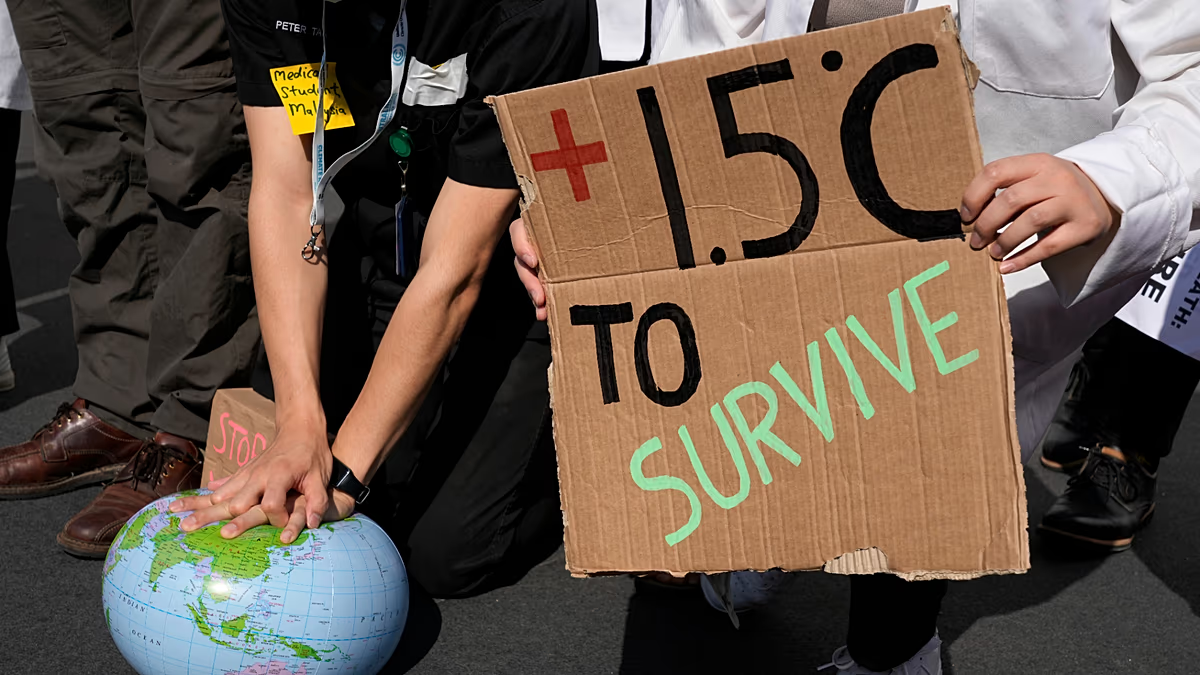
The transition to an overshoot trajectory shifts the burden of proof from prevention to active extraction, prioritizing Carbon Dioxide Removal (CDR) technologies as a necessary hedge against systemic, non-linear climate failure.

The Mechanics of the Breach
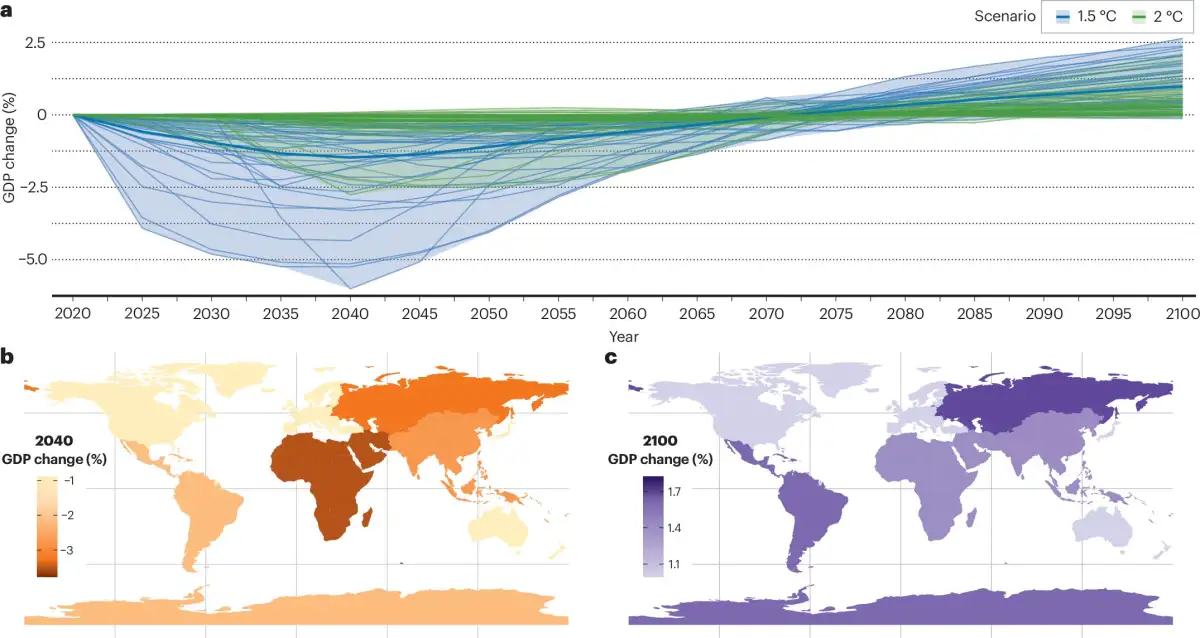
The shift from a "safe limit" to an "overshoot" reality forces a recalculation of planetary risk. Current climate modeling suggests that even if global temperature spikes are later reversed, the atmospheric and oceanic systems remain subject to erratic responses.
Read More: New 'Just-Shoring' Idea Focuses on Fair Mining for Critical Minerals
| Factor | Stable 1.5°C Path | Overshoot Scenario |
|---|---|---|
| Mitigation Focus | Emission Reductions | Extraction (CDR) |
| Risk Profile | Preventative | Management of Irreversibility |
| Adaptation | Planned infrastructure | Crisis-led systemic pivots |
Irreversibility and the Illusion of Recovery
Technical literature from Nature indicates that while temperature curves may be manipulated downward, certain consequences—most notably sea level rise—are not tethered to this reversal. The temporal distribution of these impacts remains a "significant area of uncertainty."
Non-linear Feedback: The climate system is responding with unpredictable feedbacks that challenge the linear models of the last decade.
The CDR Dependency: Reliance on carbon removal capacity is now a central, though physically unproven, requirement for meeting long-term goals.
Legal & Economic Exposure: Legal claims against states and corporations are sharpening as the gap between stated policy goals and the physical reality of warming widens.
Context: The Death of a Hard Limit
For years, the Paris Agreement goals functioned as a social and political binary: success or failure. By rebranding the breach as an "overshoot," institutional discourse attempts to maintain the viability of the Net Zero framework even as the goalposts physically move.
UN officials and international bodies argue that the 1.5°C mark must persist as a "limit" rather than a target, maintaining its role as a political tool even when its physical utility is contested by scientists. This creates a friction between Political Intent and Atmospheric Fact. The landscape ahead is defined not by the achievement of a goal, but by the management of a damage-control experiment that assumes humanity can retroactively fix the state of the atmosphere.
Read More: Why Earth Froze 700 Million Years Ago Due to Low Volcano CO2
Whether the current reliance on Carbon Dioxide Removal can offset the structural damage of the overshoot remains the defining question for the coming decade. As politics continues to trail the physics of the system, the gap between institutional promises and climate reality appears increasingly irregular.