


The Yukon government has undertaken a significant reorganization of its Department of Energy, Mines and Resources, bifurcating its mining functions into two new divisions: one for major mine projects and another for mineral exploration. This restructuring aims to bolster the territory's appeal to mining investors, positioning it as a more "competitive, predictable and attractive" jurisdiction.

The new structure carves out a dedicated "major mines and technical services" division, tasked with shepherding large-scale projects, particularly those involving critical minerals, through the often-convoluted permitting labyrinth. Concurrently, a "Mineral Tenure and Exploration" branch will manage the permits for both quartz and placer exploration activities. A new Deputy Minister's oversight committee on major mines and critical minerals is also being established to facilitate interdepartmental alignment and expedite decision-making processes. While the intention is described as a "restructure, not grow" scenario, the potential for new hires to support these divisions remains unconfirmed.
Read More: Telangana CM Revanth Reddy Asks Citizens to Help Keep Women Safe
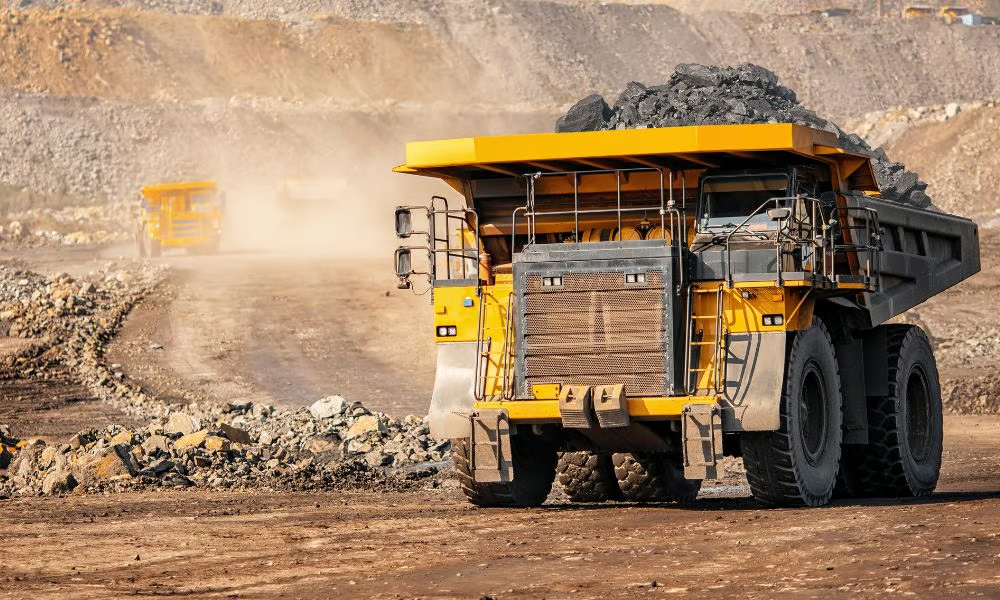
A Dual Focus: Large Projects and Exploration
The rationale behind this division appears rooted in the distinct needs of different scales of mining operations. The emphasis on major projects suggests a strategic push to secure substantial investment in critical minerals, a sector increasingly seen as vital for global supply chains. Simultaneously, the continued attention to exploration underscores the ongoing need to identify and develop new resource opportunities within the territory. Mining currently stands as the leading private-sector employer in the Yukon, a fact highlighted by officials as a cornerstone of the territorial economy, providing well-compensated employment opportunities across the region.
Unaddressed Revenue Concerns
Notably, this administrative overhaul precedes the anticipated introduction of updated mineral resource legislation and a modernized royalties regime. When questioned about the timing of the restructuring relative to these financial policy changes, which aim to ensure the government captures a more substantial share of revenue from new mining ventures, officials stated that legislative updates are a "significant priority," with hopes for announcements "in the near future." The current royalty structure is described by sources as yielding only a "small fraction" of potential revenue.
Read More: South Dakota Jobless Claims Rise to 358 in January 2026 as More People Lose Work
Parallel Efforts in Oversight and Compliance
This administrative restructuring occurs alongside separate, ongoing initiatives to enhance the independence and capacity of Yukon's mining oversight and compliance mechanisms. These efforts, prompted by recent incidents such as the heap leach failure at the Eagle Gold Mine, are focused on strengthening inspection, enforcement, and monitoring systems. The government is exploring options for housing this oversight function, including the potential role of the Yukon Water Board, and plans to engage with a broad range of stakeholders, including First Nations, industry representatives, and frontline workers, in this process. A commitment has been made to improve the territory's connection to the Yukon-BC grid connect project, seen as a positive step towards local energy integration.