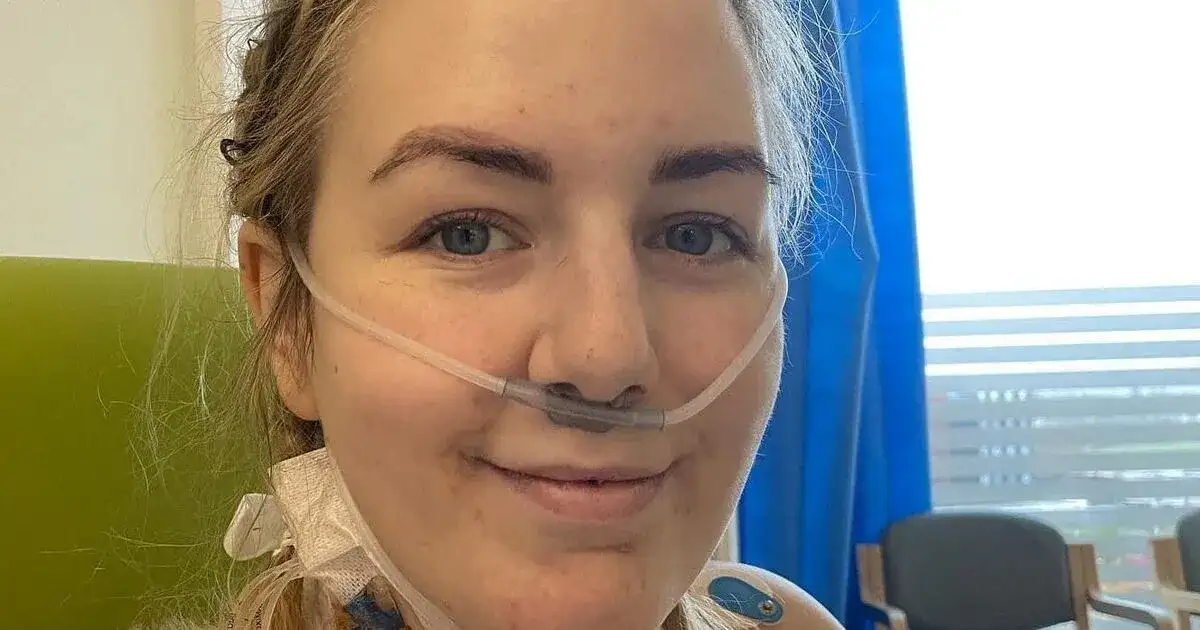
A 27-year-old woman, Megan Hetherington, finds herself in a critical medical predicament, facing refusal for a life-saving heart surgery due to a rare blood clotting syndrome. The procedure, which involves replacing a narrowed tricuspid valve with an animal valve, is deemed too risky by medical professionals because of her diagnosis of antiphospholipid syndrome (APS). This refusal comes despite Hetherington experiencing multiple strokes and a heart attack in the months following her diagnosis, underscoring the urgency of her situation. Doctors have reportedly advised her to "live every day like it's her last," a statement highlighting the perceived severity and finality of her prognosis.
Hetherington's condition involves both APS, a syndrome that causes abnormal blood clotting, and tricuspid stenosis, a narrowing of a heart valve. It's noted that she was unaware of APS prior to her diagnosis. Medical imaging also revealed a prior stroke she hadn't realized she'd suffered, the timing of which remains unknown. The direct implications of these conditions on her immediate survival and the rationale behind the surgical denial are central to her plight.
Read More: Dr. Pimple Popper Sandra Lee Had Stroke While Filming Show
Navigating Systemic Hurdles
Adding to her distress, Hetherington's struggle for medical necessity has been compounded by seemingly unrelated bureaucratic hurdles. In a separate instance, a gym chain reportedly refused her request to cancel her membership solely for financial reasons. This policy, according to reports, dictates that cancellations require either relocation to a different state or a valid medical exemption. This experience, which involved extensive hold times and multiple transfers with customer service representatives, occurred after she and her family had recently purchased a home in Kentucky. While distinct from her medical crisis, this interaction points to rigid institutional policies that can further burden individuals facing significant personal challenges.
Read More: UK Closes 11 Asylum Seeker Hotels This Week Due to Policy Change
The Shadow of Rare Conditions
The situation brings into sharp focus the challenges faced by individuals with rare diseases. Antiphospholipid syndrome (APS), described as a rare blood clotting disorder, can lead to serious complications, including strokes and heart problems. Tricuspid stenosis, the narrowing of a heart valve, impairs blood flow and can necessitate surgical intervention. The confluence of these conditions in a young patient presents a complex medical scenario, one that medical institutions appear reluctant to address surgically due to perceived risks.