

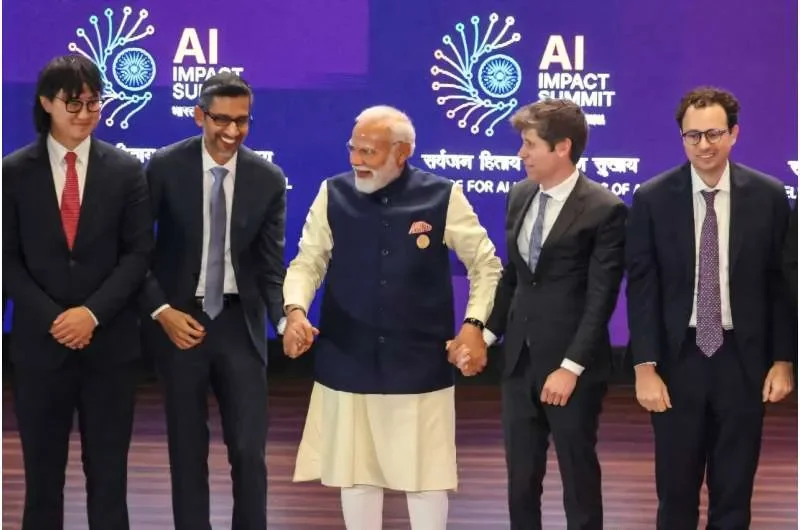
A lack of women in artificial intelligence (AI) development is a serious problem that could prevent the technology from serving everyone equally. Professor Dame Wendy Hall, a leading computer scientist, points to a male-dominated field where the concerns and needs of half the population may be ignored. This absence of diverse perspectives in AI design could lead to biased technology and missed opportunities for societal benefit.
Background and Scope of the Issue
Professor Dame Wendy Hall, a respected figure in computer science with decades of experience and a role on a United Nations advisory body for AI, has repeatedly highlighted a significant gender imbalance within the AI sector. Her observations span various AI-related events and policy discussions, including recent summits in New Delhi and Bletchley Park.
Observations at AI Summits: At a major AI summit in New Delhi, Professor Hall described the scene as "amazingly awful" and "totally male-dominated." She noted that a majority of the attendees and leaders were men, leading to a situation where "50% of the population is effectively not included in the conversations." A similar sentiment was expressed regarding the AI safety summit at Bletchley Park, where she felt too few women and academics were invited compared to business executives, indicating a broader societal exclusion.
Government and Policy Roles: Professor Hall has also expressed concern over the gender of key individuals in AI policy and leadership within the UK government. She noted that the heads of important bodies, such as the AI Council (since disbanded), the UK's AI Skills Champion role, the UK's Advanced Research And Invention Agency, the AI Opportunities Action Plan, and the Science and Technology ministries, were all held by men.
Historical Context: The issue of women's underrepresentation in computing is not new. Professor Hall has been a vocal advocate for increasing female participation in computing for many years. She suggests that the historical marketing of computers as "toys for the boys" in the West during the 1980s may have contributed to a persistent "geeky image" and a cultural barrier that has yet to be overcome. This contrasts with countries like India and Malaysia, where university computer science classrooms can have over half women.
Evidence of Gender Bias in AI
The lack of women in AI development is linked to observable biases in the technology itself.
Stereotypes in AI Outputs: Numerous studies have indicated that generative AI tools, such as ChatGPT and Google's Gemini, reflect societal stereotypes. These biases are believed to stem from the vast amounts of text and image data used to train these AI systems, data that itself contains historical biases.
Examples of Problematic AI: Concerns have been raised about AI tools generating content that perpetuates harmful stereotypes. For instance, the ability of some AI tools, like Elon Musk's Grok AI, to create sexualized deepfakes, often depicting women, has led to global outrage and bans in several countries. This suggests that AI systems, when developed without diverse input, can amplify existing societal problems.
Impact on Inclusive Technology
Professor Hall argues that the significant gender gap in AI development poses a direct threat to the goal of creating inclusive technology.

Undermining Inclusivity Pledges: The increasing prevalence of AI across various sectors means that the technology's design and application have widespread societal implications. When the developers predominantly reflect one demographic, pledges for inclusive technology are at risk of not being met. The concerns and needs of those not represented in the development process may be overlooked, leading to technologies that do not serve everyone equally.
Broadening the Definition of AI Skills: Professor Hall emphasizes that the AI revolution requires a wider range of expertise beyond just technical coding. She advocates for skills in finance, law, business, and psychology, arguing that AI will create new jobs that demand diverse talents. A workforce solely comprised of a narrow demographic may lack the breadth of understanding needed to navigate the societal impact of AI effectively.
Calls for Global Governance and Diversity
Professor Hall's concerns extend to the need for structured global approaches to AI development and governance, with diversity as a key component.
Global AI Governance: As a member of the UN's high-level advisory body on AI, Professor Hall has contributed to recommendations for global AI governance. These recommendations include establishing international dialogues, creating AI standards charters for regulation, and forming a fund to support developing nations. The goal is to harness AI's benefits while minimizing its risks.
Need for Diverse Input: The underlying message of these efforts is that global governance must inherently incorporate diverse perspectives. Without women and other underrepresented groups at the forefront of AI development and policy, the governance structures themselves may fail to address the full spectrum of risks and opportunities. Professor Hall explicitly states, "Women must be at the forefront of AI - not just users of it."
Expert Analysis
"All the CEOs are men. It's totally male-dominated, and they just don't get the fact that this means that 50% of the population is effectively not included in the conversations."— Professor Dame Wendy Hall, Computer Scientist
"Gender bias 'creeps through everything, because they don't think about it when they build their products."— Professor Dame Wendy Hall, Computer Scientist
"The government’s AI safety summit, held at Bletchley Park last November, invited very small numbers of women and academics compared to the number of business execs. There were so many people excluded, so much of society excluded."— Professor Dame Wendy Hall, Computer Scientist
"Ever since I’ve been in computing, I’ve advocated and led projects and government investigations into why there aren’t enough women in computing. It’s a deeply cultural thing."— Professor Dame Wendy Hall, Computer Scientist
Conclusion and Implications
Professor Dame Wendy Hall's consistent warnings underscore a critical juncture in the development of artificial intelligence. The pervasive male dominance in AI, from development to leadership and policy, presents a tangible risk to the creation of inclusive and equitable technology. This gender imbalance not only excludes a significant portion of the global population from the conversation but also directly contributes to biases embedded within AI systems, as evidenced by studies on generative AI outputs.
Read More: New Mexico Meta Trial May Block Facebook, Instagram
The implications are far-reaching:
Undermined Trust: If AI systems are perceived as biased or unrepresentative, public trust in the technology will erode, hindering its adoption and potential benefits.
Exacerbated Inequalities: AI, if developed without diverse perspectives, could inadvertently widen existing societal inequalities rather than help solve them.
Missed Innovation: The exclusion of women and other diverse groups means losing out on a vast pool of talent, innovative ideas, and crucial insights that could drive AI forward in more beneficial directions.
Addressing this issue requires a concerted effort to actively recruit, retain, and promote women in AI. This includes tackling cultural barriers, reforming educational pipelines, and ensuring diverse representation in leadership and policymaking roles. As Professor Hall suggests, the future of AI, and its capacity to genuinely benefit humanity, hinges on creating a more inclusive and diverse field. The calls for global governance of AI, coupled with an explicit focus on gender diversity, represent a vital pathway forward.
Sources
Tech Xplore: "'Alpha male' AI world shuts out women: Computing prof Hall" (Published: Feb 23, 2026). https://techxplore.com/news/2026-02-alpha-male-ai-world-women.html
UKTN: "AI policymaking captured by 'tech bro takeover', Professor Dame Wendy Hall warns" (Published: Oct 22, 2024). https://www.uktech.news/news/ai-policymaking-captured-by-tech-bro-takeover-professor-dame-wendy-hall-warns-20241022
Bailiwick Express News Jersey: "FOCUS: 'Toxic' tech? Why diversity is key for our AI revolution" (Published: Mar 8, 2024). https://www.bailiwickexpress.com/news/toxic-tech-importance-diversity-ai-revolution/
Southampton BRC: "AI risks left unchecked, Regius Professor warns" (Published: Sep 19, 2024). https://www.southamptonbrc.nihr.ac.uk/post/ai-risks-left-unchecked-regius-professor-warns
University of Southampton: "AI risks left unchecked, expert warns ahead of UN report" (Published: Sep 19, 2024). https://www.southampton.ac.uk/news/2024/09/ai-risks-left-unchecked-expert-warns-ahead-of-un-report.page
FOX 28 Spokane: "'Alpha male' AI world shuts out women: computing prof Hall" (Published: Feb 23, 2026). https://www.fox28spokane.com/alpha-male-ai-world-shuts-out-women-computing-prof-hall/


