


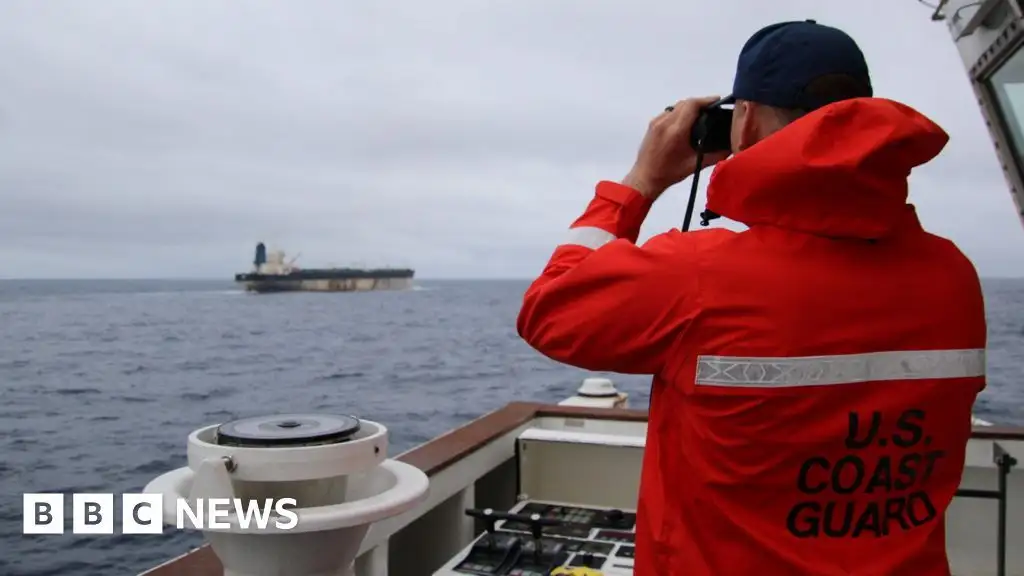
A complex legal and diplomatic disagreement has emerged following the removal of Avtandil Kalandadze, the captain of a seized oil tanker, from Scottish jurisdiction. The U.S. Coast Guard took the Georgian national and his first officer from UK waters aboard the vessel USCGC Munro just as a Scottish court issued an order to prevent their departure. The U.S. Department of Justice intends to prosecute the men for their roles in transporting sanctioned Venezuelan oil. While the UK government provided operational support for the seizure, Scottish leaders claim they were not fully informed of the move. The incident has raised questions about international law and the rights of crew members when global sanctions are enforced within the territory of an ally.
Chronology of the Maritime Pursuit and Seizure
The events leading to the captain's removal involve a weeks-long operation in the North Atlantic.
Read More: Nations A and B in Tense Standoff Over Sea Border

December 2025: The U.S. begins tracking the Bella 1, a tanker linked to Venezuelan oil exports. The ship later changes its name to the Marinera and flies a Russian flag.
January 7, 2026: U.S. Navy SEALs and Coast Guard teams board the vessel south of Iceland. The ship is moved to the Moray Firth in Scotland for safety and supplies.
Late January 2026: The Marinera sits in Scottish waters while the U.S. and UK discuss the crew’s fate. Legal representatives for the captain’s wife, Natia Dzadzama, file a petition to stop his removal.
January 27–28, 2026: A Scottish judge, Lord Young, grants an emergency order to keep the captain in Scotland. However, the U.S. Department of Justice notifies Scottish authorities that the captain is already on a U.S. ship and has left UK territory.
Documented Facts and Key Figures
The following data outlines the participants and the legal status of the crew involved in the operation.
| Subject | Details |
|---|---|
| Vessel Name | Marinera (formerly Bella 1) |
| Primary Individuals | Captain Avtandil Kalandadze; First Officer (unnamed) |
| Legal Representative | Aamer Anwar (representing the captain's wife) |
| Crew Status | 26 total; 5 to the U.S.; 21 repatriated or relocated |
| Jurisdiction | Seized in international waters; held in Moray Firth, Scotland |
| U.S. Vessel | USCGC Munro (Coast Guard Cutter) |
"The United States and the United Kingdom are coordinating regarding the status, processing, and prospective repatriation of crew members." — U.S. Embassy Statement
The core conflict centers on whether the U.S. bypassed Scottish legal processes by moving the captain before a court order could be enforced.

Conflict of Jurisdictions
Scottish Legal Authority vs. U.S. Enforcement
Lawyers for the captain argued that he was being held "unlawfully" and that his human rights were at risk if taken to the U.S. without a formal extradition hearing. On a Monday night, Lord Young granted an "interim interdict" to stop the removal. However, by Tuesday morning, the U.S. reported the captain was already on the USCGC Munro. Because the men were no longer in UK waters, the Scottish court had to revoke its order. Did the timing of the transfer intentionally avoid the court's ruling? This remains a central point of debate among legal observers.
Read More: Cairngorms National Park bans campfires and barbecues until September 2026
International Sanctions and Maritime Law
The U.S. claims authority to seize the ship because it was involved in a "shadow fleet" meant to bypass sanctions on Venezuela. The vessel was "interdicted" in international waters before being brought to Scotland. This raises a question: once a seized ship enters the territorial waters of a friendly nation, does that nation's local law take over, or does the original seizing power maintain control?
Internal UK Political Tension
Scottish First Minister John Swinney expressed concern that the Scottish government was "left in the dark" about the operation. While the UK Ministry of Defence and the Home Office supported the U.S., the regional government in Edinburgh was not part of the early planning. This has led to public disagreements between Scottish and UK officials regarding "proper lines of communication" during international military operations.
Read More: Prince William Marks 100 Years of Royal Navy Submarines in Scotland
Professional and Legal Analysis
Aamer Anwar, the lawyer representing the captain's family, described the removal as a "disregard for the rule of law." He argued that the U.S. had no lawful authority to arrest individuals within Scotland without following local procedures.
In contrast, U.S. officials maintain that the operation was a lawful seizure of a sanctioned asset and its leadership. Ruth Charteris KC, representing the Scottish ministers, confirmed to the court that the individuals had departed and were no longer under the court’s power.
Security analysts note that the use of RAF Lossiemouth and other UK facilities indicates high-level cooperation between London and Washington. This suggests that while the regional Scottish court sought to intervene, the national governments viewed the matter as a completed military seizure rather than a standard criminal arrest.
Read More: Scotland Kidney Policy Changes Cause Patient Worry
Status and Implications
The captain and first officer are currently in U.S. custody and face prosecution. The remaining crew members have been processed; five chose to go to the U.S., while the rest have returned to their home countries or moved to third-party nations.
The Marinera remains a subject of discussion between U.S. and UK agencies to determine its "final disposition." The incident highlights a significant gap in how international maritime seizures are handled when the ship enters a third country's waters. Future cases may require clearer agreements on whether local courts have the power to stop the transfer of prisoners captured by allied forces on the high seas.
Primary Sources
BBC News: US remove tanker captain from UK waters — Context on Scottish court orders.
Daily Mail: Skipper of tanker seized by U.S. 'whisked away' — Details on the transfer to USCGC Munro.
MarineLink: Captain of Seized Tanker Now Aboard US Vessel — Details on the Russian-flagged status and seizure near Iceland.
NBC News: U.S. seizes Russian-flagged oil tanker — Background on the pursuit and sanctions.
STV News: Captain and first mate to face prosecution in US — Information on crew housing in Elgin and Aberdeen.
Sky News: US moves captured tanker captain — Legal timeline of the Scottish Court of Session.
Morning Star: US 'abduction' in British waters — Critical perspectives on international law.


