

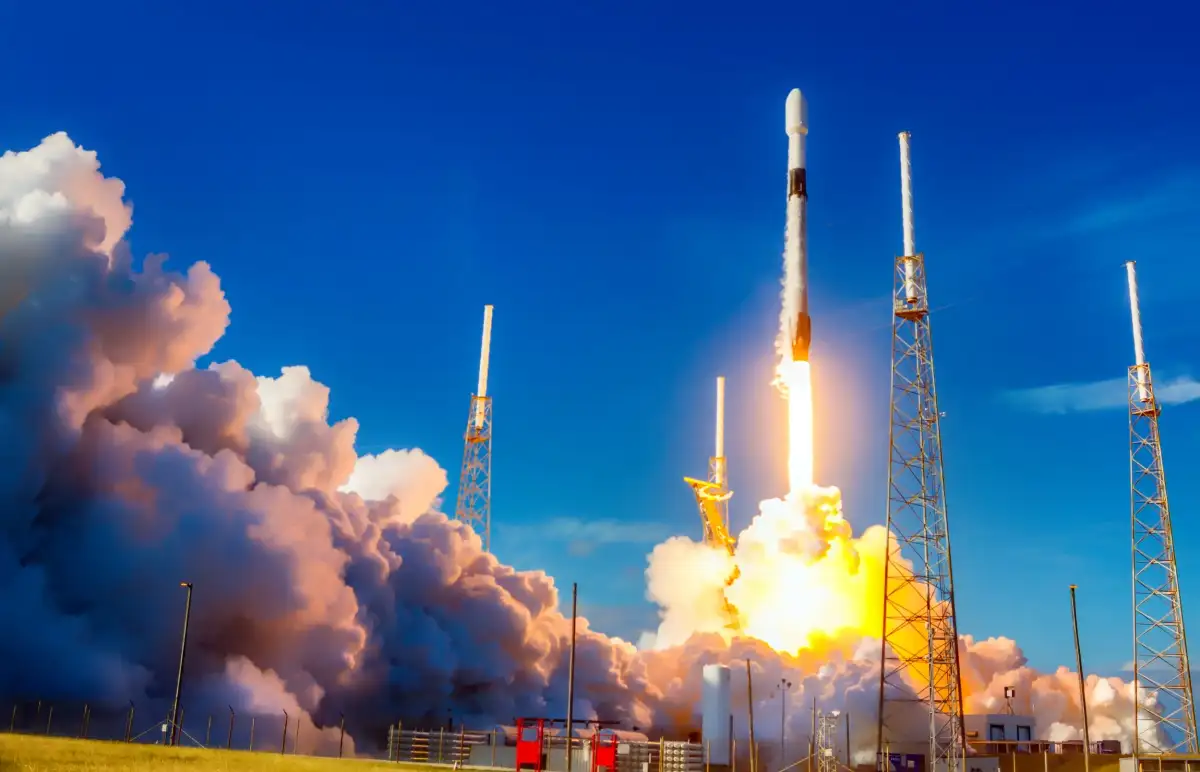
When sending craft into the far reaches of space, a key choice faces engineers: what kind of engine to use? The journey itself demands a specific kind of power. This report looks at the main types of engines used for space travel – chemical and electric – and explains why one type is often better for the very long trips needed to reach distant planets and beyond.
Understanding the Choices: Chemical and Electric Propulsion
Spacecraft engines create thrust, a push that moves the vehicle. Two main families of engines exist: chemical and electric. Each has its own way of making this push and its own strengths.
Chemical Propulsion: These engines work by burning fuel and an "oxidizer" – a substance that helps the fuel burn. This burning creates hot gas that shoots out the back of the engine, pushing the spacecraft forward.
They are known for producing a strong, quick push (high thrust).
Examples include systems using hydrazine or monomethyl hydrazine with nitrogen tetroxide (NTO).
These are often used for quick bursts of power, like reaching orbit or changing direction rapidly.
Electric Propulsion: These engines use electricity to push out very small particles (like ions) at extremely high speeds.
They create a gentle, steady push (low thrust) but can do so for a very long time.
They are highly fuel-efficient, meaning they don't need to carry as much fuel for the same job.
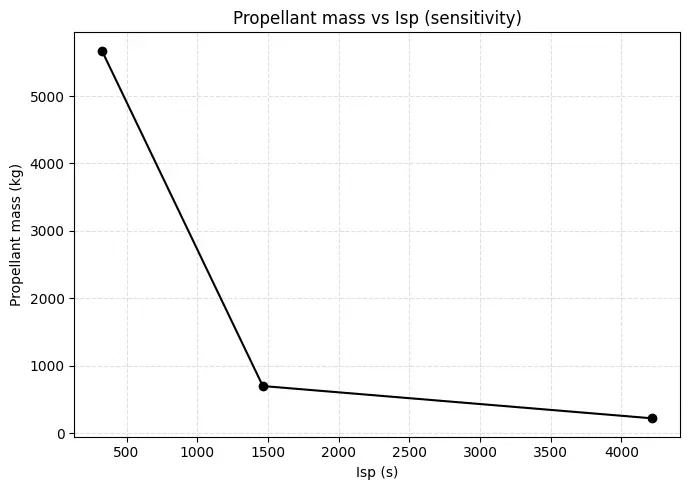
This efficiency is measured by "specific impulse" (Isp), and electric engines generally have a much higher Isp than chemical ones.
The Trade-offs: Power vs. Efficiency
The choice between these engine types boils down to what the mission needs most:
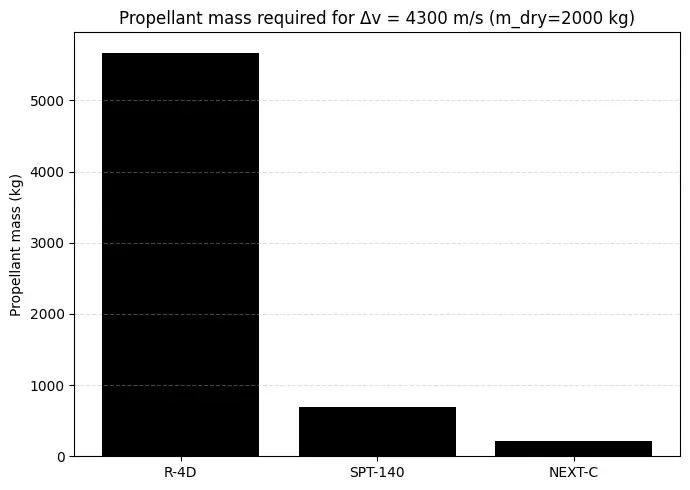
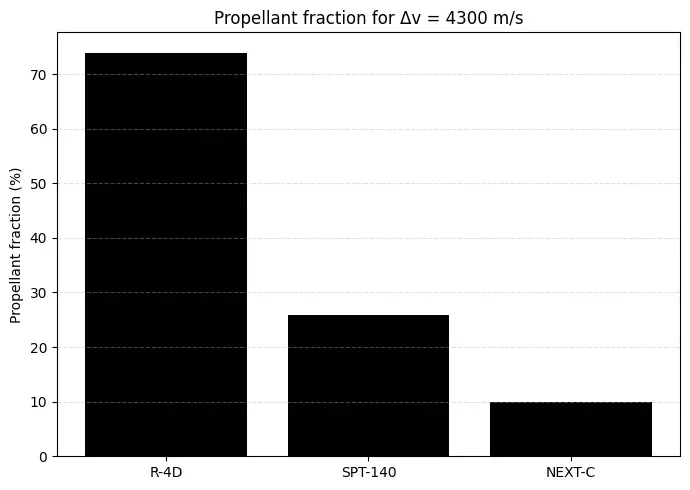
High Thrust (Chemical): Chemical engines provide a large amount of force quickly. This is good for lifting off from Earth or making fast changes in direction. However, to go very far, they need a huge amount of fuel, which makes the spacecraft heavy and costly to launch.
High Efficiency (Electric): Electric engines use very little fuel for the amount of push they provide over time. This is because they can push the exhaust particles out much faster. The downside is that their push is very weak, meaning it takes a long time to build up speed.
"Conventional chemical propulsion provides high thrust but incurs significant propellant mass penalties for long-distance transfers. Electric propulsion reduces propellant mass at the cost of low thrust and extended burn times." - Chicago Society for Space Studies
Deep Space Missions Favor Electric Propulsion
For missions that travel vast distances, such as to Mars or beyond, electric propulsion often becomes the more practical choice.
Read More: Mars Rover Concept Uses Curved Wheels to 'Swim' on Sand

Long Distances, Less Fuel: While chemical engines would require an enormous amount of fuel for an interplanetary journey, electric engines can achieve the same result using much less. This mass savings is critical.
Fine Control: The gentle, continuous push of electric engines is also ideal for making very precise adjustments to a spacecraft's path over long periods, a capability difficult for high-thrust chemical systems.
"For high delta V missions, such as interplanetary or deep space exploration, chemical propulsion systems would require very large amounts of propellant, making electric propulsion the most suitable choice." - Dawn Aerospace
While electric engines might not be suitable for launching from Earth due to their low thrust, they are seen as a complementary technology for the long cruise phases of deep space missions.
Future Possibilities
Advancements in technologies that provide power to electric engines, such as solar electric propulsion and potentially nuclear power, could make these already efficient systems even more capable for future exploration. There is also research into electric propulsion systems that can produce higher thrust, though they are still less powerful than chemical engines.
Conclusion
For the specific challenge of deep space travel, where fuel mass is a major constraint and missions last for years, electric propulsion systems generally offer a superior solution. Their high fuel efficiency allows spacecraft to travel further with less propellant, even though it means longer travel times and gentler acceleration. Chemical propulsion remains vital for initial launch phases and for missions requiring rapid maneuvers, but for the vast, unhurried journeys across the solar system, the slow, steady burn of electric engines often wins.
Read More: Dhruva Space gets ₹105 crore for making 600 satellites yearly
Sources:
Dawn Aerospace: https://www.dawnaerospace.com/latest-news/electricorchemical
ScienceTimes: https://www.sciencetimes.com/articles/61143/20260116/chemical-rockets-vs-ion-engines-comparing-power-efficiency-space-travel-potential.htm
Space Voyage Ventures: https://spacevoyageventures.com/electric-vs-chemical-propulsion-efficiency/
ScienceDirect Topics: https://www.sciencedirect.com/topics/earth-and-planetary-sciences/chemical-propulsion
Chicago Society for Space Studies: https://www.chicagospace.org/mass-efficiency-tradeoffs-in-chemical-and-electric-propulsion-for-mars-cargo-transfers/
Space Propulsion Laboratory (MIT): https://spacepropulsion.mit.edu/electric-propulsion/


