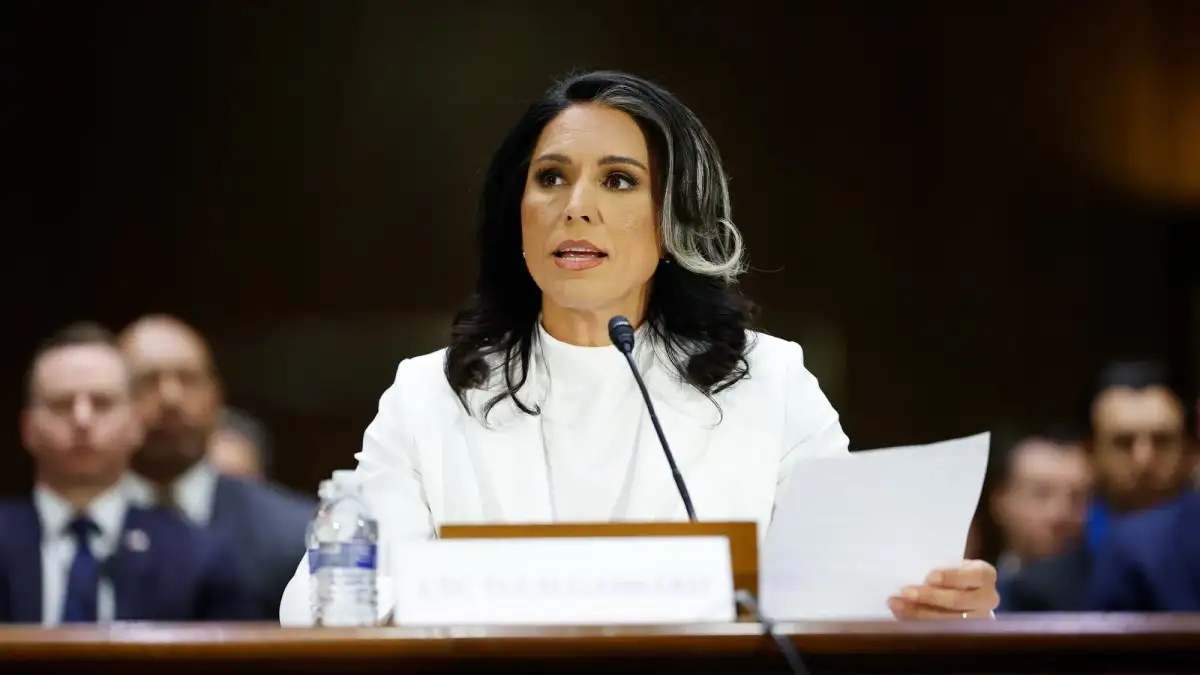
A recent whistleblower complaint concerning Director of National Intelligence Tulsi Gabbard has generated significant attention. The complaint, originating from an anonymous government insider, alleges that Gabbard withheld classified information for political reasons. While some lawmakers have dismissed the complaint, questions remain regarding its origin, credibility, and the subsequent handling of the allegations.
The matter surfaced following reports in The Guardian, The New York Post, and The Independent, detailing a complaint filed by an anonymous government source. The core accusation centers on the alleged withholding of classified information by Gabbard's office, with implications for national security. The Intelligence Community's Inspector General (ICIG) has reviewed parts of the complaint, finding some allegations unsubstantiated while others remain undetermined.
Timeline of Events and Key Actors
The timeline of the whistleblower complaint and related reporting reveals a complex sequence of events:
Read More: Warsh Confirmed for Fed Chair Role on May 14
Undisclosed Timeframe: An anonymous government insider files a whistleblower complaint.
Review by Intelligence Community Inspector General (ICIG): The ICIG assesses the complaint.
Certain allegations were deemed not credible.
The veracity of other claims could not be established.
Early February 2026: Reports emerge detailing the complaint and the ICIG's findings.
The Guardian publishes an article on February 5th, noting that Republican leaders of House and Senate intelligence committees rejected the complaint.
The New York Post and The Independent also report on the complaint around February 2nd.
Mid-February 2026: Further commentary and analysis arise, with The Guardian's reporting becoming a point of contention.
Twitchy.com publishes an article on February 9th, suggesting The Guardian is "walking back" its initial report and questioning the sources involved.
Key figures involved include Tulsi Gabbard, Director of National Intelligence; select lawmakers who reviewed the complaint; the Intelligence Community's Inspector General (ICIG); and anonymous sources cited in reporting.
The Whistleblower Complaint and ICIG Findings
The complaint lodged against Director of National Intelligence Tulsi Gabbard alleges specific transgressions:
Withholding Classified Information: The primary accusation is that Gabbard's office withheld classified information for political motivations.
Failure to Report Potential Crime: The complaint also reportedly accused Gabbard's office of general counsel of failing to report a potential crime to the Department of Justice.
The Intelligence Community's Inspector General (ICIG) has conducted an initial review of the allegations. Their findings, as reported, are nuanced:

Allegations against DNI Gabbard did not appear credible.
The truth of other claims within the complaint could not be determined.
There was no legal obligation to transmit the complaint quickly if it was not deemed credible.
Congressional Reaction to the Complaint
Lawmakers who were briefed on the complaint have offered differing perspectives:
Republican Leaders of Intelligence Committees:
Dismissed the complaint.
Referred to it as an attempt to smear Gabbard's reputation.
Did not find the allegations credible.
Other Lawmakers: Select lawmakers were given access to the complaint's details.
The varying responses suggest a division in how the complaint's validity and implications are perceived among members of Congress.
Analysis of Media Reporting and Source Scrutiny
The reporting on the whistleblower complaint has drawn attention to the media outlets involved and their sources:

The Guardian: Initially reported on the complaint, but later faced suggestions of a "walk-back" from some observers. Twitchy.com specifically questioned the sources behind The Guardian's reporting.
Twitchy.com: Critiqued The Guardian's report, implying that certain individuals or groups, potentially linked to Senator Mark Warner and Christopher Steele, were involved in the compilation of the information presented.
The New York Post and The Independent: Provided accounts of the complaint and its findings.
The scrutiny of media sources raises questions about the motivations and influences behind the dissemination of the allegations.
Related Controversies and Gabbard's Public Record
The whistleblower complaint is not the sole instance of scrutiny surrounding Tulsi Gabbard:
Read More: Ex-FBI Official Claims Political Test for Top Job
"Walk-Back" of Iran Testimony (June 2025): Gabbard issued a public clarification regarding her testimony to the Senate Intelligence Committee concerning Iran's nuclear program, following U.S.-Israeli airstrikes. This event was framed by some as narrative management overriding intelligence judgment.
Past Controversies: The Week's publication lists various controversies associated with Gabbard's career, particularly from her time in Congress and her presidential campaign.
These instances provide a broader context for understanding public and media reactions to new allegations against Gabbard.

Expert Insights on Intelligence Oversight and Whistleblower Mechanisms
While no specific expert analyses were provided in the input data regarding this particular complaint, general principles of intelligence oversight and whistleblower protections are relevant:
Whistleblower complaints within the intelligence community are designed to provide a mechanism for reporting waste, fraud, abuse, or illegal activity.
The process typically involves review by relevant Inspectors General, who assess the credibility and substance of the allegations.
Subsequent handling by congressional oversight committees is crucial for ensuring accountability.
The potential for political influence in the reporting and handling of such complaints is a recurring concern in discussions of intelligence oversight.
Conclusion and Implications
The whistleblower complaint against Director of National Intelligence Tulsi Gabbard presents a situation where serious allegations have been met with mixed assessments of credibility. The ICIG's findings suggest a lack of definitive proof for some claims, while others remain undetermined.
The dismissal of the complaint by leading Republican lawmakers indicates a lack of perceived merit among key oversight figures.
Questions persist regarding the origin and intent behind the complaint, particularly given the scrutiny of media sources by outlets like Twitchy.com.
The nature of the allegations—involving the withholding of classified information and potential failure to report crimes—carries significant weight for national security and the integrity of intelligence operations.
Further developments may depend on whether additional evidence emerges or if congressional committees decide to pursue the matter despite the ICIG's current findings. The case highlights the complexities of intelligence oversight and the challenges in verifying anonymous accusations.
Sources Consulted
Twitchy.com: Article titled "BACKPEDAL! The Guardian Walks Back Tulsi Gabbard Hit-Piece (Check Out Who Their Source Was, It's a HOOT)". Published 14 hours ago.
Context: This source offers a critical perspective on The Guardian's reporting, suggesting a retraction and questioning the origins of the information.
The Guardian: Article titled "Republicans dismiss whistleblower complaint against Tulsi Gabbard". Published 4 days ago (February 5, 2026).
URL: https://www.theguardian.com/us-news/2026/feb/05/republicans-tulsi-gabbard-whistleblower-complaint
Context: This article reports on the whistleblower complaint and the initial reactions from Republican lawmakers.
The New York Post: Article titled "Tulsi Gabbard hit with mysterious whistleblower complaint as office insists ‘no wrongdoing’". Published 6 days ago (February 2, 2026).
Context: This source provides details about the complaint and includes statements from Gabbard's office and the ICIG.
The Week: Article titled "A running list of Tulsi Gabbard's controversies". Published February 12, 2025.
URL: https://theweek.com/politics/list-tulsi-gabbard-controversies
Context: This article offers a historical overview of controversies associated with Tulsi Gabbard.
The Honey Badger Journal (Substack): Article titled "Why Tulsi Gabbard Walked Back Her Iran Testimony". Published June 22, 2025.
URL: https://thehoneybadgerjournal.substack.com/p/why-tulsi-gabbard-walked-back-her
Context: This piece analyzes a past instance where Tulsi Gabbard issued a clarification on her testimony regarding Iran.
Newsweek.com: Topic page for Tulsi Gabbard.
Context: Provides general news coverage related to Tulsi Gabbard.
The Independent: Article titled "Complaint against Tulsi Gabbard could do ‘grave damage to national security’: Report". Published February 2, 2026.
Context: Reports on the potential national security implications of the complaint.
New York Post (Tag page): Tag page for Tulsi Gabbard.
Context: Aggregates news content related to Tulsi Gabbard from the New York Post.