The seemingly simple English word "whether" frequently causes confusion, often mistaken for its homophones "weather" and "wether." While colloquially, "whether" and "if" can appear interchangeable in many contexts, their nuanced distinctions and specific applications warrant closer examination. This exploration aims to delineate the precise boundaries of "whether," moving beyond its common use to clarify its role in expressing choice and doubt.
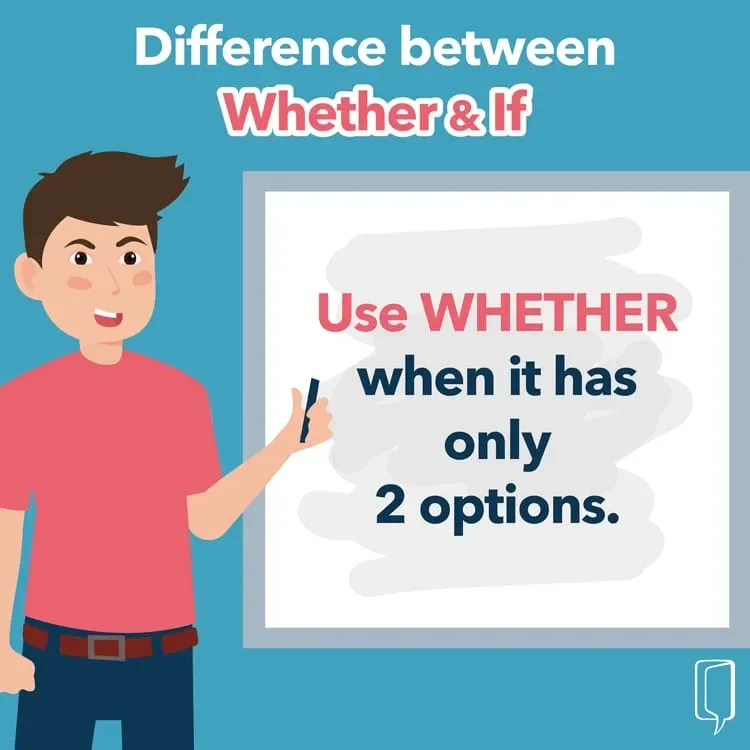
Distinguishing "Whether" from its Sound-Alikes
At the core of the confusion lies a trio of words that sound alike but possess vastly different meanings and grammatical functions:
Weather: This refers to atmospheric conditions. It is a distinct concept from grammatical conjunctions and describes meteorological phenomena. It's a non-countable noun.
Wether: This term pertains to agriculture and animal husbandry, specifically referring to a castrated ram. Its usage is confined to a specialized vocabulary, unrelated to general communication or grammar.
Whether: This is the word at the heart of the linguistic quandary. Primarily, "whether" introduces clauses that present two or more alternatives, highlighting a choice or uncertainty.
The Nuances of "Whether" in Practice
The common interchangeability of "whether" and "if" often stems from informal usage. However, formal grammar offers clearer guidelines.

Expressing Alternatives: "Whether" is most accurately employed when presenting a direct choice, particularly when the "or not" is implied or explicitly stated. For instance, "Can you tell me whether you're coming on Friday or Sunday?" clearly presents two distinct possibilities. The construction "whether or not" is a common idiomatic pairing that emphasizes the inclusion of all possible outcomes.
Introducing Indirect Questions: "Whether" is also used to introduce indirect questions where doubt or inquiry is central. Phrases like "to question whether" or "to doubt whether" signal an investigation into a possibility. Dictionaries offer translations like "selon que" or "pour savoir si" in these contexts, underscoring the investigative aspect.
Etymological and Grammatical Context
The word "whether" itself carries a sense of deliberation. While a deep dive into its etymological roots is beyond the scope of simple distinction, its consistent grammatical function points towards a deliberative or conditional framing. It serves as a connector, illuminating pathways of possibility or inquiry, thereby distinguishing itself from the factual description of atmospheric conditions ("weather") or the specific agricultural term ("wether").
Read More: Why English idioms lose their original history as of April 2026