

ANDHRA PRADESH POISED TO BECOME CRITICAL HUB FOR INDIA'S LONG-TERM NUCLEAR RESEARCH ROADMAP
Visakhapatnam has been selected as the site for a new high-energy proton accelerator system. This facility is slated to become a cornerstone in India's atomic science initiatives, particularly in the context of harnessing thorium reserves for nuclear energy. The announcement emerged from discussions at the Raja Ramanna Centre for Advanced Technology (RRCAT) in Indore, with Dr. Jishnu Dwivedi, Director of the Technology Development and Support Group, elaborating on the project's significance.
The proposed accelerator is designed to generate high-energy neutrons via spallation reactions. These neutrons are intended to convert India's abundant thorium resources into uranium fuel suitable for nuclear reactors. This technological pathway is a central element of the country's long-term nuclear research strategy.
The RRCAT's existing infrastructure already supports crucial applications. Its linear accelerators, for instance, power electron beam facilities used for sterilizing medical devices. These sterilized products are then exported to over 35 countries. The new Visakhapatnam facility, therefore, represents an expansion and intensification of these capabilities.
Read More: Kurnool IIITDM Workshop Explores Quantum Materials for Future Tech
DEPARTMENT OF ATOMIC ENERGY CONTINUES EXPANSION AND APPLICATION OF NUCLEAR TECHNOLOGIES
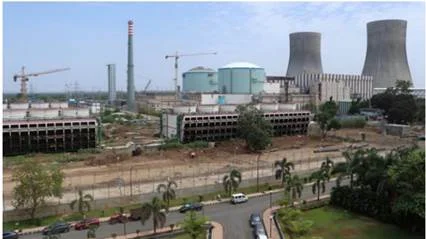
The Department of Atomic Energy (DAE) has been actively pursuing its mandate across various fronts. In recent developments, Kakrapar Unit 3 has commenced full power commercial electricity production, while Kakrapar Unit 4 has achieved criticality. These advancements underscore the DAE's ongoing commitment to nuclear power generation and capacity building.
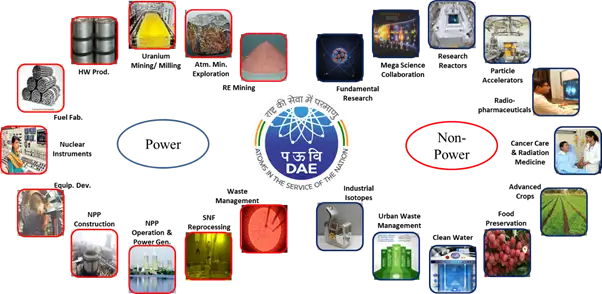
Beyond power production, the department has focused on the creation and operation of research reactors and particle accelerators. These are vital for the production of radio-isotopes and radio-pharmaceuticals, serving critical needs in healthcare. Furthermore, the DAE has been applying radiation-based technologies to address societal challenges, with notable work in healthcare, food security, and water management.
Among its achievements, the DAE has begun the indigenous production of O18-water, a substance essential for Positron Emission Tomography (PET) scanning. The Homi Bhabha Cancer Hospital and Research Centre in New Chandigarh is now fully operational, signifying progress in specialized medical infrastructure. The Heavy Water Board (HWB) is also preparing to meet increasing demands for Deuterium, Heavy Water, and Deuterium Depleted Water for applications outside the nuclear sector.
Read More: Dindigul Opens ₹16 Crore Slender Loris Centre for Conservation and Eco-Tourism
BACKGROUND
The selection of Visakhapatnam for the proton accelerator places Andhra Pradesh at the forefront of advanced nuclear research in India. The technology envisioned for this facility is tied to a broader national objective of energy independence and resource utilization, specifically targeting the nation's significant thorium deposits. This approach aims to diversify India's nuclear fuel cycle, moving beyond uranium dependence.
The DAE's continued investment in both nuclear power generation and applied radiation technologies highlights a multifaceted approach to leveraging atomic science. The progress in areas such as radio-isotope production and medical applications suggests a strategic intent to maximize the societal benefits derived from nuclear capabilities, extending from large-scale energy projects to specialized medical diagnostics and treatments. The mention of Indigenous production of O18-water for PET scanning by the DAE points to an increasing focus on supporting high-tech medical procedures.
Read More: Space Rock Hits Osterwieck Home July 30, 2019, Causing Roof Damage