Visakhapatnam's much-touted metro rail project, intended to untangle the city's burgeoning traffic, appears to be charting a complex course, entangled with an intricate web of proposed flyovers and the specter of long-standing delays. The current push centers on an ambitious plan to construct 'double-decker' structures, integrating a four-lane road flyover with a metro viaduct, a concept being formalized through Detailed Project Reports (DPRs). This dual-level approach aims to accommodate both vehicular traffic and the envisioned metro network, with official pronouncements suggesting the integration of rail, road, and port connectivity as a key objective.
The core of the Visakhapatnam metro endeavor is the proposed integration with new flyover constructions, specifically designed as double-decker structures to house both road traffic and metro lines. This integration is currently being studied via Detailed Project Reports (DPRs), signaling a shift towards a multi-modal transportation solution. The project is broken down into phases, with Phase 1 involving a significant tendering process for a 46.23 km viaduct across three corridors, estimated at INR 6,250 crore, and a total project cost for Phase 1 pegged at INR 11,498 crore.
Read More: New Bengaluru Green Line Metro Trains Arriving by August 2026
While the concept of a metro rail system has been on the books for over a decade, officially sanctioned as part of special assistance, its physical realization has been repeatedly mired in bureaucratic processes and shifting governmental priorities. The current iteration sees the Andhra Pradesh Metro Rail Corporation Limited (APMRCL) actively seeking consultants for DPRs related to these integrated metro-flyover corridors.
A Shifting Blueprint of Corridors and Elevated Structures
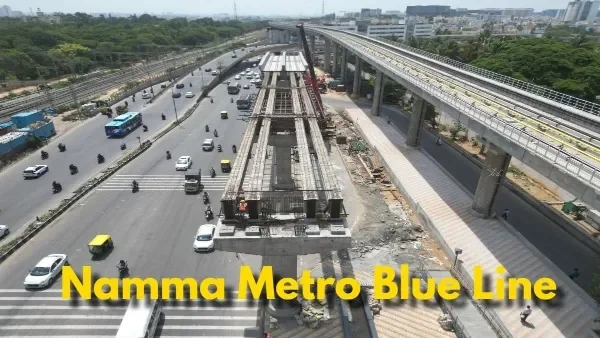
The Visakhapatnam Metro Rail Project, envisioned to meet the city's long-term transportation needs, is slated to span approximately 76.70 kilometers across four corridors. A significant portion of this network, specifically 20.16 kilometers within Phase 1, is planned as a double-decker structure featuring a four-lane flyover alongside the metro viaduct. This elevated component will also host an estimated 42 elevated metro stations.
The tendering process for Phase 1 has been initiated, focusing on the design and construction of this extensive viaduct.
Several proposed flyovers, essential for this integrated approach, are positioned within the metro network area, though a few, like those at Duvvada Junction and Lankelapalem, are slated for development outside the direct metro scope.
The initial phases are marked by a substantial financial outlay, with Phase 1's estimated cost touching INR 11,498 crore.
Delays and Ambiguities Clouding the Project's Trajectory
Despite the renewed official impetus and the issuance of tenders, the project's history is punctuated by "setbacks" and descriptions as "duds" nearly a decade and a half after its initial sanction. Reports from late 2024 and early 2025 indicate that the state government is actively pursuing detailed project reports for these integrated metro-flyover designs, suggesting that the final architectural and logistical blueprints are still in formative stages.
Read More: India IVF Costs And Social Barriers Limit Access In April 2026
The proposed integration with flyovers has, at times, been linked to delays in construction, particularly concerning traffic management during the development phase.
A notable aspect is the governmental desire to align new flyover constructions with the metro project, a move aimed at efficiency but potentially contributing to the project's extended timeline.
The project's progress has been a subject of dialogue between state officials and central ministries, with calls for "swift approvals" on revised DPRs highlighting the persistent need for central government clearance.
Historical Context: A Long and Winding Road
The Visakhapatnam Metro Rail Project, along with its counterpart in Vijayawada, was initially assured of central support under the Andhra Pradesh Reorganisation Act. However, this support has been elusive, leading to extended periods of stagnation. The projects, conceived to stimulate economic growth and improve urban mobility, have instead become symbolic of "policy drift, political indifference and administrative logjams." The current administration's renewed focus, marked by site visits and official announcements, signals an attempt to revive these stalled infrastructure ambitions, with the integrated metro-flyover concept representing the latest strategic pivot.
The Union Ministry of Housing and Urban Affairs (MoHUA) has previously insisted on updated Comprehensive Mobility Plans (CMPs), impacting the appraisal and progress of the metro projects.
Chief Minister Chandrababu Naidu's engagement with the Union Minister of Housing and Urban Affairs, Manohar Lal Khattar, in late 2025, underscores the ongoing efforts to navigate these inter-governmental hurdles.
/newsfirstprime/media/media_files/2026/02/18/green-line-metro-2026-02-18-14-46-47.jpg)