


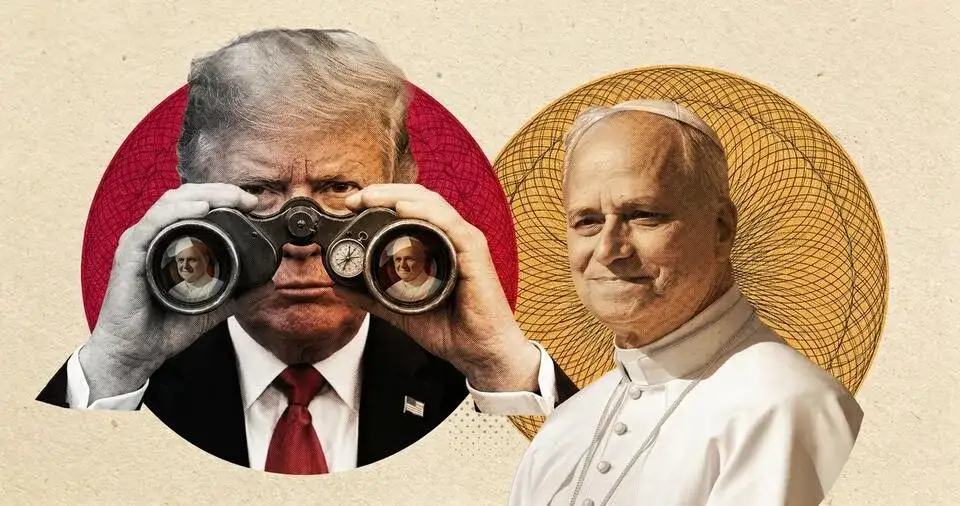
Reports indicate that U.S. intelligence agencies have escalated surveillance efforts targeting the Vatican, a shift seemingly catalyzed by President Donald Trump's public criticisms of Pope Leo XIV. This heightened focus marks a notable change in the long-standing, albeit sometimes complex, relationship between American intelligence and the Holy See.
Ken Klippenstein, an independent journalist with a history of reporting on national security matters, has published findings suggesting that U.S. intelligence agencies have engaged in spying on the Vatican for years. Klippenstein's reporting, corroborated by multiple sources, asserts that Trump's remarks on April 12, which characterized Pope Leo XIV as a detrimental force in foreign policy, transformed this existing surveillance into an "operational priority."==
Shift in Intelligence Posture
The relationship between the U.S. and the Vatican, which reportedly began establishing ties around eighty years ago, appears to be undergoing a significant transformation. Reports suggest that following Trump's April pronouncements, the U.S. posture toward the Holy See has become decidedly more inward-looking. The State Department is said to be circulating daily intelligence summaries concerning Vatican affairs, and its Bureau of Intelligence and Research is generating classified analyses of papal diplomacy.
Read More: US Stocks Hit New Highs After Iran Ceasefire Extension
Specific intelligence activities mentioned include the Central Intelligence Agency's alleged maintenance of human sources within the Vatican's administrative structure, and the National Security Agency's efforts to intercept Vatican communications, such as emails and text messages. Furthermore, the U.S. military reportedly maintains a dedicated language code for Vatican-specific communication, indicating a long-standing, albeit perhaps latent, capability.
Context of Papal-Presidential Disagreements
Pope Leo XIV has emerged as a notable global figure willing to publicly challenge the Trump administration on a spectrum of issues. His criticisms have encompassed U.S. foreign policy concerning the Iran conflict and the situation in Venezuela, where the U.S. has sought the removal of ruler Nicolas Maduro. The Pope has also reportedly questioned the alignment of Trump's immigration policies with the Church's teachings on sanctity of life.
FBI documents obtained by reporters indicate that the first Trump administration also pursued enhanced coordination with Italian intelligence and Vatican officials on matters such as cybersecurity, financial crime, human trafficking, and art theft. This suggests a pre-existing framework of cooperation that may have been recalibrated or intensified.
Read More: DOJ Stops Criminal Probe into Fed Chair Jerome Powell Today
Historical Precedents
This recent intensification of surveillance, however, is not entirely without historical precedent. In 2013, reports surfaced alleging that the NSA had wiretapped Vatican phone calls, possibly including communications related to the selection of Pope Benedict's successor. At the time, the NSA denied these allegations, stating they did not target the Vatican. The Holy See also reportedly had no knowledge of any such activities. The Vatican itself employs measures to safeguard its internal communications, particularly during conclaves.
The Vatican, for its part, is described as not being naive about the realities of international intelligence operations. The reports indicate a recognition within the Holy See of the U.S. government's surveillance capabilities and potential interests.


