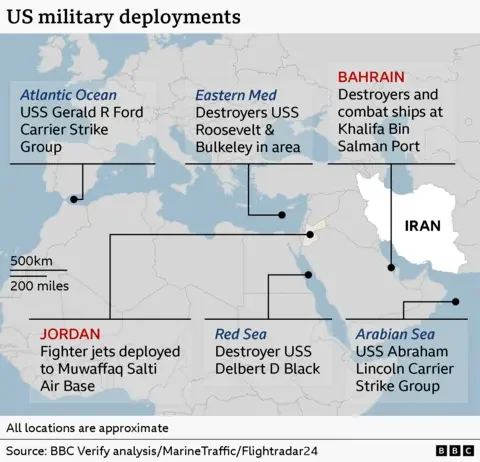
Washington is moving a significant number of warships and aircraft to the Middle East, a buildup that coincides with ongoing diplomatic efforts and raises questions about the US's intentions.
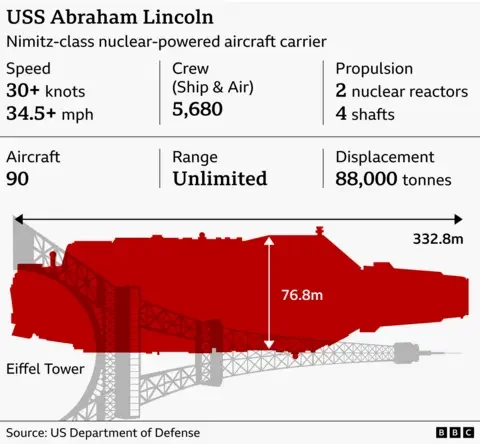
The United States has increased its military presence in the Middle East, sending a large number of warships and fighter jets to the region. This deployment is happening while talks with Iran about its nuclear program are ongoing. Reports indicate that the US is sending its largest force of American warships and aircraft to the Middle East in decades, including two aircraft carrier strike groups. This build-up includes scores of warplanes and specialized assets.
Timeline of Military Movements and Related Events
The deployment of US military assets has been observed over recent weeks and days:

Recent Weeks: Satellite imagery has tracked 12 US ships in the Middle East. Tanker aircraft have surged to Al Udeid Air Base in Qatar.
January 2026: CENTCOM publicly acknowledged an F-15E deployment.
January 12, 2026: A new air defense coordination cell (MEAD-CDOC) opened at Al Udeid Air Base.
Prior Events: Iran previously launched over a dozen missiles at Al Udeid Air Base following strikes on its nuclear facilities in June of the previous year.
Present: Numerous additional US fighter jets and support aircraft have arrived in the Middle East. More than 50 US Air Force and Navy aircraft were confirmed flying east from US bases towards the Middle East over an eight-hour period on a recent Wednesday. The Lincoln aircraft carrier was last seen in public satellite imagery on February 1st.
Nature of Deployed Military Assets
The US military has moved a range of significant assets to the region:
Read More: Trump Adds 10% Global Tariffs After Supreme Court Ruling on February 20
Naval Assets:
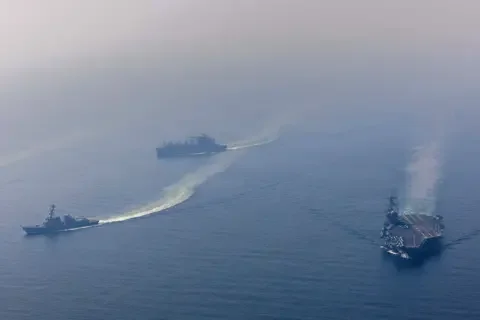
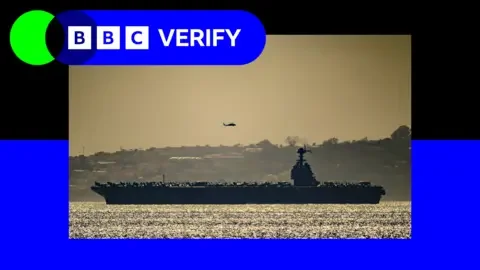
Two aircraft carrier strike groups are being sent.
12 US ships have been tracked in the Middle East.
Air Assets:
Scores of U.S. warplanes are joining an "armada" heading to the region.
F-22 Raptors, described as America's most capable air-to-air fighters, are being deployed. These can also be used for striking enemy air defenses and ground targets.
F-15E aircraft deployments have been acknowledged by CENTCOM.
Support aircraft, including tanker aircraft, have arrived at bases like Al Udeid Air Base in Qatar.
Specialized Units:
A new air defense coordination cell (MEAD-CDOC) has been established at Al Udeid Air Base.
Strategic Locations and Transit Hubs
Several key locations are noted as part of this military movement:
Al Udeid Air Base, Qatar: This base has seen a surge in tanker aircraft and is home to CENTCOM’s forward headquarters. It has previously been targeted by Iranian missiles.
Muwaffaq Salti Air Base, Jordan: This base has become a critical point in the current military buildup.
Lakenheath Air Base, U.K.: Identified as a major transit hub for aircraft moving between the US and the Middle East.
Azores and Crete: US aircraft have been observed arriving at bases in these locations, fueling speculation.
Jordan-Saudi Arabia Border: Some aircraft reportedly disappeared from radar in this vicinity.
Official Statements and Diplomatic Context
The movements occur within a complex geopolitical environment:
President Trump's Stance: President Trump has warned of possible military action against Iran if talks over its nuclear program fail. National security officials have informed him that the US military is ready for potential strikes, though a final decision has not been made.
Diplomatic Negotiations: The military buildup is happening concurrently with ongoing negotiations over a deal with Iran, with talks reportedly taking place in Geneva.
Iran's Capabilities: Iran's military is understood to possess the capability to strike US bases across the Middle East. An Iran expert suggested Iran might respond more broadly if its leadership feels targeted, referencing past missile launches at Al Udeid Air Base.
Potential Motivations and Expert Views
The purpose behind this significant military deployment is a subject of analysis:
Increased Strike Options: The buildup is intended to provide the US military with extensive strike options should an order be given.
Deterrence and Pressure: The movement of assets could be a strategy to pressure Iran during diplomatic negotiations or to deter certain actions.
Response to Iranian Actions: Some reports link the buildup to concerns over Iran's military program and its crackdown on protesters.
Uncertainty in Intelligence: The US reportedly lacks clear insight into Iran's military hierarchy, particularly after the assassination of a prominent Iranian military commander.
Speculation about Attack: The surge of aircraft, particularly refueling planes, and their arrival at transit bases ahead of carrier group movements have fueled speculation about a possible US attack.
Unanswered Questions and Areas for Further Investigation
Several aspects of this situation require continued scrutiny:
What is the precise number and type of all military assets deployed to the Middle East?
What is the definitive strategic objective behind this escalated military presence?
How will Iran respond to this increased US military posture?
What is the current status and potential outcome of the ongoing diplomatic talks with Iran?
Sources Used:
AP News (via AOL): https://apnews.com/article/us-military-middle-east-iran-protests-b7a56659d708f2f11f66a18135f44c40
CNN Politics: https://www.cnn.com/2026/02/16/politics/us-iran-military-buildup-pressure
CBS News: https://www.cbsnews.com/news/trump-iran-military-buildup-includes-scores-of-us-warplanes-joining-armada/
The War Zone: https://www.twz.com/news-features/final-pieces-moving-into-place-for-potential-attack-on-iran
MEF Forum: https://www.meforum.org/mef-reports/americas-military-buildup-around-iran-what-we-know-and-what-it-means