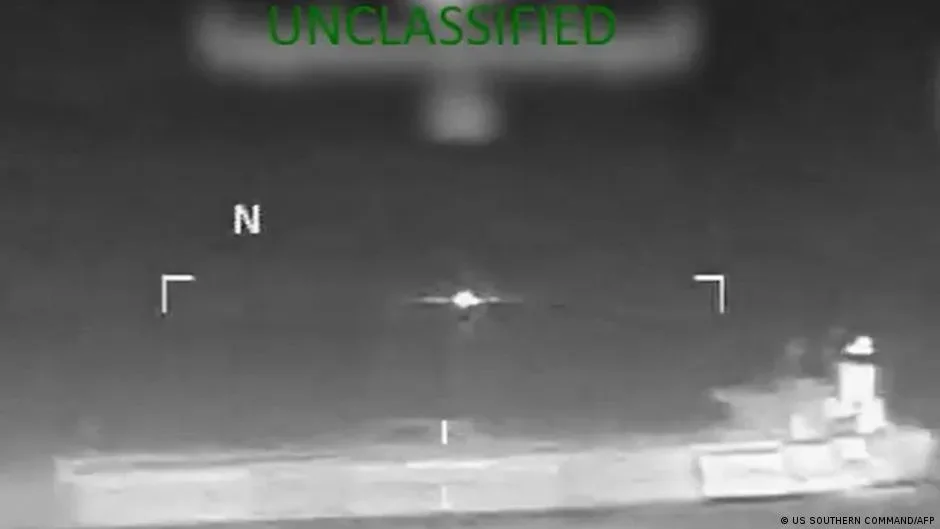
On Friday, February 13, 2026, the U.S. military conducted a strike on a vessel in the Caribbean, which officials stated was involved in drug trafficking. This action resulted in the deaths of three individuals. This incident is part of an ongoing anti-narcotics campaign by the U.S. that has expanded to include attacks on maritime targets.
The U.S. Southern Command confirmed the strike, identifying the vessel as allegedly transporting drugs. The incident follows a similar strike on February 10, 2026, in the eastern Pacific, where two people were killed and one survived after their boat was targeted under similar pretenses.

Background of U.S. Maritime Interdiction Operations
The U.S. administration initiated strikes against alleged smuggling boats in early September, characterizing these operations as part of a broader effort against what it terms "narco-terrorists" operating from Venezuela. This strategy represents a significant escalation in U.S. counter-narcotics efforts in the region.
Read More: Iran Zagros Mountain Nuclear Site Construction Update April 2026
Timeline: U.S. strikes against alleged drug boats began in early September. Publicly known attacks have occurred since then, with recent incidents in late January 2026 and February 2026.
Actors: The U.S. Southern Command is responsible for these operations. Officials from the U.S. administration, including the Pentagon chief Pete Hegseth, have commented on the campaign. Colombian President Gustavo Petro has publicly denounced the strikes. Venezuelan President Nicolás Maduro has accused the U.S. of seeking his ouster.
Objectives: The stated aim is to interdict drug trafficking and disrupt operations linked to Venezuela.
Recurrence of Fatal Strikes
The February 13, 2026, strike marks at least the fourth publicly acknowledged maritime strike of the year, bringing the cumulative death toll in Washington's anti-narcotics campaign to at least 133, according to some reports. Previous strikes have also resulted in fatalities. For example, a strike on November 6, 2025, in the Caribbean resulted in three deaths and brought the campaign's toll to at least 70.

February 13, 2026: Caribbean strike, 3 fatalities.
February 10, 2026: Eastern Pacific strike, 2 fatalities, 1 survivor.
November 6, 2025: Caribbean strike, 3 fatalities, cumulative toll at least 70.
Disputed Evidence and International Reactions
Administration officials have not provided definitive evidence linking all targeted vessels to drug trafficking. This lack of transparent evidence has fueled a debate regarding the legality and justification of these operations.
"Administration officials have provided no definitive evidence that the vessels are involved in drug trafficking, prompting heated debate about the legality of the operations that have expanded from the Caribbean to the Pacific."
The campaign has drawn criticism from regional leaders. Venezuelan President Nicolás Maduro has repeatedly accused President Donald Trump of seeking to remove him from power. Maduro asserts that Venezuela is not a country where drugs are cultivated but is used as a transit route for Colombian cocaine against its will. He has also pleaded not guilty to drug and weapons charges in the United States.
Read More: Four Killed in Florida Boat vs Cuba Patrol Incident Near El Pino Channel
Colombian President Gustavo Petro has previously denounced the strikes, comparing them to war crimes.
In the U.S. Congress, Senate Republicans voted to reject legislation that would have imposed checks on the President's authority to launch attacks against Venezuela. Democrats have pushed for Congress to play a more significant role in the administration's campaign.
Operational Scope and Justification
The U.S. administration's rationale for these strikes centers on combating alleged "narco-terrorists" and disrupting drug flow. The operations have broadened in scope, extending from the Caribbean to the Pacific.
Expansion: Operations initially focused on the Caribbean have expanded to include the Pacific Ocean.
Stated Threat: U.S. officials refer to a threat from alleged "narco-terrorists" operating out of Venezuela.
Legal Scrutiny: The absence of public evidence linking targeted vessels to drug smuggling raises questions about the legal basis for these actions.
Conclusion
The U.S. military's recent strike on a Caribbean vessel, resulting in three fatalities, underscores the continuation of a controversial anti-narcotics campaign. The operations, characterized by a lack of publicly disclosed evidence of the targeted vessels' involvement in drug trafficking, have led to significant international criticism and domestic debate regarding their legality and effectiveness. The campaign's expanded scope and the persistent use of lethal force against maritime targets highlight the complex geopolitical and security dynamics at play in the region. Further scrutiny of the evidence supporting these interdictions and the broader legal framework governing them is warranted.
Read More: 40 Die in Quetta to Peshawar Bus Crash in Balochistan on April 3 2026
Sources
NBC News: U.S. strikes alleged drug boat in Caribbean, killing three
Published: Feb 14, 2026
Gulf News: Three dead in latest US strike on alleged drug boat in Caribbean: Military
Published: Feb 14, 2026
CBS News: New U.S. strike on alleged drug boat in Caribbean kills 3 people, bringing campaign's death toll to at least 70
Published: Nov 7, 2025
Link: https://www.cbsnews.com/news/us-strike-alleged-drug-boat-caribbean-kills-3-death-toll-70/
Channel News Asia: 3 dead in latest US military strike on alleged drug boat in Caribbean
Published: Feb 14, 2026