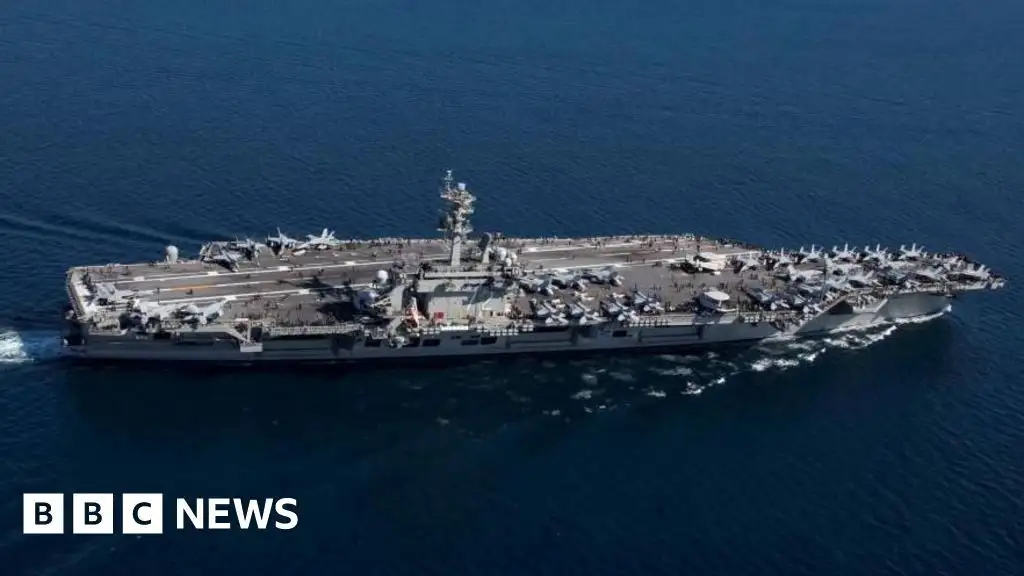
A tense Tuesday in the Arabian Sea saw the U.S. Navy shoot down an Iranian drone, escalating an already volatile regional situation. This act of military aggression, just days before crucial diplomatic talks, paints a grim picture of simmering tensions and raises profound questions about the true intentions of both Washington and Tehran.
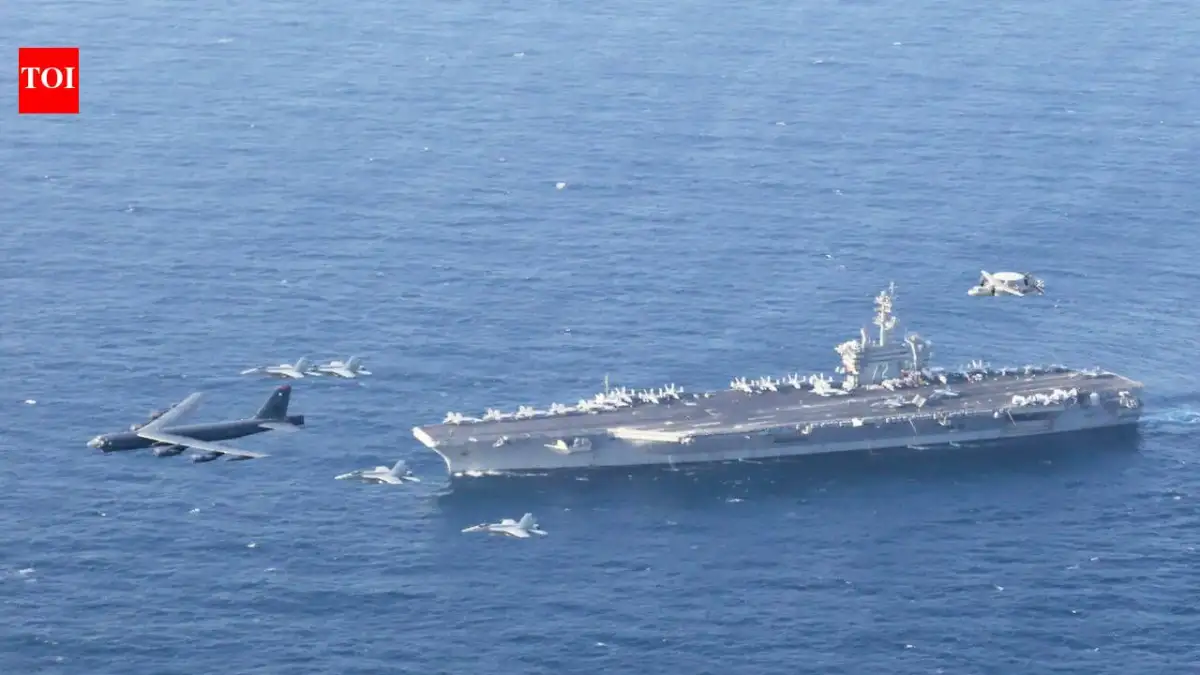
The incident, unfolding in the strategic waters of the Arabian Sea, brings into sharp focus the delicate balance of power and the ever-present threat of conflict between the United States and Iran. With a U.S. aircraft carrier, the USS Abraham Lincoln, in the vicinity, an Iranian drone, identified as a Shahd-139, was downed by an F-35C fighter jet after reportedly heading towards the carrier. CENTCOM confirmed the engagement, stating the drone was “invading the airspace” around the carrier. This isn't an isolated event; it follows a pattern of escalating confrontations, including a separate incident where Iran’s Revolutionary Guards allegedly harassed a U.S.-flagged merchant vessel in the Strait of Hormuz.
Read More: Iran Zagros Mountain Nuclear Site Construction Update April 2026
A DAGGER AT THE THROAT OF DIPLOMACY
The timing of this military engagement is particularly concerning, occurring mere days before scheduled diplomatic talks between U.S. and Iranian officials. These discussions, purportedly aimed at de-escalating tensions and addressing Iran’s nuclear program, now appear overshadowed by the aggressive posture taken by both sides. Reports suggest the talks, originally slated for Turkey, might be moving to Oman, with Iran seeking a venue free from “threats and unreasonable expectations.”
| Event | Actors Involved | Reported Date | Significance || :————————————————————— | :————————————————— | :————————- | :——————————————————————————————————————- || US Navy shoots down Iranian drone | US Navy, Iran | Feb 3, 2026 | Direct military confrontation, escalating regional tensions. || Iranian forces harass merchant vessel | Iran IRGC, US-flagged merchant ship | Feb 3, 2026 | Continued pattern of aggressive actions by Iran targeting shipping. || Diplomatic talks scheduled (Turkey/Oman) | US, Iran | Imminent (Feb 6) | Potential for de-escalation or further breakdown based on outcomes. || US envoy Steve Witkoff to attend talks | US | Planned | Indicates US commitment to diplomatic channel, despite military actions. || Iran President Pezeshkian signals talks OK | Iran | Recently | Shows internal Iranian willingness for dialogue under certain conditions. || Trump's threats of military action against Iran | US President Donald Trump | Ongoing | Creates pressure and raises stakes for any diplomatic resolution. |
Read More: Iran Warns Gulf States After U.S. Naval Clash
This dual approach – military posturing and diplomatic overtures – leaves one wondering: Is this a deliberate strategy to gain leverage at the negotiating table, or is it a sign of an unraveling diplomatic process, where military action is becoming the default response?
WHO’S REALLY PULLING THE STRINGS?
The narratives emerging from this incident are as complex as the geopolitical landscape itself. The U.S. military’s CENTCOM has been the primary source of information regarding the drone shootdown, framing it as a defensive measure against an encroaching Iranian threat. But how aggressively was the drone approaching? What were its exact flight parameters? And crucially, was this a rogue act by a local Iranian commander, or a calculated move sanctioned from the highest levels in Tehran?
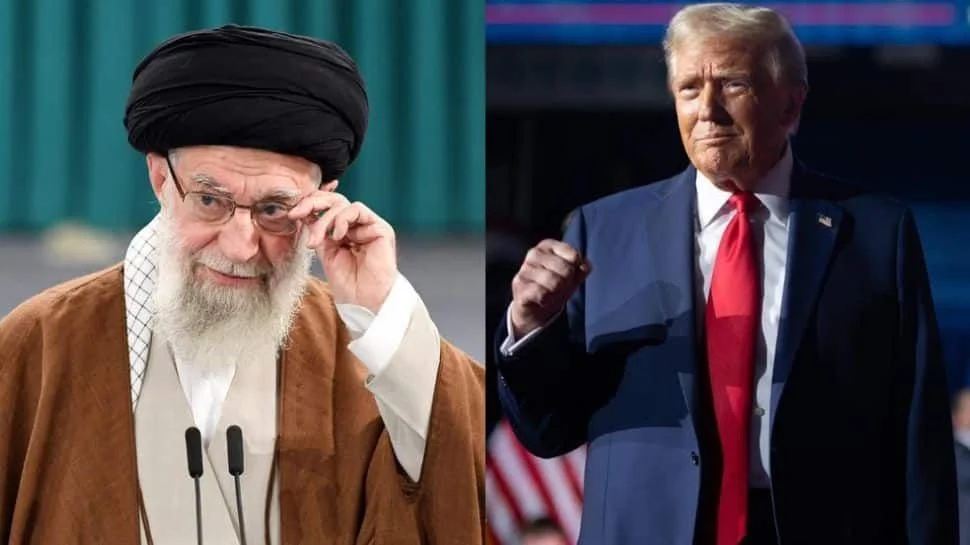
Tehran's response, or lack thereof, is equally telling. While Iran’s UN mission has declined to comment, Iran’s Tasnim news agency vaguely reported a loss of connection with a drone in international waters, attributing it to an unknown reason. This ambiguity fuels speculation.
Read More: 40 Die in Quetta to Peshawar Bus Crash in Balochistan on April 3 2026
"Iran’s UN mission declined to comment on the claims, while Iran’s Tasnim news agency said connection had been lost with a drone in international waters, but the reason was unknown." (Source: The Guardian)
This disconnect between the U.S. military's firm assertion of a hostile drone and Iran's subdued, almost dismissive, response begs the question: Is Iran testing the waters, deliberately provoking a reaction to gauge U.S. resolve, or is it attempting to downplay an incident it may not have fully controlled? And what role does the internal power struggle within Iran, particularly between President Pezeshkian's overtures for talks and the hardline stance of elements within the Revolutionary Guard, play in these actions?
A PATTERN OF PROVOCATION OR PRECAUTION?
The Arabian Sea and the Strait of Hormuz have long been flashpoints in U.S.-Iran relations. This latest drone incident, coupled with the reported harassment of the merchant vessel Stena Imperative, forms a disturbing tableau of escalating assertiveness. U.S. officials, including President Trump, have repeatedly warned of potential military action if Iran doesn't curb its nuclear program. The build-up of U.S. military assets in the region – the USS Abraham Lincoln, guided-missile destroyers like the USS McFaul and USS Delbert D. Harris, and air defense assets – suggests a readiness to enforce these warnings.
Read More: Russia Boosts Air Defense Against Ukraine Drone Attacks

But is this build-up a genuine deterrent, or is it an escalatory move that Iran feels compelled to counter with its own asymmetric tactics, such as drone operations and harassment of shipping? The U.S. states its increased presence is to counter air threats and secure shipping routes. Yet, Iran's actions, such as the harassment of the Stena Imperative, could be interpreted as a response to perceived U.S. aggression, a move to disrupt vital global trade.
"The shootdown came within hours of another confrontation in the region, during which Iranian forces harassed a US-flagged and US-crewed merchant vessel transiting the Strait of Hormuz, according to the US military." (Source: Times of India)
This cyclical dynamic – U.S. displays of force met with Iranian provocations, which in turn justify further U.S. military presence – raises serious concerns. Are we witnessing a deliberate escalation, where each side is trying to corner the other, or is this a case of miscalculation and misinterpretation, where defensive actions are perceived as offensive, and vice-versa?
Read More: Ayatollah Ali Khamenei Funeral Schedule in Iran and Iraq April 2026
THE SHADOW OF NUCLEAR AMBITIONS AND DOMESTIC UNREST
Underlying these immediate confrontations are the persistent issues of Iran's nuclear program and the recent crackdown on internal protests. The U.S. administration has explicitly linked potential military action to Iran’s nuclear concessions. Yet, Iran continues to reject U.S. demands to halt uranium enrichment.
"Iran continues to reject U.S. demands to halt uranium enrichment and to surrender existing stockpiles." (Source: Ynet News)
This deadlock over the nuclear program, combined with the specter of tens of thousands arrested during recent protests within Iran, creates a volatile internal and external environment. Is the drone incident a distraction from domestic issues, a demonstration of strength to a restive population, or a genuine military engagement born out of perceived threat? How do these internal pressures influence Iran's foreign policy and its willingness to engage in risky military maneuvers?
Furthermore, the role of U.S. special envoy Steve Witkoff attending talks, even as military tensions flare, presents a paradox. Is his presence a signal of genuine U.S. desire for negotiation, or a diplomatic facade to legitimize a more assertive, potentially military, approach?
Read More: Iran Claims US Ceasefire Breach After Strikes, Strait of Hormuz Blocked
UNCERTAINTY REIGNS AS TALKS LOOM
The shooting down of the Iranian drone in the Arabian Sea is more than just a military engagement; it is a potent symbol of the deep-seated distrust and animosity that continues to define U.S.-Iran relations. The timing, so close to scheduled diplomatic talks, injects an alarming level of uncertainty into an already precarious situation.
The critical questions remain:
What was the Iranian drone’s ultimate objective, and was it acting under direct orders?
How will Tehran officially respond to this military action, and will it jeopardize the upcoming talks?
Will the U.S. continue its assertive military stance, or will diplomatic channels prevail in the face of this escalation?
Are these incidents a prelude to a wider conflict, or are they the desperate gambits of nations playing a high-stakes game of brinkmanship?
The implications of this incident are far-reaching, potentially impacting regional stability, global oil prices, and the future of nuclear diplomacy. As the world watches, the coming days will reveal whether this confrontation is a temporary flare-up or a definitive turn towards a more dangerous trajectory.
Sources:
https://www.euronews.com/2026/02/03/us-navy-shoot-down-iranian-drone-in-arabian-sea
https://zeenews.india.com/world/us-shoots-down-iranian-drone-in-arabian-sea-amid-tensions-what-is-happening-3013560.html
https://www.theguardian.com/us-news/2026/feb/03/us-shoots-down-iranian-drone-arabian-sea-navy-says
https://timesofindia.indiatimes.com/world/middle-east/us-navy-shoots-down-iranian-drone-approaching-its-aircraft-carrier-in-arabian-sea/articleshow/127892336.cms
https://www.militarytimes.com/news/your-military/2026/02/03/us-shoots-down-iranian-drone-approaching-aircraft-carrier/
https://www.france24.com/en/asia-pacific/20260203-live-iran-s-president-pezeshkian-seeks-fair-and-equitable-negotiations-with-us
https://globalnews.ca/news/11650760/us-shoots-down-iranian-drone/
https://apnews.com/article/us-iran-drone-shot-down-military-634f406a5bb416b7a1a8bec8cc72b4b8
https://www.nbcnews.com/world/iran/us-military-shoots-iranian-drone-approached-aircraft-carrier-rcna257321
https://www.aljazeera.com/news/2026/2/3/us-military-says-it-shot-down-an-iranian-drone-in-arabian-sea
https://www.independent.co.uk/news/world/middle-east/iran-drone-shot-down-trump-us-updates-b2913289.html