Tensions are rising between Iran and the United States, as both nations are displaying naval power while discussions about Iran's nuclear program have slowed. Iran is holding joint military exercises with Russia, while the U.S. has moved an aircraft carrier closer to the Middle East. These actions are happening as diplomatic efforts concerning Iran's nuclear activities appear to be stalled.
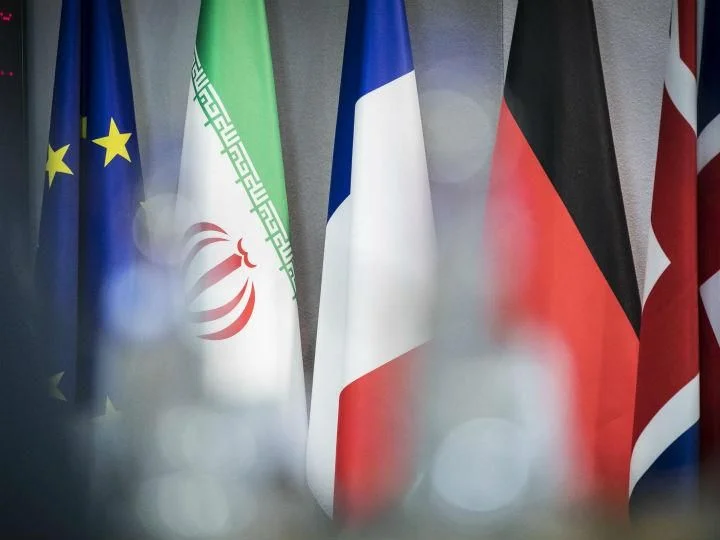
Background of Nuclear Diplomacy and Naval Presence
Discussions between the U.S. and Iran regarding Iran's nuclear program have been ongoing, though they have faced difficulties.

Recent Talks: Indirect talks between U.S. and Iranian diplomats about Iran's nuclear program resumed in February 2026. These talks, held in Oman, focused on establishing a path for future negotiations. Iran has stated its discussions would solely concern its nuclear program.
U.S. Secretary of State's Stance: U.S. Secretary of State Marco Rubio indicated that the talks should address a broader range of issues.
Uncertainty: The exact terms Iran is prepared to negotiate remain unclear.
Past Conflicts: These renewed diplomatic efforts come after a war between Iran and the U.S. the previous year.
Escalating Military Posturing
Both nations have recently increased their military presence in key waterways, a tactic described as "gunboat diplomacy."

Iranian-Russian Drills: On Thursday, Iran conducted joint military exercises with Russia.
These operations took place in the Gulf of Oman and the Indian Ocean.
The drills involved Iranian forces and Russian sailors.
U.S. Naval Deployment: Simultaneously, the U.S. has brought another aircraft carrier closer to the Middle East. This action can be interpreted in different ways.
It could be seen as a display of strength or a signal of potential force.
Is this intended to deter Iran, or could it be perceived as a move that increases the risk of conflict?
The Concept of Gunboat Diplomacy
The current situation evokes historical instances of "gunboat diplomacy," a strategy where naval power is used to influence political outcomes rather than relying solely on negotiation.

Historical Parallel: This approach draws parallels to historical events where warships were deployed to exert pressure.
Perception of Coercion: Tehran might view the U.S. naval movements not as a deterrent, but as a step towards potential attack.
Strategic Calculations: The U.S. appears to be seeking ways to exert pressure without resorting to war, balancing its actions between strong public statements and strategic realities.
Iran's Nuclear Advancements and International Concerns
Iran's nuclear program has been a central point of discussion and concern for the international community.
Read More: FIFA Congress: Palestinian official refuses handshake with Israeli counterpart
Technical Progress: Despite efforts to limit its program, Iran has made technical advancements, particularly in uranium enrichment.
Does this mean Iran is technically closer to developing nuclear weapons, even if a new agreement is reached?
Regional Arms Race: Other countries in the region, such as Saudi Arabia, have stated intentions to develop their own uranium enrichment capabilities if Iran proceeds.
Challenges to Agreements: The advancements made by Iran and a perceived decrease in U.S. credibility are seen as factors that make securing verifiable nuclear agreements more challenging.
Reported Casualties: Reports from within Iran have noted anti-government chants during mourning ceremonies, with the government reporting a death toll of 3,117 people in related violence.
Expert Analysis and Perspectives
Analysts offer various viewpoints on the current diplomatic and military climate.
"Gunboat Diplomacy" as Coercion: Some view the U.S. naval presence as an attempt to use coercion without initiating a full-scale war. This strategy attempts to leverage power while operating within constraints and managing political risks.
Revolutionary Guard Dynamics: The operational environment for Iran's Revolutionary Guard commanders is described as being under intense pressure, with limited communication and a culture that leans towards brinkmanship.
Iran's Position on Talks: Iran has consistently maintained that any discussions would focus exclusively on its nuclear program. However, the U.S. has expressed a desire to broaden the scope of these negotiations.
Current Status and Future Outlook
The convergence of naval displays and stalled nuclear talks creates a precarious situation.
Stalled Negotiations: The diplomatic path concerning Iran's nuclear program appears to be at a standstill, with disagreements over the scope of discussions.
Increased Military Presence: Both the U.S. and Iran are employing naval power, a move that historically signifies heightened tensions and a reliance on force over dialogue.
Mistrust Lingers: Iran has indicated that alongside its nuclear program, addressing mutual mistrust will be a key element for any future talks, especially with ongoing threats from former President Trump.
U.S. Accusations: In parallel to its nuclear diplomacy with Iran, the U.S. has accused China of conducting a secret nuclear test. This adds another layer of complexity to the global nuclear landscape.
Key Events Timeline:| Event | Date (Approximate) | Description || :————————————- | :————————- | :———————————————————————————————————————————————————— || U.S. Nuclear Treaty Expires | Feb 7, 2026 | A key nuclear arms treaty between the U.S. and Russia expired. || Iran-U.S. Indirect Talks | Feb 6-7, 2026 | U.S. and Iranian diplomats held indirect talks in Oman regarding Iran's nuclear program. || U.S. Naval Deployment | Early Feb 2026 | The U.S. moved an additional aircraft carrier closer to the Middle East. || Iran-Russia Military Drill | Jan 30, 2026 | Iran and Russia conducted joint military exercises in the Gulf of Oman and Indian Ocean. || U.S. Nuclear Diplomacy | Oct 2024 | Analysis suggests rethinking U.S. nuclear diplomacy with Iran in light of its advancements and diminished U.S. credibility. |
Sources Used
AP News: "Iran and the US lean into gunboat diplomacy as nuclear talks hang in balance." Published approximately 30 minutes ago. https://apnews.com/article/iran-us-russia-drill-nuclear-talks-aircraft-carrier-0456903e0d7a24cfcdc33d53732dee2f
Summary provided context on recent Iranian-Russian drills and U.S. naval movements in the context of stalled nuclear talks.
PBS NewsHour: "U.S. restarts nuclear diplomacy with Iran amid escalating threats. Here’s what to know." Published Feb 7, 2026. https://www.pbs.org/newshour/show/u-s-restarts-nuclear-diplomacy-with-iran-amid-escalating-threats-heres-what-to-know
Summary highlighted the restart of U.S.-Iran nuclear diplomacy following a war and mentioned U.S. accusations against China regarding nuclear tests.
CBS News: "Iran says talks with U.S. to continue, but adds mistrust to be addressed as Trump's threats linger." Published Feb 6, 2026. https://www.cbsnews.com/news/iran-us-talks-nuclear-negotiations-to-continue-despite-mistrust/
Summary provided details on the indirect talks in Oman, Iran's focus on its nuclear program, and the need to address mistrust.
European Business Review: "Trump’s ‘Armada’ to Iran and the Return of Gunboat Diplomacy." Published Feb 4, 2026. https://www.europeanbusinessreview.eu/page.asp?pid=7909
Summary offered analysis on the historical context and perception of "gunboat diplomacy" and its relevance to current U.S. naval deployments.
Iran International: "Gunboat diplomacy: US seeks coercion without war on Iran." Published Jan 29, 2026. https://www.iranintl.com/en/202601292772
Summary discussed the U.S. strategy of seeking coercion through naval presence without initiating war and the factors influencing this approach.
Arms Control Association: "Rethinking U.S. Nuclear Diplomacy With Iran for 2025." Published Oct 1, 2024. https://www.armscontrol.org/act/2024-10/features/rethinking-us-nuclear-diplomacy-iran-2025
Summary provided analysis on Iran's nuclear advancements and the challenges facing future nuclear agreements, including regional proliferation concerns.