

A Classified U.S. Intelligence Report Casts Doubt on Invasion's Effectiveness
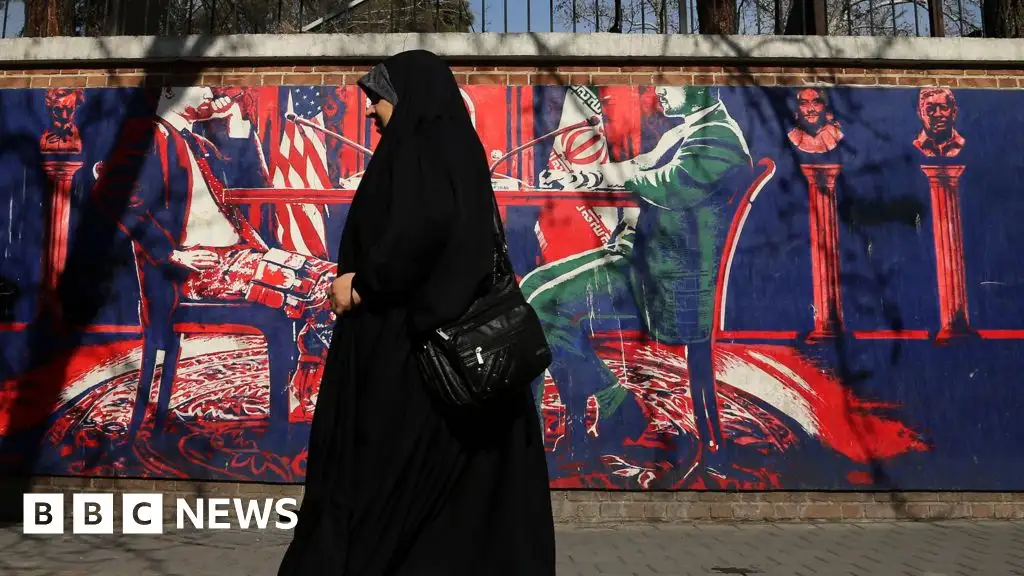
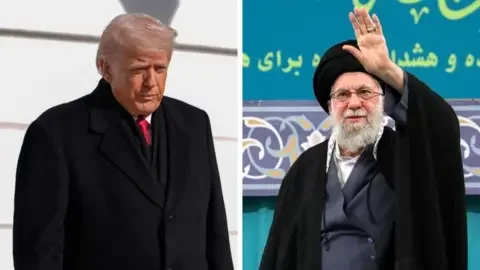
A recent classified U.S. intelligence assessment suggests that a large-scale ground invasion of Iran, whether prolonged or short-lived, is unlikely to result in the toppling of the current regime or the emergence of a viable opposition in power. This report highlights significant skepticism within U.S. intelligence circles regarding the efficacy of military intervention as a tool for regime change in Iran. The findings directly challenge the stated maximalist aims of the current U.S. administration, particularly President Trump's stated desire for regime change.
== The core assertion is that even a significant U.S. military commitment on the ground may not achieve the desired political outcome of removing the existing Iranian government. ==
Geopolitical and Logistical Hurdles of a Ground War
The sheer scale and geography of Iran present formidable obstacles to any invading force. Iran's territory offers natural defensive barriers, complicating a military advance. Beyond the physical terrain, the United States faces significant logistical challenges. Military analyses indicate that the U.S. does not possess sufficient deployable ground troops to effectively occupy and govern a country of Iran's size for an extended period.
Read More: Trump Hosts Fundraiser at Mar-a-Lago During Iran Missile Strikes Saturday
Territorial Vastness: Iran's immense size requires a substantial and sustained military presence for occupation and governance, a capability reportedly lacking.
Natural Defenses: The country's geography provides inherent defensive advantages against external forces.
Economic and Strategic Costs: A protracted conflict is projected to incur immense economic and strategic costs, raising questions about long-term sustainability.
Political Realities and the Ambiguity of "Major Combat Operations"
The prospect of a ground invasion is further complicated by profound political divisions within the U.S. Congress regarding Iran policy. Distinguishing between air campaigns and ground invasions is crucial, as the latter involves hundreds of thousands of personnel over extended durations. The current U.S. military actions, described as "Major Combat Operations," have thus far relied predominantly on air strikes, a strategy exemplified by the "Operation Epic Fury" campaign undertaken by the U.S. and Israel.
Congressional Division: Deep disagreements exist within the U.S. legislative branch concerning the approach to Iran.
Nature of Operations: A ground invasion entails a vastly different scale of commitment compared to air campaigns.
"Operation Epic Fury": This ongoing U.S.-Israeli operation has primarily involved aerial bombardment.
Regional Implications and Strategic Chokepoints
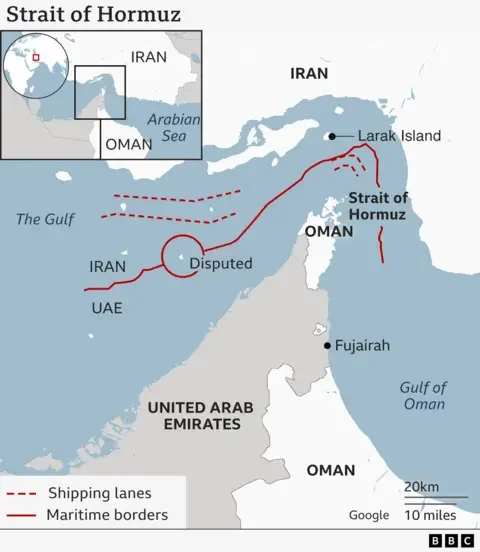
Any U.S. military action in Iran carries significant regional implications. U.S. allies in the Persian Gulf are reportedly experiencing considerable anxiety, fearing potential repercussions. The Strait of Hormuz, a critical chokepoint situated between Iran and Oman, remains a strategic vulnerability that could be impacted by escalating conflict. Furthermore, the Islamic Revolutionary Guard Corps (IRGC) is deeply integrated into Iran's economic structure, suggesting that economic repercussions would be widespread and potentially destabilizing.
Read More: Illinois Candidates Use Social Media Winks for Crypto and AI Funds
Neighboring State Anxiety: U.S. allies in the Gulf are concerned about the fallout from military action.
Strait of Hormuz: This vital maritime passage is a potential flashpoint.
IRGC's Economic Role: The deep involvement of the IRGC in Iran's economy signifies complex interdependencies.
Escalation and Uncertain Endgames
President Trump has not explicitly ruled out the deployment of ground troops, though some experts anticipate targeted special operations rather than a full-scale invasion. The potential for escalation is significant, with at least six U.S. service members reported killed in the ongoing conflict. The strategic objective of regime change, while openly stated, is viewed by some as a gamble that could lead to a much larger and more costly war than anticipated. Without a direct U.S. presence on the ground, Washington would likely need to depend on regional partners to support opposition elements within Iran.
Ambiguous Presidential Stance: President Trump's position on ground troops remains unconfirmed.
U.S. Casualties: The conflict has already resulted in American fatalities.
Regime Change as a Risky Objective: The pursuit of regime change is seen as potentially leading to unintended consequences and broader conflict.
Reliance on Partners: In the absence of a ground presence, the U.S. may rely on allies for support of Iranian opposition groups.
Background
The current military engagements follow a period of heightened tensions and a shift in U.S. policy towards Iran. President Trump's administration has consistently articulated a desire for a different outcome in Iran, moving beyond containment to actively seeking the dismantling of the existing government. This stance has been met with both domestic political debate and international apprehension, particularly from European allies who face difficult diplomatic choices. The intelligence assessment that a ground invasion may not achieve the desired regime change introduces a critical layer of doubt into the strategic calculus, suggesting a potential mismatch between stated objectives and realistic military outcomes. The complex web of regional alliances, Iran's internal dynamics, and the sheer logistical and political challenges inherent in occupying a nation of Iran's size all contribute to the uncertainty surrounding the potential long-term consequences of continued military engagement.
Read More: India lets Iranian warship dock in Kochi for repairs on humanitarian grounds