

Researchers are developing advanced protein-screening tools and leveraging naturally occurring bacterial proteins to more efficiently extract and separate rare-earth elements (REEs), a move that could bolster domestic supply chains and reduce reliance on foreign sources. These biological methods offer a potentially greener and more selective approach compared to traditional mining and separation processes, which are often environmentally taxing and costly. The push is driven by the critical need for REEs in modern technologies, from electronics and magnets to clean energy systems and defense applications.

Biological Pathways to REE Independence
The core of this developing strategy lies in understanding and harnessing specific proteins, particularly lanmodulin proteins, which are found in bacteria that metabolize REEs. These proteins demonstrate a remarkable ability to bind to and differentiate between various rare-earth elements. Scientists at Lawrence Livermore National Laboratory (LLNL) and Penn State University have been instrumental in isolating and characterizing these proteins.
Read More: Blue Plaque for Astronomer Cecilia Payne-Gaposchkin in London

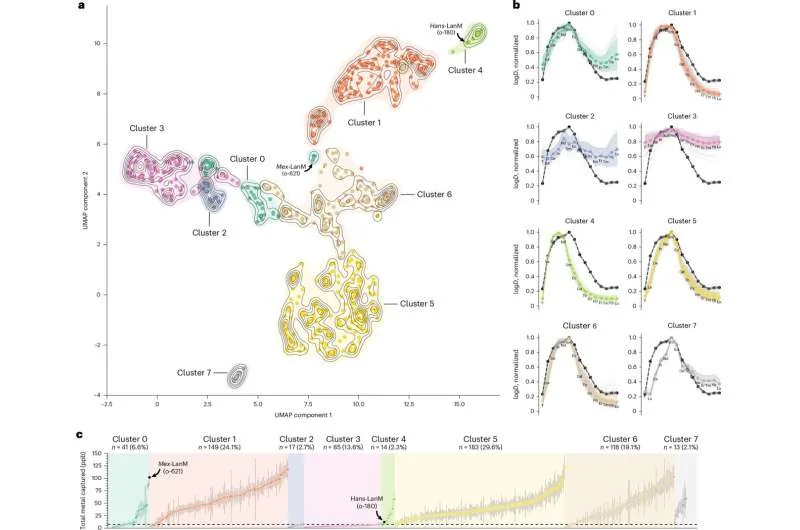
Recent advancements, exemplified by the SpyCI-LAMBS platform developed at LLNL, allow for faster screening of these proteins. This tool can identify novel proteins capable of separating challenging REE mixtures, sometimes in a single step.
This speedier screening process has revealed connections between a protein's genetic code (amino acid sequence) and its selectivity for specific REEs. This insight could lead to the engineering of even more effective separation agents.
The discovery of proteins that bind only to REEs, as found by Penn State researchers working with the bacterium Methylobacterium extorquens, offers a significant leap forward. Previously, REE separation was a complex, multi-stage process.
These bio-based methods hold the promise of adapting natural biological mechanisms for industrial-scale recovery and separation of REEs.
Addressing Supply Chain Vulnerabilities
The United States currently imports the majority of its REE needs, a dependency that creates vulnerabilities in its technological and defense sectors. REEs are not rare in terms of abundance but are dispersed in low concentrations, making traditional extraction difficult.

The development of these protein-based separation techniques is seen as a crucial step towards establishing a more resilient domestic supply chain.
Researchers envision using these methods to extract REEs from unconventional sources, such as industrial waste and electronic debris, reducing the need for extensive new mining operations. This "urban mining" approach could simultaneously address waste management and resource acquisition.
Companies like Alta Resource are actively pursuing commercialization of these biochemical separation technologies, having secured significant funding to advance pilot projects, with partnerships linking LLNL and Penn State breakthroughs.
A Greener Horizon for Critical Minerals
Traditional methods for REE extraction and separation are often energy-intensive and can generate substantial environmental waste. The biological approach offers a more sustainable alternative.
The ability of these proteins to differentiate REEs not only from other metals but also among themselves is a key advantage, enabling the production of purer rare-earth compounds.
This research aligns with broader initiatives, such as those supported by the MIT Climate Project, which focus on building secure and flexible critical mineral supply chains through innovative methods, including bio-based separation.
The challenge of processing REEs remains a significant hurdle, even with advancements in extraction. While Lynas Rare Earths operates a facility outside China, developing more efficient and domestically controlled processing remains a priority.


