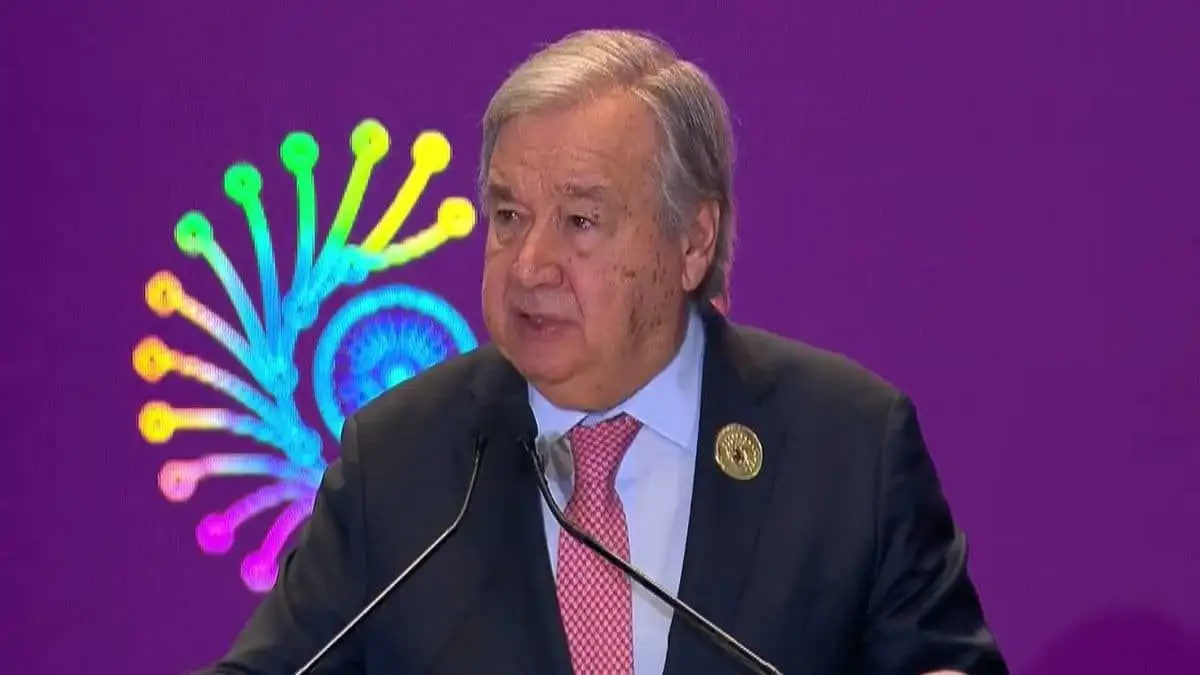
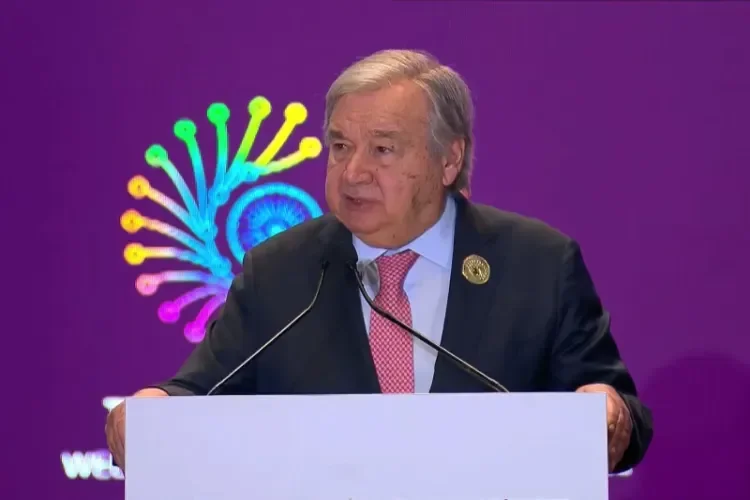
United Nations Secretary-General Antonio Guterres has issued a strong appeal for inclusive global governance of Artificial Intelligence (AI). Speaking at an AI summit in India, Guterres stated that the future of AI cannot be shaped solely by a small number of wealthy individuals or nations. He proposed a $3 billion global fund to ensure widespread access to AI technology and called for international cooperation to prevent potential harms like increased inequality and bias.

Calls for Inclusivity Amidst Rapid AI Advancement
The rapid development of Artificial Intelligence is transforming societies and economies worldwide. This pace presents both opportunities and risks, leading United Nations Secretary-General Antonio Guterres to advocate for a more equitable and globally representative approach to its governance. Guterres's remarks were made during an AI summit held in India, an event he acknowledged as significant for being the first in the Global South. He emphasized that AI's benefits must be shared broadly, rather than being concentrated in the hands of a few.
Read More: Chrome mimeHandler API lets extensions handle file types
Evidence of UN's Proactive Stance
The United Nations has been actively involved in shaping AI governance.

A global fund of $3 billion has been proposed to ensure open access to AI for all.
An Independent International Scientific Panel on AI was established at the UN General Assembly.
The Global Dialogue on AI Governance was launched, with its first session held in July.
The UN system is using AI internally to support innovation and address issues like gender inequality, discrimination, and bias.
The UN is committed to a proactive, ethical, and human rights-based approach to adopting AI.
Deep Dives
The Promise and Peril of AI
Guterres highlighted the dual nature of AI.
Potential Benefits:
Accelerating medical breakthroughs.
Expanding learning opportunities.
Strengthening food security.
Bolstering climate action and disaster preparedness.
Improving access to vital public services.
Potential Risks:
Deepening inequality.
Amplifying bias.
Fueling harm.
Exploitation, manipulation, and abuse.
The Call for a Global Fund
A central proposal from Guterres is the creation of a $3 billion global fund.
Purpose: To ensure open and equitable access to fast-advancing AI technology for everyone.
Rationale: Guterres described this as "a small price for AI diffusion that benefits all," stressing that AI must belong to everyone.
Support: He urged Member States, industry leaders, and civil society to contribute to this fund and its objectives.
Global South Leadership in AI Governance
The summit in India was noted by Guterres as a significant event.
India's Role: He congratulated India for organizing the event, describing it as the first AI summit in the Global South.
Inclusivity: This positioning underscores a call for a more globally representative dialogue on AI, moving beyond the dominance of a few major players.
Empowerment: Guterres stated that AI "must become a medium for inclusion and empowerment, particularly for the Global South."
Expert Analysis
Antonio Guterres, as the UN Secretary-General, is positioned to address global challenges and advocate for international cooperation. His statements reflect a growing concern among international bodies regarding the concentration of technological power and its potential impact on global disparities. The UN's proposed initiatives, such as the scientific panel and the dialogue on governance, indicate a structured effort to navigate the complexities of AI development and deployment on a worldwide scale.
Conclusion and Implications
United Nations Secretary-General Antonio Guterres's address at the India AI summit signals a critical juncture in the global discourse on Artificial Intelligence. His warning against AI being dictated by the "whims of a few billionaires" and a call for universal access through a $3 billion global fund underscore a deep concern for equity and inclusion. The UN's efforts to establish scientific advisory bodies and foster dialogues on AI governance are proactive steps. The challenge lies in translating these calls into concrete, collaborative actions that ensure AI development serves humanity broadly, rather than exacerbating existing inequalities. The leadership role acknowledged for India and the Global South in this discussion is also a notable aspect, suggesting a shift towards more diverse participation in shaping AI's future.
Read More: UN Panel Warns AI Risks Grow Faster Than Science and Rules
Sources Used:
The Hindu: Published on February 19, 2026. Discusses Guterres's warning about AI risks and the call for a global fund for open access. https://www.thehindu.com/sci-tech/technology/ai-summit-india-un-chief-antonio-guterres/article70650495.ece
UN News: Published about 1 hour ago. Details Guterres's call for a global fund to support AI access for all and mentions UN efforts in AI governance. https://news.un.org/en/story/2026/02/1166996
The Economic Times: Published about 1 hour ago. Reports on Guterres's statement that AI cannot be left to a few billionaires and his call for a $3 billion fund. https://economictimes.indiatimes.com/ai/ai-insights/india-ai-impact-summit-ai-cannot-be-left-to-whims-of-a-few-billionaires-says-un-chief/articleshow/128539590.cms
Deccan Herald: Published 5 minutes ago. Highlights Guterres's view that AI's future should not be decided by a few countries or billionaires, and acknowledges India's leadership in hosting the summit. https://www.deccanherald.com/technology/artificial-intelligence/the-future-of-ai-cannot-be-decided-by-handful-of-countries-or-left-to-whims-of-few-billionaires-un-secretary-general-antonio-guterres-3904049
Republic World: Published 47 minutes ago. Covers Guterres's call for inclusivity in AI and the need for its future not to be left to a few billionaires. https://www.republicworld.com/india/ai-impact-summit-2026-un-s-antonio-guterres-gives-powerful-call-for-inclusivity-says-future-of-ai-cannot-be-left-to-whims-of-few-billionaires
Hürriyet Daily News: Published 6 hours ago. Reports Guterres's warning about AI risks and the call for a $3 billion fund for open access, emphasizing inclusion for the Global South. https://www.hurriyetdailynews.com/ai-cannot-be-left-to-whims-of-a-few-billionaires-un-chief-219104
Awaz The Voice: Published 6 hours ago. States that the UN chief warns against AI being controlled by a few and highlights the transformative pace of AI, stressing the need for multilateral cooperation. https://www.awazthevoice.in/india-news/un-chief-warns-against-ai-controlled-by-few-51960.html