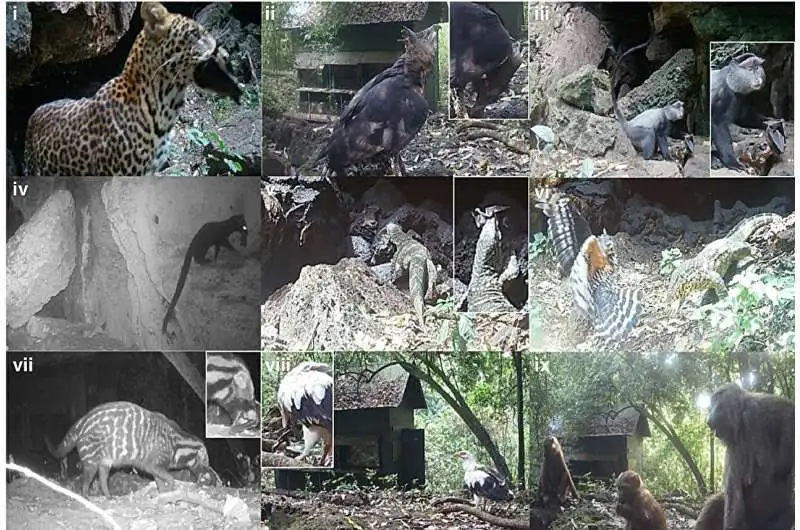
Recent findings at Uganda's Python Cave offer a stark, visually documented illustration of how deadly viruses like Marburg could jump from bats to other animals, and subsequently, to humans. Camera traps deployed over four months captured a disturbing panorama of at least 14 different animal species, including leopards, monkeys, eagles, and monitor lizards, repeatedly feeding on or scavenging bats known to carry the Marburg virus. This unprecedented footage provides crucial, large-scale visual evidence of potential viral transmission pathways in a natural setting.
The sheer volume and variety of predator-prey interactions observed within the cave, a known reservoir for the Marburg virus, directly implicate it as a critical interface for zoonotic disease emergence.
The research, spearheaded by Ugandan undergraduate Bosco Atukwatse and conducted by teams including the Volcanoes Safaris Partnership Trust and the Kyambura Lion Project, was initially focused on surveying large predators. However, their cameras revealed a more profound ecological dynamic. The recorded instances—261 predator encounters initially, later totalling 320—paint a complex picture of how viruses can move through ecosystems. Researchers noted that while direct bat-to-human transmission might be less common due to typical human infectiousness occurring with severe illness, the presence of intermediary species like monkeys, which have demonstrated Marburg exposure in East Africa, presents a more facile route for human infection.
Read More: India IVF Costs And Social Barriers Limit Access In April 2026
Further complicating the risk profile is the cave's accessibility to humans. The footage also documented 214 human visitors, including tourists and school groups, within the cave system. This presence raises immediate concerns about direct contact with bats or bat guano, potentially exposing humans to the virus. Recommendations have been made to require protective clothing for tourists visiting the site.
The Python Cave's role as a Marburg virus reservoir has been scientifically confirmed, with previous studies detecting the virus in its bat population. The recent footage adds a critical dimension by illustrating the ecological mechanisms that facilitate its spread beyond the bat colony.
Read More: Orangutan Mothers Plan Playdates for Babies in Borneo
A Broader Context of Viral Threats
While the focus has been on Marburg, the Python Cave situation underscores a larger, evolving threat. The report from April 13, 2026, notes that Marburg virus outbreaks are increasingly appearing in regions previously unaffected, and mentions the potential for avian influenza strains to develop airborne human-to-human transmission. The presence of "other zoonotic potential pandemic agents, known and unknown" at human-animal interfaces, such as the bat guano observed coating the cave walls, signifies that such locations are complex, multi-faceted risks. The theoretical depictions of viral spread are now being supplanted by actual, filmed evidence, shifting the understanding of how pandemics can originate.