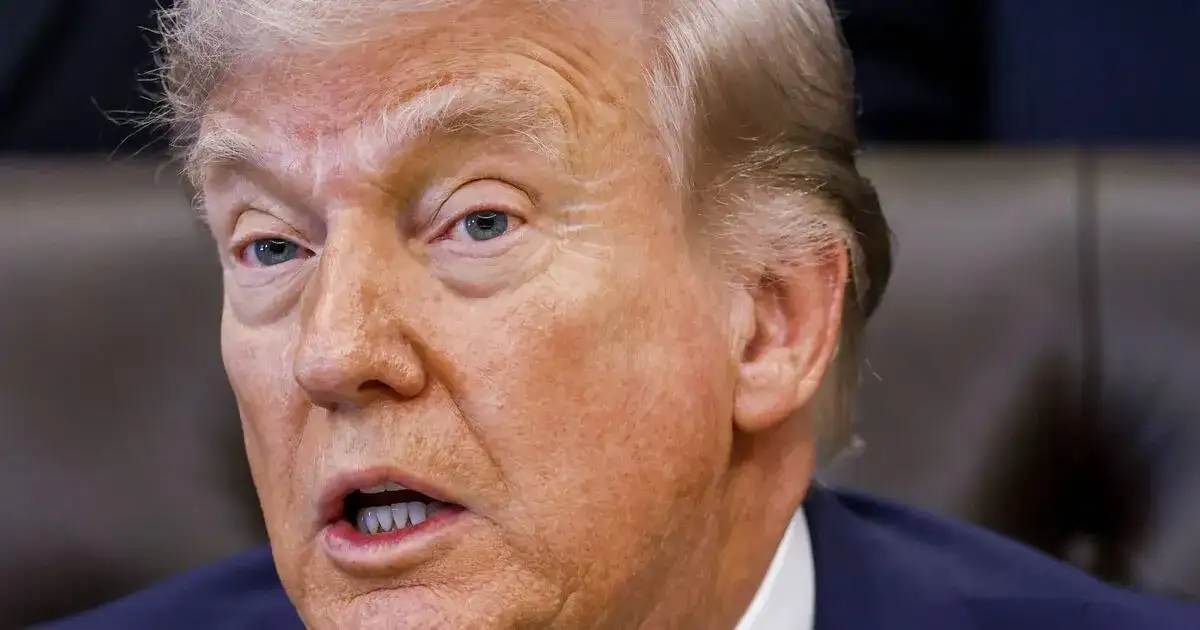
President Donald Trump has informed Congress that ongoing hostilities with Iran have "terminated" due to a ceasefire, asserting this obviates the need for lawmakers' approval for continued military action. Trump communicated this to congressional leaders, stating, "There has been no exchange of fire between the United States Forces and Iran since April 7, 2026." This declaration comes as the 60-day limit, stipulated by law for the president to seek congressional authorization for military engagement without such approval, elapsed on Thursday.
The White House, through Defense Secretary Pete Hegseth, has also indicated that the 60-day clock on seeking congressional approval has been paused. Trump's assertion frames the current situation as a de-escalation, arguing that the conflict, which he claims began on February 28, 2026, has concluded. This move effectively challenges Congress's oversight role under the War Powers Resolution, a post-Vietnam era law limiting the deployment of U.S. forces abroad without legislative backing.
Read More: Trump Says Iran Hostilities Ended, Avoids Congress Vote
Congressional Deadline Reached Amidst Shifting Definitions
The legal framework in question requires presidents to either withdraw forces or obtain Congressional approval within 60 days of formally notifying lawmakers of military action. Trump's administration notified Congress of strikes against Iran on March 2, 2026, setting May 1st as the critical juncture under the War Powers Resolution. However, Trump's latest communication suggests a deliberate reframing of the conflict's status to circumvent this requirement.
The administration's argument hinges on the notion that a ceasefire suspends the urgency of the deadline. This tactic has been employed by previous administrations, who have also contended that congressional authorization was not always necessary for military engagements. The debate underscores a persistent tension between executive authority in matters of national security and legislative prerogative.
Context of the Iran Conflict
The U.S. military strikes on Iran, which the Trump administration launched without initial congressional approval, have been ongoing. The 60-day mark under the War Powers Resolution represented a potential turning point, prompting discussions within Congress about scheduling votes on a formal war authorization.
Read More: US Pulls 5,000 Troops From Germany Due to Iran Conflict
While Congress has historically struggled to effectively utilize the War Powers Resolution to terminate military campaigns, it has often served as a political constraint on presidential actions. The administration's current stance, coupled with Trump's past remarks suggesting the War Powers Resolution would not impede his leadership, points to a broader strategy of asserting executive control over foreign policy decisions.
The situation presents Congress with choices regarding its next steps, potentially involving resolutions or other legislative actions to assert its constitutional role. The conflict's progression, whether through a negotiated settlement, continued engagement, or an extended state of ambiguity, remains uncertain.