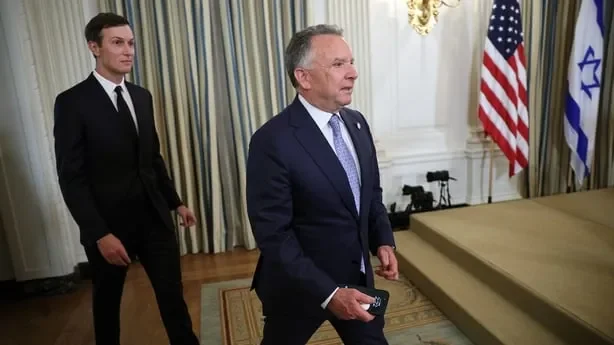
President Donald Trump has abruptly canceled a planned trip by U.S. envoys Jared Kushner and Steve Witkoff to Pakistan, signaling a shift in U.S. diplomatic efforts regarding the ongoing conflict with Iran. The cancellation comes as the Iranian Foreign Minister Abbas Araghchi concluded his own talks in Islamabad with Pakistani officials.

Trump stated that the trip was being called off due to "too much time wasted on traveling, too much work!" He also asserted that the U.S. "have all the cards, they have none." The move follows Iran's Foreign Minister Araghchi's departure from Islamabad, casting further uncertainty on the prospect of direct negotiations between Washington and Tehran.

The U.S. special envoys were expected to travel to Pakistan for ceasefire talks with Iran. However, Iran's top diplomat had already departed the country after approximately 20 hours of discussions with senior Pakistani leadership, including Prime Minister Shehbaz Sharif.
Read More: Trump Cancels Pakistan Trip; Iran Doubts US Peace Talk Seriousness

Trump’s decision was announced via his social media platform, Truth Social, and subsequently confirmed in statements to Fox News. He indicated that Iran could initiate contact if they wished to negotiate, stating, "all they have to do is call." This assertion appears to contradict earlier reports suggesting the rounds of negotiations were requested by the Iranians.
The conflict, which began with U.S.-Israeli airstrikes on Iran on February 28, has seen the Strait of Hormuz subjected to a de-facto blockade by Iran. Oil prices have remained elevated since the war's commencement. Despite the ongoing hostilities, a ceasefire has been in effect.
In a separate development, the Israel Defense Forces reported killing 15 Hezbollah fighters in southern Lebanon, even as a three-week extension of a ceasefire in that region remains in place. This occurs amidst reports of attacks on journalists in Lebanon, including the death of Amal Khalil in an Israeli strike on April 22.
Read More: Mandelson Vetting Row: Official Refuses Evidence, Overruling Claim Surfaces