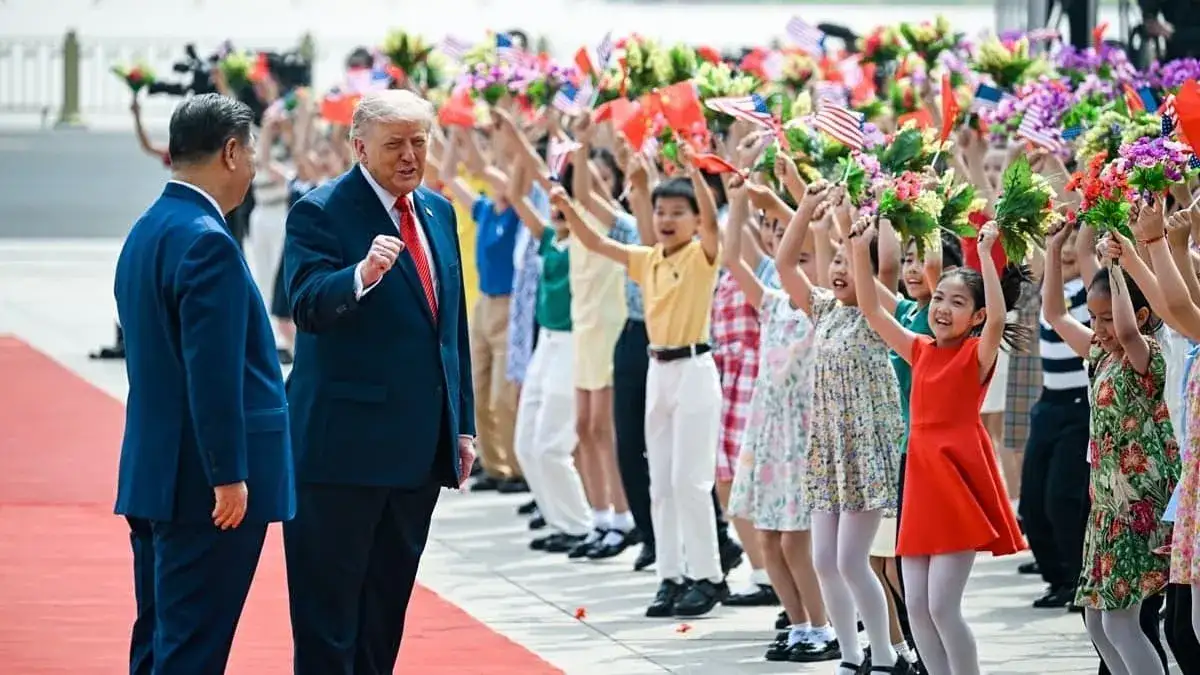
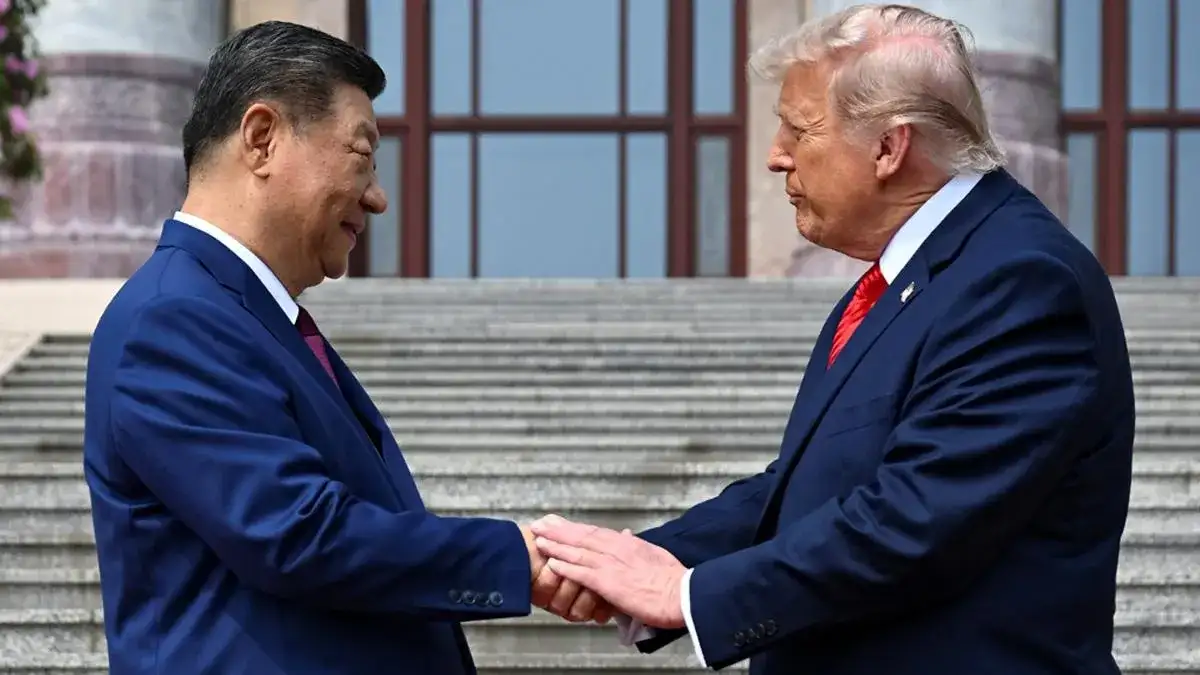
President Donald Trump’s journey to Beijing for a high-stakes summit with Xi Jinping features a robust delegation, signaling a pronounced emphasis on economic and commercial objectives. The entourage includes a significant contingent of top American executives from titans of industry such as Apple, BlackRock, Boeing, and Nvidia, alongside key administration officials. This assembly, arriving in China for meetings slated to shape future U.S.-China relations, underscores a strategy heavily invested in the intersection of statecraft and corporate might.
The summit, commencing on Thursday, is poised to tackle substantial issues including trade, investment, and the ongoing conflict in Iran. Treasury Secretary Scott Bessent is present, having conferred with China's Vice Premier He Lifeng in South Korea prior to the presidential meetings. The composition of Trump's group — a mix of cabinet members, tech billionaires, and Wall Street leaders — suggests a deliberate projection of American economic influence and a potential avenue for securing business agreements.
Read More: Xi Warns Trump: Taiwan Issue Could Cause US-China Conflict
Among the prominent business figures traveling with the President are:
Elon Musk of Tesla
Jensen Huang of Nvidia
Tim Cook of Apple
Larry Fink of BlackRock
Stephen Schwarzman of Blackstone
David Solomon of Goldman Sachs
Government officials accompanying Trump include Secretary of State Marco Rubio and Defense Secretary Pete Hegseth. The delegation’s formation has also drawn attention for those not included, such as First Lady Melania Trump, who is not attending the Beijing trip.
Economic Underpinnings and Geopolitical Currents
The presence of figures like Elon Musk and Jensen Huang, whose companies operate significantly within the Chinese market and navigate complex technological trade relations, highlights the delicate balance of U.S. economic interests abroad. Huang’s involvement, in particular, comes amid ongoing discussions regarding sales of advanced AI chips to China, a point of contention and strategic importance. The inclusion of numerous CEOs from financial institutions and manufacturing giants further cements the trip’s focus on bolstering economic ties and exploring avenues for expanded cooperation, as indicated by statements from Beijing regarding discussions on "major issues concerning bilateral relations and world peace and development."
Read More: NDIS Reforms Called 'Immoral' Amid Tax Overhaul Opposition
A Familiar Dynamic: Business and Family
The composition of the delegation also reflects the ongoing intertwining of the Trump family’s business interests with official U.S. foreign policy. The Trump Organization is reportedly represented, suggesting the trip serves not only national economic objectives but also acts as a platform for the President's personal enterprise. This aspect has been noted by observers as a significant element of the presidential travel.
Background: The Road to Beijing
This summit marks a return to Beijing for Trump, with the current visit being the first by a U.S. president to the Chinese capital since his own 2017 trip during his initial term. The meetings, initially scheduled for March, were postponed due to the U.S. engagement in the Iran war, a conflict that continues to cast a shadow over broader international relations and diplomatic efforts. The overarching goal, as expressed by both Washington and Beijing, appears to be strengthening relations and mitigating potential hostility, though underlying geopolitical tensions, such as discussions around Taiwan, remain a persistent undercurrent.
Read More: Xi Jinping and Trump Meet in Beijing to Discuss Partnership