


President Donald Trump has stated that Americans should indeed worry about potential retaliatory attacks from Iran on U.S. soil.
The former president's admission, delivered with a hesitant "I guess," comes in the wake of recent U.S. military actions against Iran and follows the deaths of six U.S. service members in a drone strike abroad. When questioned by correspondent Eric Cortellessa for a TIME cover story titled 'Trump's War,' Trump acknowledged the possibility of on-home casualties, remarking, "Like I said, some people will die." He further contextualized this by stating, "When you go to war, some people will die."

This utterance has stirred significant unease, particularly among Democrats in Congress, who have expressed sharp criticism of Trump's judgment amid the escalating conflict. His comments also coincide with broader national security concerns, including the FBI monitoring potential threats from activated Iranian sleeper cells within the United States.
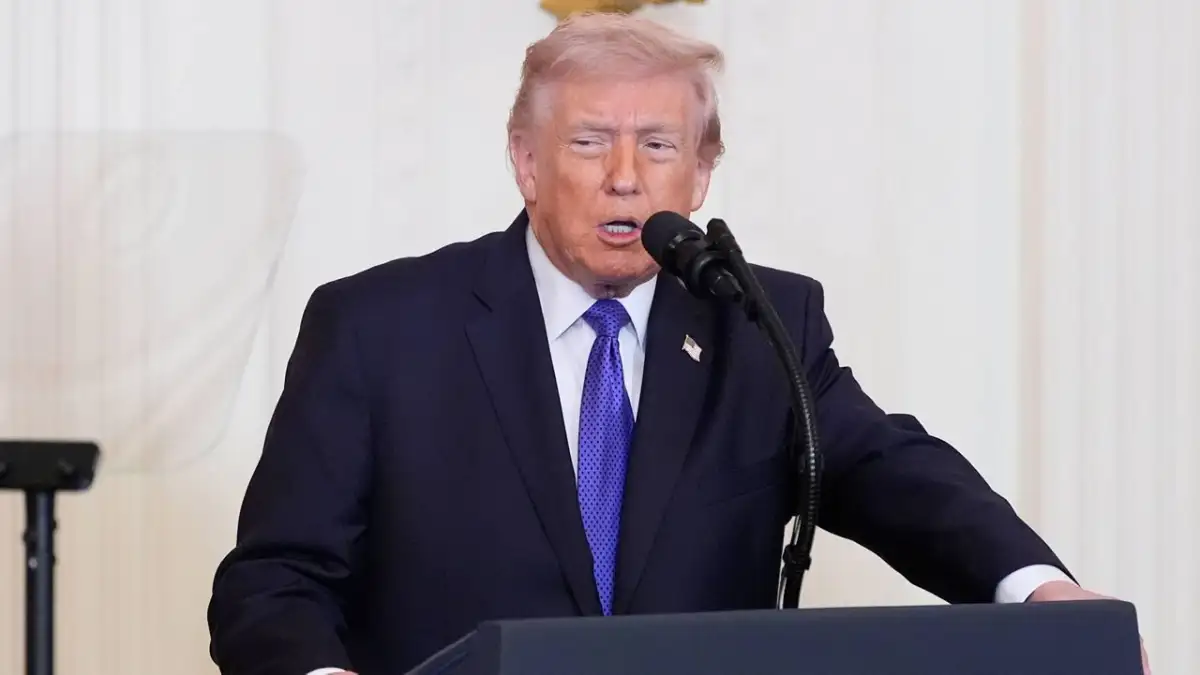
War's Unfolding Logic
Trump's assertion regarding the possibility of attacks on American soil was offered as a partial justification for initiating the current conflict. He claimed to have anticipated Iran's preemptive actions, which he suggested influenced his decision to accelerate U.S. and Israeli strikes. The projected duration of this engagement, according to Trump, was initially set for four to five weeks, though he has indicated a willingness to extend it should circumstances necessitate.
Read More: Jerusalem 300,000 Jewish Residents Can Now Seek Gun Licenses
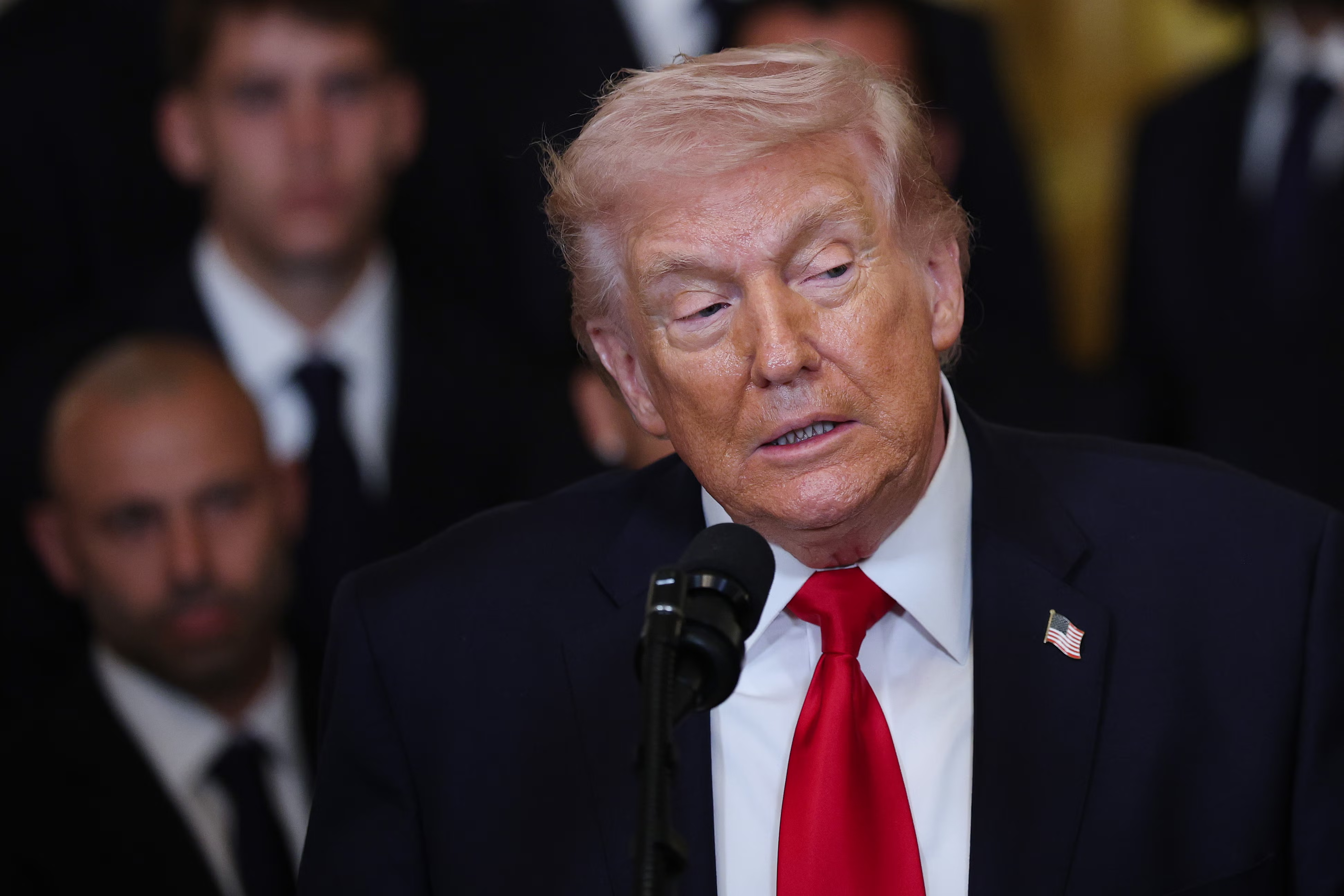
Context of Escalation
The former president's remarks were made against a backdrop of heightened international tension. Recent U.S.-Iran clashes abroad have amplified worries about the potential for broader engagement. These developments follow closely on the heels of a deadly drone strike that claimed the lives of six U.S. service members subsequent to a joint U.S.-Israel operation within Iran.
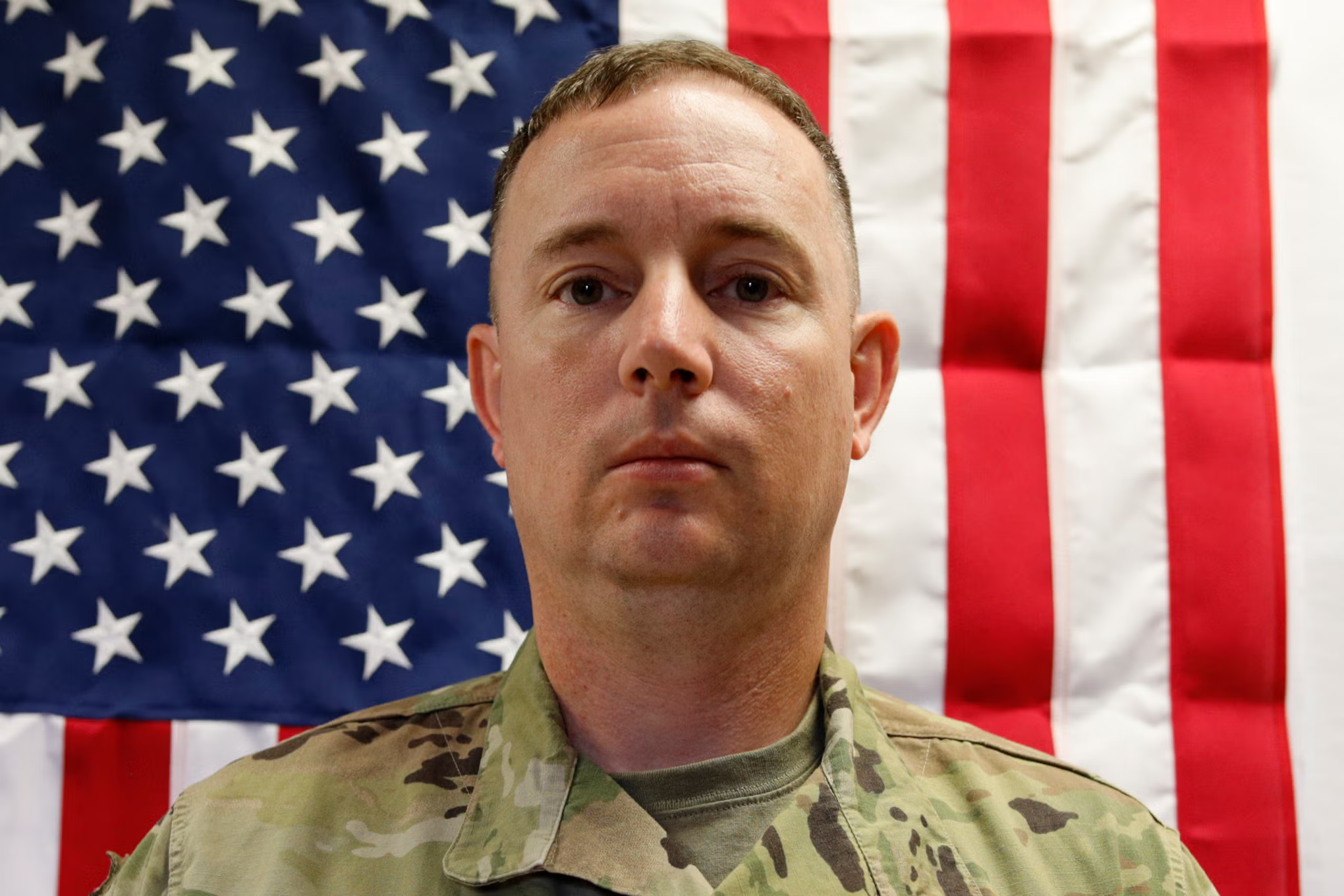
Domestic Disquiet
The pronouncement has ignited a firestorm of criticism, notably from Democratic lawmakers. They are lambasting Trump's perceived nonchalance regarding the safety of Americans on home turf. Senator Mark Kelly, a vocal critic, has publicly challenged Trump's handling of the situation, particularly in light of past disagreements over military orders. This dialogue underscores a broader unease about potential reprisal, a concern amplified by the FBI's ongoing vigilance regarding Iranian threats.
BACKGROUND
The escalating tensions between the United States and Iran have a complex history, rooted in geopolitical rivalries and strategic interests. The current situation is further complicated by stalled nuclear negotiations and a series of retaliatory actions that have drawn global attention. The possibility of Iranian retaliation on U.S. soil represents a significant escalation, prompting increased security measures and public apprehension.
Read More: Pakistan Navy Escorts Ships Through Strait of Hormuz Due to Middle East Crisis