


The Trump administration has been employing legal maneuvers, often through settlements with what some describe as "friendly adversaries," to enact policies that bypass the traditional legislative process. These actions aim to cement changes at the federal level, potentially enduring beyond his time in office.
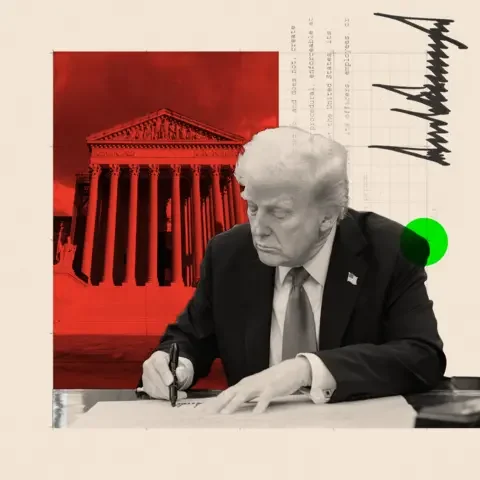
President Donald Trump's administration has initiated a strategy that allows it to pursue policy changes by circumventing the standard ' legislative process '. This approach appears to enable the ' administration to do an end run ' around Congress. In some instances, these legal strategies have permitted states to effectively disregard their own established laws, all without engaging the typical ' legislative pathway '.
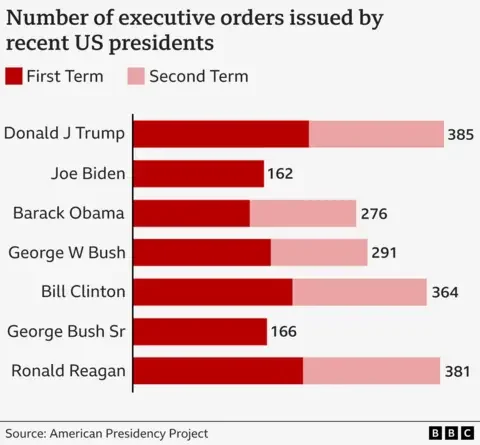
The administration's methods have drawn criticism, with some characterizing them as akin to throwing " spaghetti against the wall ". This involves testing various legal avenues as federal judges have repeatedly blocked ' Trump's policies '. The Solicitor General John Sauer has urged the Supreme Court to stop ' nationwide injunctions ' against the administration's directives.
Read More: Saudi Arabia Warns Iran Over Attacks, Pakistan's Stance Unclear
Escalating Rhetoric Amidst Legal Setbacks
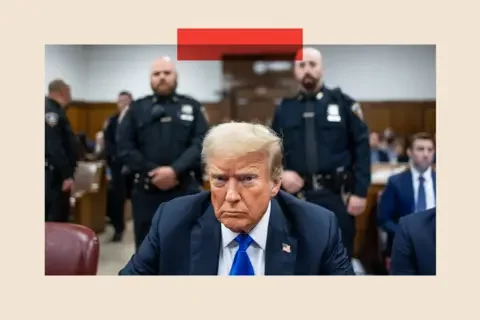
Amidst a series of legal challenges and setbacks, the Trump administration has intensified its public commentary targeting the courts. This escalation in rhetoric coincides with numerous instances where judges have issued orders blocking initiatives proposed by the ' Trump administration '. A spokeswoman for Trump stated that judges had issued 16 orders against Trump initiatives, contrasting this with 14 against a previous administration.
Executive Authority and Judicial Sparring
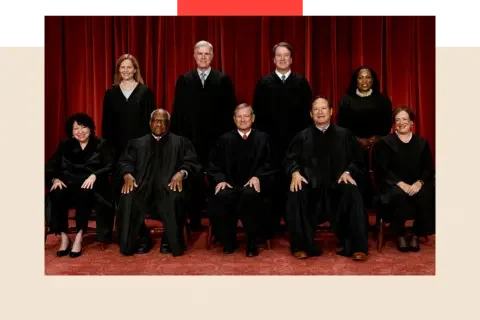
The ' executive and judicial branches ' are currently engaged in a dispute over the authority within federal courts. While ' executive orders ' are acknowledged as within a president's inherent powers, Trump has reportedly come close to ' defiance ' in certain situations.
One notable action was an ' executive order ' issued last year that prompted the Justice Department to withdraw from overseeing nearly two dozen police departments. Despite the heated rhetoric, the administration has, thus far, not openly defied any court order. The legal actions against its policies have generally followed established ' legal courses '.
Read More: NACC Robodebt Report Questions Public Service Integrity After Findings