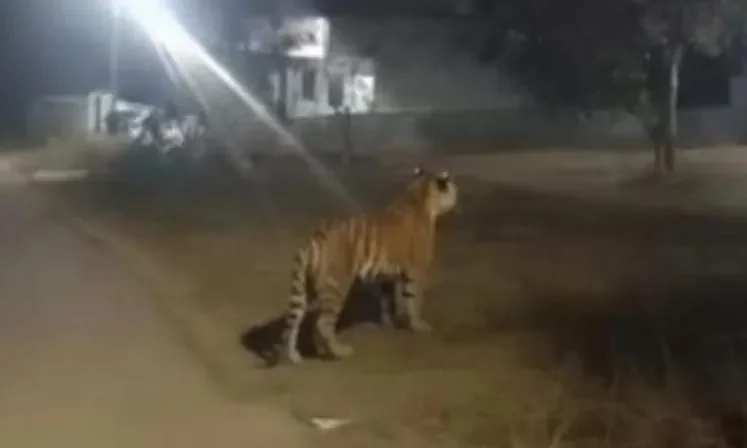
A shadow has fallen over Rajamahendravaram. The unmistakable silhouette of a tiger, a creature of the wild, has encroached upon the city's periphery, leaving a trail of fear and disruption. Schools are shuttered, communities are on high alert, and a palpable anxiety grips the air. But how did this magnificent predator find its way so close to human settlements? And more importantly, what does this signal about the health of our shared environment? This isn't just a story of a lost animal; it's a wake-up call to understand the complex interplay between expanding human activity and the shrinking wild.
The Enigmatic Journey of a Striped Wanderer
The recent sighting of a tiger near Rajamahendravaram, specifically on the outskirts at Diwancheruvu Reserve Forest, has thrown the region into a state of heightened alert. This isn't a mere stray animal; this is a creature undertaking a significant and concerning journey.
Read More: Red-footed Boobies Use Wind for Navigation, New Study Shows
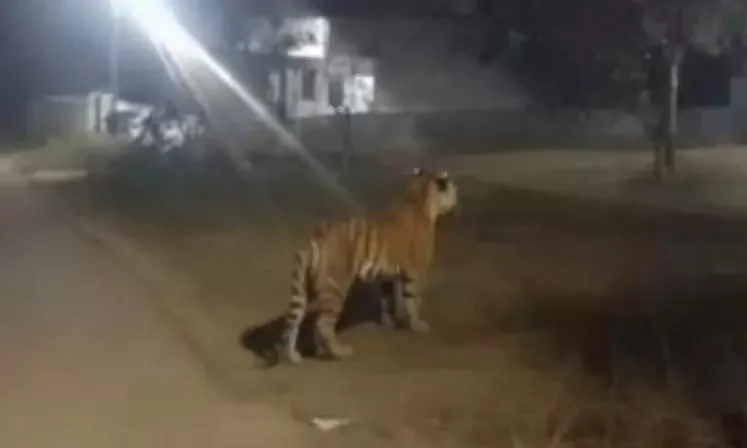
Timeline of Incursions: The tiger's presence has been noted across several locations, with escalating incidents.
Early February 2026: The tiger preyed on cattle in Torredu village, marking a significant proximity to human habitation.
February 1, 2026: The tiger was last seen in Torredu village, killing livestock.
Late January 2026: The tiger had previously created panic in the Eluru district, indicating a broader movement pattern.
Around September 2024: A separate incident involved a leopard on the prowl near Diwancheruvu West Reserve Forest, raising questions about the frequency of wildlife incursions in the area.
The "Wanderer": Forest officials believe this is a transient male tiger, a lone traveler. Its suspected origin is the Tadoba-Andhari Tiger Reserve (TATR) in Maharashtra.
The Godavari Crossing: A remarkable, and perhaps perilous, feat attributed to this tiger is its alleged crossing of the River Godavari. The prevailing theory suggests it used the Polavaram irrigation project as a passage to reach the Rajamahendravaram outskirts.
Impact on Daily Life: The immediate consequence has been the declaration of school holidays.
February 4, 2026: East Godavari District Collector Keerthi Chekuri declared holidays for schools within a five-kilometre radius of Diwancheruvu.
Previously, on Monday (February 3, 2026), a similar holiday was declared in the Torredu area.
"We should guide the tiger to return to the forest safely," a forest official stated, highlighting the immediate goal of wildlife management. But what guides a tiger from its natural habitat into densely populated fringes?
Echoes of Past Encounters: A Pattern of Intrusion?
This isn't the first time the delicate balance between wildlife and human settlements has been tested in this region, or even in neighboring areas. Understanding these past incidents provides crucial context for the current situation.
Eluru District Scare (January 2026): The same tiger that is now causing alarm in Rajamahendravaram had previously caused panic in Eluru district. This suggests a migratory pattern that predates its arrival in East Godavari.
Telangana's Tiger Trails (January 2026): Significantly, similar tiger movements were reported in Yadadri Bhuvanagiri district, Telangana, around the same time.
January 29, 2026: Pugmarks were found near Thirumalapuram, raising alerts.
January 17, 2026: Initial awareness of a tiger’s presence in Telangana stemmed from pugmarks found near Ibrahimpur.
This shared geographical and temporal pattern raises a critical question: Is this one tiger's expansive journey, or are there multiple big cats venturing out?
Mancherial School Closure (February 2025): A more distant, but telling, incident occurred in Mancherial, Telangana, where a tiger’s presence forced Sri Chaitanya School to declare a holiday. This earlier event underscores the recurring challenge of wildlife straying too close to educational institutions.
Leopard's Near Miss (September 2024): A leopard was sighted near Diwancheruvu West Reserve Forest, the same general area where the tiger has now been spotted. While a different species, it points to potential ecological pressures driving wildlife into proximity with Rajamahendravaram.
| Incident Location | Species | Date of Sighting/Activity | Primary Impact | Source of Incursion Theory |
|---|---|---|---|---|
| Rajamahendravaram Outskirts (Diwancheruvu) | Tiger | Early Feb 2026 onwards | School holidays, public alert | TATR, Maharashtra; crossed Godavari via Polavaram |
| Torredu Village | Tiger | Feb 1, 2026; Late Jan 2026 | Cattle kills, school holidays | TATR, Maharashtra; moved from Eluru |
| Eluru District | Tiger | January 2026 | Panic, alerts | Migratory from unknown origin |
| Yadadri Bhuvanagiri (Telangana) | Tiger | January 2026 | Panic, heightened alerts | Unknown origin, potential for wider dispersal |
| Mancherial (Telangana) | Tiger | February 2025 | School holiday | Drifted from nearby districts |
| Diwancheruvu West Reserve Forest | Leopard | September 2024 | Efforts to trap | Possible link to recent floods in Godavari valley |
These past events paint a picture not of isolated incidents, but of a recurring challenge. Why are these wild animals, particularly tigers, finding their territories encroached upon to the extent they are forced into such extensive, and dangerous, migrations?

The Forest Department's Tightrope Walk: Tracking and Taming
The Forest Department is engaged in a high-stakes operation, balancing public safety with the welfare of the elusive tiger. Their efforts are a race against time, and against the animal's unpredictable movements.
Intensified Operations: Forest officials have significantly stepped up efforts to track and capture the tiger, which has been on the move for the past 20 days across the Godavari districts.
Evidence of Movement: Crucial evidence comes from pugmark identification.
Pugmarks were found at Venkatanagaram and Chinakondepudi village in Seethanagaram mandal, confirming its presence on Sunday.
These markings were also spotted near Torredu village.
Expert Teams Deployed: The response includes multiple levels of forest officials.
District Forest Officer V. Prabhakara Rao and Range Officer David Raj Naidu are among those leading the operations.
Deputy Forest Range Officer Ch. Srinivasa Rao and his teams are actively involved.
Guidance and Containment: The strategy appears to be two-pronged:
Tracking: Continuous surveillance is underway.
Guidance: The aim is to "guide the tiger to return to the forest safely," according to forest range officer N. Ramanaiah. This suggests efforts to direct its path away from human settlements, possibly using bait or sound deterrents.
Public Advisory: A critical component is managing public perception and preventing panic.
Ms. Keerthi Chekuri has appealed to the public not to share fake videos and photos, as this exacerbates panic.
Movement towards farmlands has been restricted to prevent untoward incidents.
The department's confidence in eventually guiding the tiger back to its natural habitat is admirable, but it raises profound questions about the root causes that pushed it out in the first place. Is the forest effectively receding, or are there other factors at play?
Read More: Andhra Pradesh aqua farmers face higher feed costs and export issues

The Great Migration: Why Now? Why Here?
The tiger's journey from potentially Maharashtra to Andhra Pradesh, crossing a major river like the Godavari, is extraordinary and points to significant ecological shifts or pressures. Understanding the "why" behind this epic migration is key to preventing future conflicts.
Habitat Shrinkage and Fragmentation: The most plausible explanation for tigers venturing into human-dominated landscapes is the loss and fragmentation of their natural habitats. Deforestation, agriculture, and infrastructure development can break up contiguous forest areas, forcing animals to seek new territories or food sources.
Prey Scarcity: A decline in the tiger's natural prey (deer, wild boar) within their core territories could compel them to move towards areas where livestock is abundant, albeit risky.
Human-Wildlife Conflict: The report of a leopard in the same Diwancheruvu area in September 2024 suggests that wildlife is increasingly finding its way to the city's edge. Could the floods in the Godavari valley, as suggested in the leopard incident, have displaced prey animals or even the predators themselves, pushing them towards settled areas?
Population Dynamics: If the tiger is indeed from TATR, a well-known reserve, it could be a young male seeking its own territory. With established populations in protected areas, dispersal into new, unfamiliar, and potentially dangerous areas becomes a necessity for survival and reproduction.
Waterways as Corridors: The reported crossing of the Godavari River via the Polavaram project highlights how large-scale infrastructure can inadvertently create or alter wildlife corridors. While a marvel of engineering, such projects can also fragment habitats and change hydrological patterns, impacting wildlife movement.
The sheer distance and the crossing of a major river imply a compelling need driving this tiger. Is it a desperate search for food, a new home, or an escape from an uninhabitable original territory?

Unanswered Questions: A Call for Deeper Investigation
While the immediate focus is on ensuring public safety and guiding the tiger back, a critical examination of the underlying causes is imperative. The current situation demands more than just reactive measures; it calls for a proactive and investigative approach to environmental stewardship.
What specific ecological factors led to this tiger's prolonged migration from its presumed origin? Are we seeing a broader trend of tiger dispersal due to habitat degradation in core areas?
How has the Polavaram irrigation project, and other infrastructure developments along the Godavari, impacted wildlife corridors and movement patterns? Was this crossing facilitated or necessitated by such changes?
What is the health of the prey population within the Diwancheruvu Reserve Forest and surrounding areas? A lack of natural food sources would logically drive predators towards livestock.
Beyond the immediate sighting, what is the overall status of wildlife populations and their habitats in the East Godavari and neighboring districts? Is there a systemic issue of encroachment or degradation that needs urgent attention?
Why was the same tiger involved in incidents in Eluru district just weeks prior? This suggests a deliberate, sustained movement rather than a random straying, requiring a deeper understanding of its territorial drive.
Are forest department resources adequate for effective long-term monitoring and habitat management in this region, especially given the increasing frequency of such incursions?
The arrival of a tiger on the outskirts of Rajamahendravaram is not an isolated incident, but a potent signal of ecological distress and the growing friction between human development and wild nature. The current reactive measures, while necessary, fail to address the systemic issues driving such perilous migrations. We need a comprehensive investigation into habitat health, the impact of infrastructure, and the socio-ecological dynamics that push apex predators into our urban fringes. Only then can we hope to forge a more sustainable coexistence.
Read More: Nilambur Elephant Dies After 30-Meter Fall From Cliff Today
The Way Forward: Beyond Immediate Containment
The immediate goal of safely returning the tiger to a suitable habitat is paramount. However, this event should serve as a catalyst for a more profound and lasting change in our approach to wildlife conservation and environmental planning.
Ecological Assessment and Habitat Restoration: A thorough study of the tiger’s migratory path, prey base, and habitat conditions in both its origin and current location is essential. Efforts to restore and connect fragmented habitats should be prioritized.
Human-Wildlife Conflict Mitigation: Implementing and strengthening strategies such as improved livestock protection, community awareness programs on coexisting with wildlife, and rapid response teams to manage conflict situations are crucial.
Infrastructure Project Impact Assessment: Future infrastructure projects must undergo rigorous environmental impact assessments, with specific attention to their effect on wildlife corridors and habitats. The Polavaram project’s role in this incident warrants detailed study.
Inter-State Coordination: Given the tiger's likely origin in Maharashtra and its presence in Telangana and Andhra Pradesh, enhanced coordination between state forest departments is vital for tracking and managing such wide-ranging animals.
Public Education and Responsible Reporting: Continuous efforts to educate the public about wildlife behavior and the importance of not sharing unverified information are necessary to prevent unnecessary panic and to foster a supportive environment for conservation efforts.
The tiger’s presence is a stark reminder that our development choices have far-reaching consequences for the natural world. Ignoring these signals risks escalating conflicts and jeopardizing both human safety and the survival of these magnificent creatures. The time for comprehensive, forward-thinking solutions is now.
Sources:
The Hindu: https://www.thehindu.com/news/national/andhra-pradesh/tiger-enters-rajamahendravaram-city-outskirts-holiday-declared-for-schools/article70590077.ece
Deccan Chronicle: https://www.deccanchronicle.com/southern-states/andhra-pradesh/tiger-kills-three-cows-in-torredu-holiday-on-monday-for-schools-in-area-1934333
The Times of India: https://timesofindia.indiatimes.com/city/vijayawada/rajahmundry-villages-on-alert-after-tiger-sighting-schools-shut-today/articleshow/127846385.cms
The New Indian Express: https://www.newindianexpress.com/states/andhra-pradesh/2026/Feb/03/eg-forest-officials-step-up-efforts-to-track-capture-elusive-tiger
The Hindu (Leopard): https://www.thehindu.com/news/national/andhra-pradesh/leopard-on-the-prowl-near-rajamahendravaram-in-andhra-pradesh-authorities-launch-efforts-to-trap-it/article68618464.ece
The New Indian Express (Tiger Sighted): https://www.newindianexpress.com/states/andhra-pradesh/2026/Feb/02/tiger-sighted-in-torredu-village-near-rajamahendravaram-kills-cattle
The Hindu (River Crossing): https://www.thehindu.com/news/national/andhra-pradesh/tiger-crosses-river-godavari-returns-to-human-habitations-from-papikonda-national-park/article70577076.ece
Siasat: https://www.siasat.com/tiger-movement-reported-in-more-villages-in-telanganas-yadadri-district-3333536/amp/
Telangana Today: https://telanganatoday.com/tiger-forces-school-in-mancherial-to-declare-holiday
Sri Prakash Vidya Niketan: http://sriprakash.org/sri4/index.php/institutions/schools/spvn-rajamahendravaram