


A lone European robin has been observed in Canada, a significant event prompting questions about its presence. This occurrence marks the first recorded instance of this species within the country, raising curiosity among ornithologists and bird watchers alike.
Origins and Arrival
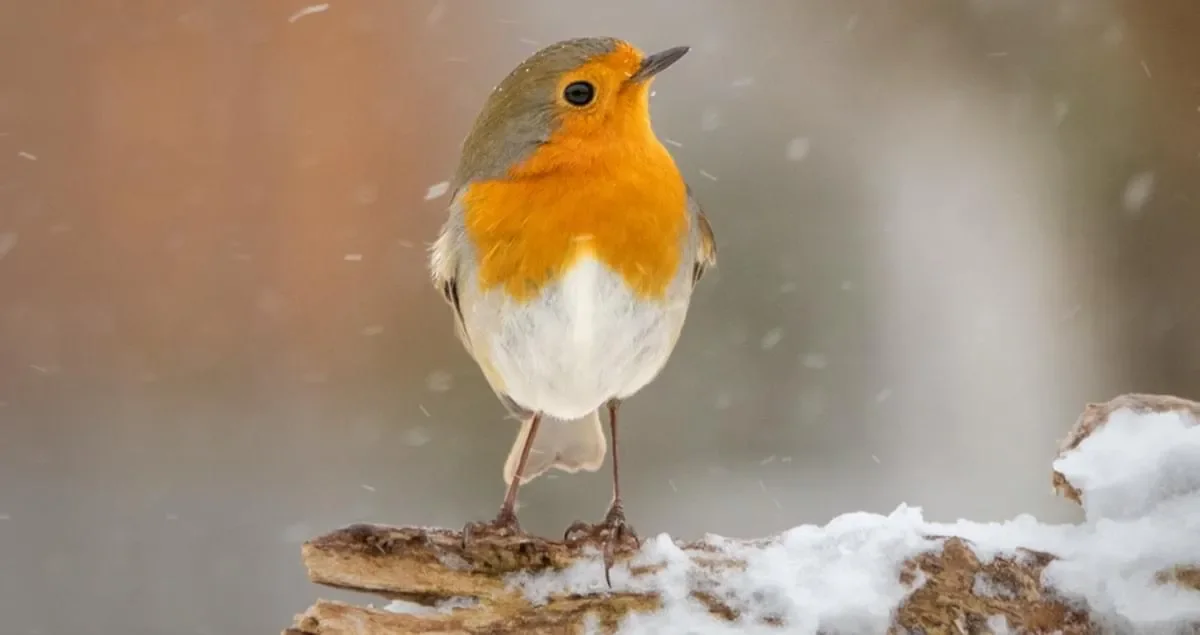
The sighting of a European robin (Erithacus rubecula) in Canada has drawn considerable attention. This species, native to Europe, is geographically distinct from the commonly found American robin (Turdus migratorius). The primary concern is understanding how this individual bird arrived so far from its usual range.

Differentiating the Species
While both are called "robins," these birds belong to different families and exhibit distinct characteristics.
| Feature | European Robin (Erithacus rubecula) | American Robin (Turdus migratorius) |
|---|---|---|
| Family | Old World flycatcher | Thrush |
| Size | Smaller | Larger (largest thrush in North America) |
| Chest Color | Bright orange-red | Brick-red |
| Back Color | Brown | Gray |
| Range | Europe | North America |
The presence of a European robin in Canada, a continent away from its native habitat, presents an unusual biological event.

Factors for Bird Migration and Range Extension
Several factors can contribute to birds appearing outside their typical geographical areas. Understanding these mechanisms is crucial for assessing the circumstances of the European robin's appearance in Canada.
Read More: Red-footed Boobies Use Wind for Navigation, New Study Shows
Natural Dispersal and Vagrancy
Birds, particularly young ones, may disperse far from their birthplaces.
Vagrancy, or the accidental movement of an individual bird outside its normal range, can be caused by factors such as severe weather events, which can push birds off course.
Sometimes, birds can become disoriented during migration, leading them to travel in incorrect directions.
Human-Assisted Movement
While less common for wild birds, accidental transport via ships or aircraft is a theoretical possibility for a bird appearing in a new continent. However, evidence supporting this for this specific sighting is absent.
Observations and Inquiries
The discovery of the European robin has spurred interest in how and why it arrived. Initial reports suggest that bird watchers feel a sense of concern, sometimes described as "feeling kinda bad," when such a solitary, out-of-place individual is observed.
What specific environmental conditions might have influenced this bird's unusual journey?
Are there any recorded instances of similar cross-continental vagrancy for this species?
Scientific Context
The European robin is a small, familiar bird found across Europe, known for its distinctive orange-red breast. Its typical habitat includes woodlands, gardens, and parks. The American robin, on the other hand, is a much more widespread and familiar bird throughout North America, inhabiting a variety of open habitats, including grasslands and suburban areas.
The European robin is a flycatcher, while the American robin belongs to the thrush family. This fundamental biological difference underscores the significance of the sighting.
European robins have been known to live up to 19 years, indicating a substantial lifespan for a bird. American Robins, in contrast, typically live for about two years in the wild.
Unanswered Questions
The presence of a European robin in Canada remains an anomaly.
Was this a singular event, or does it suggest a broader, undocumented pattern of dispersal?
What is the current status and condition of this individual bird?
Further observation and data collection are needed to understand the full implications of this unique sighting.
Sources:
Britannica: Provides general information on the European robin's habitat, appearance, and cultural significance.
Bird Watcher's General Store: Discusses the identification of different robin types, though its context on "Canadian robins" seems to refer to local populations rather than the European species.
iNaturalist: Details the seven subspecies of the American robin and notes its role as a potential carrier of West Nile virus.
American Robin (Sankofa Wetland Park & Nature Trail) · iNaturalist
Cardellina Substack: A personal essay referencing robins in a cultural context, noting a distinction between American and European robins in a film.
Hinterland Who's Who: Offers information on the American robin's behavior, nesting habits, and migration patterns, noting they migrate during the day.
Audubon Magazine: Presents fun facts about the American robin, including their mating rituals, migratory habits, lifespan, and nesting challenges.
Birds of the World (Cornell Lab of Ornithology): Provides scientific details on the European robin, including its scientific name (Erithacus rubecula) and subspecies, and field identification notes.
Britannica: Offers a broad overview of the term "robin" and mentions various species referred to by this name globally, including the scarlet robin in Australia.
Audubon: A field guide entry for the American robin, describing its physical characteristics, diet, and the typical appearance of young birds.
American Bird Conservancy: Distinguishes the American robin as a thrush and the European robin as a flycatcher, highlighting the American robin's status as a common North American songbird.
Stack Exchange (Outdoors): A forum discussion addressing the differences between European and American robins and whether European robins migrate to America.
Wikipedia: Provides entries for both the European robin and the American robin, though the extracted summaries were brief.
Cornell Lab of Ornithology (All About Birds): Offers an overview of the European robin.
European Robin Overview, All About Birds, Cornell Lab of Ornithology
Oiseaux.net: Lists the European robin (Erithacus rubecula), also known as the "Rougegorge familier".


