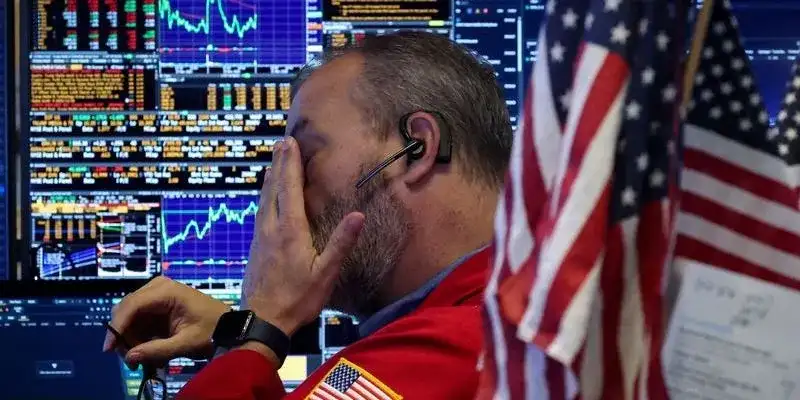
A recent downturn in technology stocks, particularly within the AI sector, appears to be an overreaction driven by isolated events rather than a fundamental shift in the market, according to financial observers. The broad sell-off is not supported by evidence that the AI trade itself is weakening, despite specific company results or new technology introductions causing market jitters.
Market participants suggest that fear and sentiment are playing a larger role than actual company fundamentals. Recent events that have spooked investors include:
Broadcom's Performance: A sell-off was reportedly triggered by Broadcom's results, with analysts asserting there's no inherent reason to divest broadly from tech solely based on one company's performance.
Anthropic's AI Agent: The introduction of a new plugin for Anthropic's Claude Cowork AI agent, capable of automating clerical tasks, fueled worries about job displacement and the disruption of existing software leaders. This led to a significant downturn in the software sector.
DeepSeek's AI Model: The release of DeepSeek's latest AI model, DeepSeek-R1, by a Chinese startup, initially upended market perceptions of AI development. This event, in early 2025, spurred concerns about competition and led to a widespread sell-off among US tech firms.
Despite these events, analysts at Bank of America and William Blair contend that the indiscriminate selling across the sector is not justified. They posit that while some disruption for specific software solutions and less adaptable vendors is inevitable, it doesn't warrant the broad-based negative investor sentiment. William Blair analysts characterized the latest AI fears as a "boogeyman in software," emphasizing that adaptation to the evolving AI landscape will determine future winners and losers, rather than a fundamental flaw in the technology's growth trajectory.
Read More: Chrome mimeHandler API lets extensions handle file types
Background: AI's Ascent and Market Volatility
The tech sector, particularly the artificial intelligence segment, has been a focal point of intense investor interest and significant capital inflow. However, this enthusiasm has also bred a degree of volatility, where specific developments can trigger outsized market reactions. The introduction of advanced AI models and tools, such as those from DeepSeek and Anthropic, highlights the rapid pace of innovation. The market's response, however, often appears to swing between extreme optimism and pronounced pessimism, sometimes detached from the long-term potential and underlying business fundamentals of the companies involved. This dynamic suggests a market grappling with both the immense promise of AI and the inherent uncertainties of rapid technological advancement.