

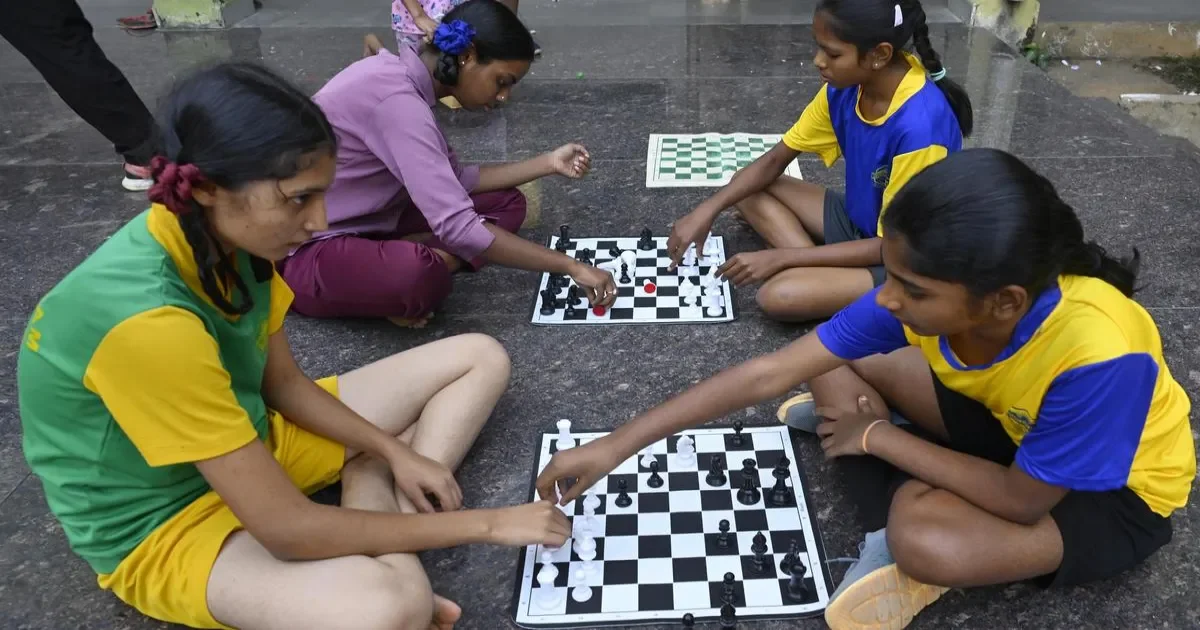
Efforts are underway in Tamil Nadu to introduce chess as a structured educational tool within tribal residential schools. This initiative aims to improve academic outcomes, cognitive abilities, and life skills among students in educationally disadvantaged regions. The program involves training teachers and collaborating with an international chess federation to embed the game into the curriculum.
The Tamil Nadu Tribal Welfare Department is spearheading a novel program to integrate chess into the daily learning of students in Government Tribal Residential Schools and Eklavya Model Residential Schools. This move, detailed across multiple reports from early February 2026, signifies a shift from viewing chess as solely a sport to its adoption as a pedagogical instrument. The core objective is to foster better concentration, thinking abilities, and overall academic engagement among tribal students.

The department has begun training physical education teachers to deliver chess instruction, with initial sessions involving dozens of educators. These teachers are being equipped to use chess not just for recreational play but as a method to teach abstract concepts and develop critical life skills. Discussions are also in progress to explore blended learning models, combining traditional classroom methods with digital chess platforms to enhance accessibility and teacher expertise.
Program Details and Collaborations
The introduction of chess into these schools is a deliberate strategy to improve learning outcomes.
Read More: Six People Arrested for GATE Exam Cheating in Raipur

Objective: To strengthen academic results and nurture cognitive capacities among tribal students.
Method: Chess will be integrated into the classroom as a learning tool, not confined to extracurricular clubs.
Training: Physical education teachers are undergoing specialized training to deliver chess education.
Collaboration: The initiative is being developed in partnership with the FIDE Education Commission, the educational wing of the International Chess Federation.
Pedagogical Approach: Methods like "human chess," where students physically represent chess pieces, are being considered to make abstract concepts tangible.
Evidence Supporting Chess in Education
Research and observations suggest a positive correlation between chess instruction and cognitive development.
Concentration and Thinking: One report noted observed improvements in students' concentration and thinking abilities after they began playing chess.
Academic Skills: The FIDE EDU Secretary pointed to research indicating that structured chess programs can enhance mathematics skills, executive functions, and reasoning abilities.
Low-Cost Intervention: Chess is highlighted as a low-cost, high-intellectual-yield tool, particularly valuable in resource-constrained school environments.
Life Skills: The program aims to nurture essential life skills and cognitive abilities, thereby empowering children from marginalized communities.
Challenges and Potential Hurdles
While the initiative is presented with positive intentions, questions remain regarding its broader impact and implementation.
Read More: India Beats Pakistan in T20 World Cup Game

Existing Research Limitations: One academic paper (May 2021) noted that while chess training showed effects on test scores, its impact on other academic outcomes, creativity, and attention/focus was not statistically significant. This suggests a need for careful evaluation of the specific outcomes targeted.
Sustainability of Training: The long-term effectiveness will depend on the sustained training and engagement of teachers.
Digital Divide: The exploration of blended learning models raises questions about access to digital platforms for all students in remote tribal areas.
Expert Perspectives and International Involvement
The program's design incorporates insights from international chess education bodies.
FIDE Education Commission: This body is actively involved in developing the program framework, advocating for chess as a pedagogical tool. Rita Atkins, FIDE EDU Secretary, has been involved in localizing the FIDE Chess in Education curriculum for Indian classrooms.
Departmental Commitment: G Lakshmi Priya, secretary to the Adi Dravidar and Tribal Welfare Department, emphasized the goal of using chess to empower children, enhance equity, and improve educational outcomes.
Conclusion
The Tamil Nadu Tribal Welfare Department's initiative to introduce chess into tribal schools represents a structured effort to leverage the cognitive and life-skill-building potential of the game. By collaborating with FIDE and focusing on teacher training, the department aims to create a sustainable and impactful learning intervention. However, it is important to acknowledge that research on the broader academic impacts of chess can be mixed, suggesting a need for ongoing assessment of this program's effectiveness beyond initial observations. The integration of digital components also warrants careful consideration of equitable access for all students.
Read More: New School Safety Rules Cause Worry, People Ask If They Work
Sources Used:
The Hindu: Reported on the immediate steps taken by the department to train teachers and integrate chess, citing observed improvements in student concentration.
https://www.thehindu.com/news/national/tamil-nadu/chess-to-be-introduced-in-tribal-schools-to-improve-learning-outcomes/article70635065.ece
Indian Witness: Detailed the program's aim to embed chess into the classroom as a sustainable intervention and mentioned FIDE EDU Secretary Rita Atkins' participation.
https://www.indianwitness.com/news/national/tamil-nadu-tribal-schools-to-turn-chess-into-a-learning
Edexlive: Focused on the collaboration with FIDE's education panel, highlighting the pedagogical approach and the goal of empowering marginalized children.
https://www.edexlive.com/news/tribal-dept-to-team-up-with-fides-education-panel-to-make-chess-a-learning-tool-in-schools
Boards of Chess: Similar to Edexlive, this report emphasized the collaboration with FIDE and the aim to enhance life skills and cognitive abilities through chess.
https://boardsofchess.com/tribal-department-collaborates-with-fide-education-panel-to-promote-chess-as-a/
ScienceDirect: Provided a research perspective, noting that not all cognitive and academic benefits of chess training were statistically significant in a field experiment.
https://www.sciencedirect.com/science/article/pii/S0304387820301905
Right for Education: Offered a broader perspective on chess as a "school for life" and a low-cost, high-yield tool, particularly relevant in resource-limited settings.
https://rightforeducation.org/2026/01/30/chess-should-be-introduced-in-schools/
Read More: Short Math Test Asks 3 Questions, Many People Get Them Wrong


)