


A Liberia-flagged oil tanker, the Shenlong, carrying approximately one million barrels of crude oil from Saudi Arabia, has docked in Mumbai after successfully transiting the Strait of Hormuz. This marks a significant development as it is possibly the first such vessel to reach Indian shores since the outbreak of hostilities in West Asia on February 28, 2026. The tanker departed Saudi Arabia on March 3, crossed the Strait of Hormuz around March 8, and arrived in Mumbai on Wednesday, March 11, 2026.

The successful passage of the Shenlong through the Strait of Hormuz, a crucial maritime chokepoint where traffic had reportedly stalled following the conflict, suggests potential shifts or assurances regarding safe passage for vessels headed to India. Reports indicate that the tanker's captain strategically disabled its Automatic Identification System (AIS) during the transit of this high-risk area.
Read More: Oil Prices Over $90 Due to Middle East Tensions and Supply Cuts
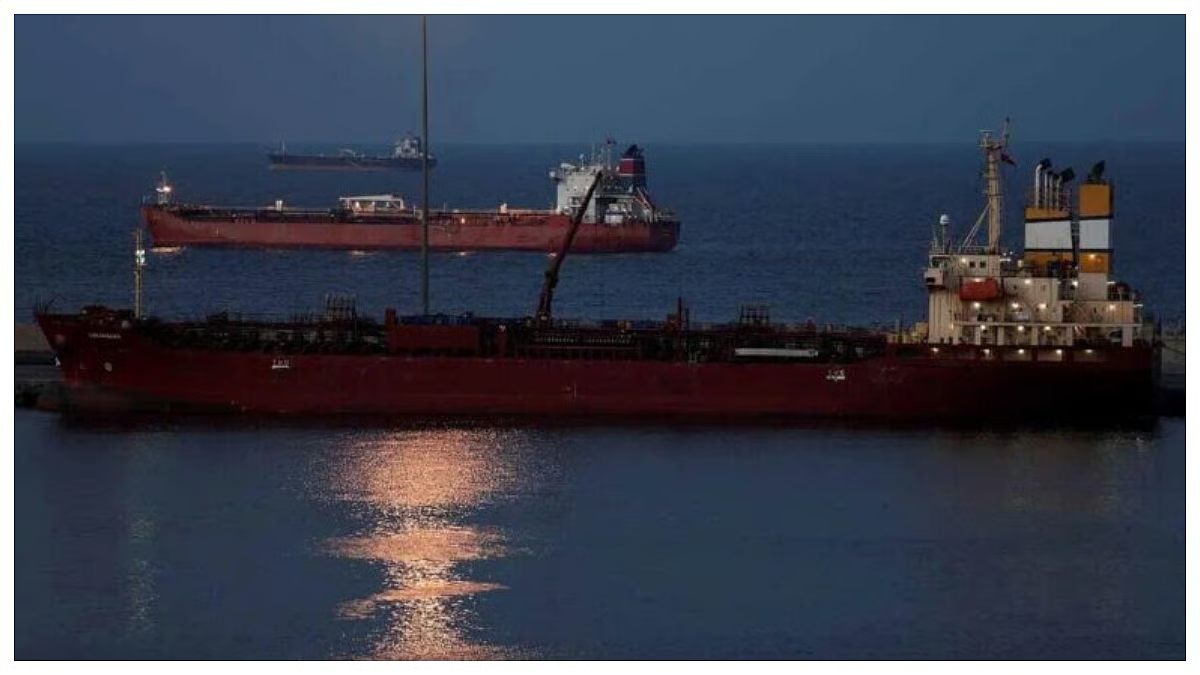
Energy Supply Lines Under Strain
India, a significant global crude importer, relies on external sources for over 85% of its daily crude oil needs, which amount to roughly five million barrels. The safe arrival of this tanker offers a temporary reprieve, though concerns about the broader threat to maritime traffic around the Strait of Hormuz persist.
Industry sources and vessel tracking data indicate that another large ship is expected to reach Indian ports within a day or two. This influx of energy supplies comes at a critical juncture, with India sourcing 88% of its oil requirements from abroad.
Diplomatic Undertones and Maritime Risks
The arrival of the Shenlong follows diplomatic discussions aimed at securing safe passage for Indian tankers. Sources suggest that the vessels may have sought and received permission from Iran to traverse the Strait of Hormuz, although this remains unconfirmed. Iran had reportedly been restricting passage to its own oil tankers bound for China.
Read More: US Activists Oppose Iran Intervention Amidst Domestic Democracy Concerns
The Strait of Hormuz, a vital artery for global oil and natural gas shipments, has seen increased control and reported incidents since military actions against Iran began on February 28, 2026. This has raised alarms about potential disruptions to international energy supplies.
Seafarer Presence and Broader Context
Maritime data reveals a considerable number of vessels, including those carrying Indian seafarers, positioned on both sides of the Strait of Hormuz. Specifically, 24 vessels with 677 Indian seafarers are situated west of the strait, while four vessels with 101 Indian seafarers are located to the east. The Shipping Ministry has stated that 28 Indian-flagged vessels are currently operating in the Persian Gulf region.
The Shenlong, identified as a Suezmax tanker, a designation for large carriers, began loading crude oil from Saudi Arabia's Ras Tanura port on March 1, the day after the West Asia conflict reportedly commenced with strikes by the United States and Israel on Iran.
Read More: LPG Gas Shortage Stops Kozhikode Crematoriums from Working