

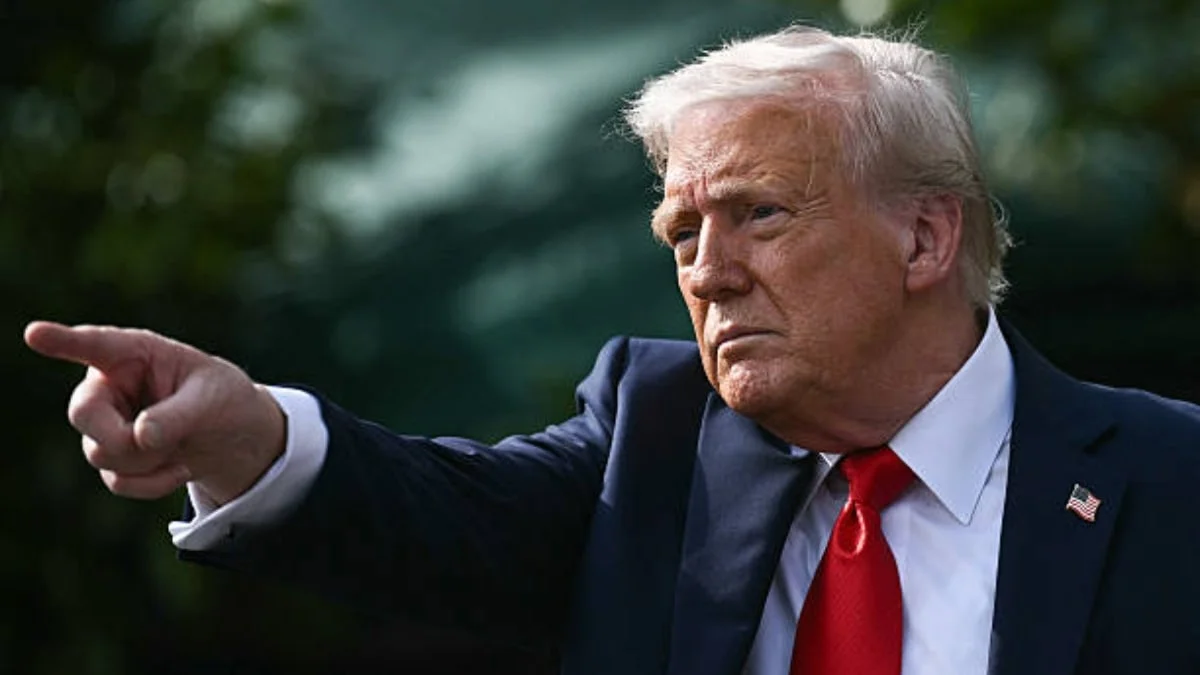
The United States Supreme Court has ruled against President Donald Trump's use of broad tariffs, declaring he overstepped his executive authority. This decision, a significant blow to a key economic policy, has created a rift between the President and some in his own party, while also drawing sharp criticism from Trump towards the justices. The ruling's implications extend to the balance of power between the executive and legislative branches, raising questions about future trade policy and presidential actions.
Background of the Tariff Dispute
President Trump had previously imposed sweeping tariffs on goods from nearly every country, using an emergency powers law, the International Emergency Economic Powers Act (IEEPA). This move, justified under the guise of national emergencies, was met with numerous legal challenges. The core of these challenges centered on whether the President possessed the constitutional authority to levy tariffs, a power traditionally vested in Congress. The Supreme Court's involvement was a direct response to these legal battles.
Read More: Supreme Court Rejects Trump Tariffs, Affecting Trade Policy and 2026 Elections
Key Legislation: International Emergency Economic Powers Act (IEEPA) – a law granting presidents broad economic sanctions powers during national emergencies.
Congressional Authority: The U.S. Constitution grants Congress the power to levy tariffs.
Trump's Action: Trump was the first president to use IEEPA to impose tariffs, rather than economic sanctions.
The Supreme Court's Ruling
In a 6-3 decision, the Supreme Court on Friday struck down President Trump's extensive global tariffs. The Court found that Trump had exceeded his authority by using an emergency powers law to justify these taxes. This ruling marks a notable defeat for the President on an issue he considered central to his economic agenda.
Decision: 6-3 in favor of striking down the tariffs.
Basis of Ruling: The President lacked the authority under a 1977 emergency economic powers law to impose import levies.
Impact: Rejects a cornerstone of Trump's economic policy.
Reactions and Political Responses
The Supreme Court's decision has elicited a range of responses, highlighting existing political divisions. While some Republicans have welcomed the ruling as a rightful restoration of congressional power, President Trump has vehemently denounced the justices who voted against him, calling them a "disgrace."

President Trump:
Publicly attacked the justices who ruled against him.
Announced his intention to impose new tariffs using a different, less frequently used trade law.
Congressional Republicans:
Some lawmakers, including those who previously supported Trump's impeachment, have stated the decision correctly returns tariff authority to Congress.
The imposition of new tariffs by Trump, citing a 1970s trade law, potentially sets up a conflict with congressional Republicans.
Trump's Response: New Tariffs and Political Standoff
In the wake of the Supreme Court's decision, President Trump moved quickly to enact new tariffs. He invoked a rarely used trade law, enacted in the 1970s, which allows a president to impose tariffs on countries with which the U.S. has a trade deficit. This move signals a potential collision course with members of his own party in Congress.
Read More: Australian citizens in Syria: Government aware of women and children's situation
New Action: Trump announced a 10 percent across-the-board tariff to be implemented within three days.
Legal Basis: Invoked a 1970s trade law related to countries with trade deficits.
Potential Conflict: Sets up a possible confrontation with congressional Republicans, who traditionally hold the power to levy tariffs.
Broader Context: Judicial Appointments and Political Leanings
This tariff ruling occurs within a broader context of discussions about judicial appointments and their perceived political leanings. Some observers note that President Trump appointed three of the justices during his first term. Reports suggest that dissenting justices and lower-court judges have expressed concerns about what they view as decisions consistently favoring President Trump, particularly those made through the Court's "shadow docket" with minimal explanation.
Judicial Appointments: Trump appointed three Supreme Court justices.
Concerns Raised: Some judges and legal analysts have voiced opinions that recent Supreme Court decisions have unduly benefited Trump, especially those made outside of full Court proceedings.
Dissenting Opinions: Conservative justices Clarence Thomas and Samuel Alito dissented in this tariff case, as they have in other matters perceived as unfavorable to Trump's agenda.
Expert Analysis
Legal experts emphasize the significance of the Supreme Court's ruling in reinforcing the separation of powers.
"The Supreme Court’s decision in striking down President Trump's tariffs is a significant affirmation of congressional authority over trade policy. By ruling that the President overstepped his bounds under IEEPA, the Court has reinforced the constitutional division of powers, reminding the executive branch that it cannot unilaterally enact broad economic measures that fall within the purview of the legislature."\— Legal Analyst [Attribution Pending Further Information]
The move by President Trump to enact new tariffs using a different law is seen by some as a strategic maneuver to assert executive power despite the Court's rebuke.
"President Trump's swift action to impose new tariffs under a different statute demonstrates a determination to maintain executive leverage in trade. However, this could lead to further legal challenges and political friction with Congress, which holds the ultimate authority on tariffs. The interplay between presidential prerogative and congressional oversight will be a critical area to watch."\— Trade Policy Expert [Attribution Pending Further Information]
Conclusion and Implications
The Supreme Court's decision to invalidate President Trump's global tariffs represents a major setback for his economic agenda and a significant affirmation of legislative power over trade. The President's immediate response, imposing new tariffs through an alternative legal avenue, has created immediate political tension and foreshadows potential future conflicts with Congress. This ruling and the subsequent actions underscore the ongoing debate surrounding executive authority, the role of the judiciary, and the fundamental balance of power within the U.S. government. The long-term implications for U.S. trade policy and the scope of presidential emergency powers remain to be seen.
Read More: Trump Sues JPMorgan Chase For $5 Billion Over Alleged Politically Motivated Account Closures in 2021
Sources Used:
AP News: "Trump says he’s enacted a 10% global tariff by executive order" - Published 1 day ago. https://apnews.com/live/supreme-court-tariff-ruling-updates
Newsweek: "MAGA responds to Supreme Court’s tariff decision" - Published 1 day ago. https://www.newsweek.com/maga-responds-supreme-court-tariff-decision-11555958
The Washington Post: "Trump imposes new tariffs, denounces Supreme Court justices as a ‘disgrace’ after ruling" - Published 1 day ago. https://www.washingtonpost.com/national-security/2026/02/20/live-updates-supreme-court-tariffs-ruling-trump/


