

REVENUE MODELS TIED TO HEALTH MANDATES
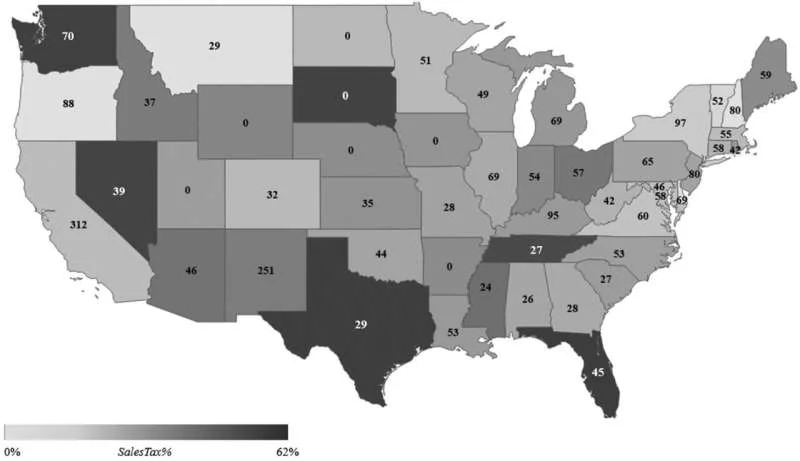
A recent study, published in Contemporary Accounting Research, suggests that how states fund themselves influenced their responses to the early days of the COVID-19 pandemic. Specifically, states relying more heavily on sales taxes tended to implement shorter stay-at-home orders.
Researchers examined tax revenue data alongside three key public health measures: stay-at-home mandates, restaurant closures, and bar closures. They observed that a greater proportion of a state's total tax revenue derived from sales taxes correlated with shorter durations for stay-at-home policies.
"For this study, we looked at a host of state data—and it is important to note that observational studies cannot prove causation," stated Nathan Goldman, co-author of the study and associate professor at North Carolina State University's Poole College of Management.
The research team controlled for a range of other factors. These included the political affiliation of the state's governor, historical voting patterns in presidential elections, population size and density, unemployment rates, poverty levels, minimum wage, per capita tax collections, and geographic region.
FISCAL STRUCTURES AND PUBLIC HEALTH DECISIONS
This unexpected link between state tax structures and the stringency and duration of public health interventions highlights a potential interplay between economic frameworks and health policy decisions during times of crisis. The findings indicate that fiscal considerations might have played a role in shaping the public health response, beyond purely epidemiological or public health justifications.
The study, titled "Is State Tax Policy Associated With State-Level COVID-19 Restrictions?", underscores the idea that the way governments collect money may have had a discernible impact on the measures enacted to combat the spread of the virus.
BROADER IMPLICATIONS FOR HEALTH POLICY
While this particular study focused on COVID-19 restrictions, other research points to a wider association between tax policy and health outcomes. One review from BMC Public Health explored the implementation of "sin taxes" on products like sugary drinks and high-fat, salt, and sugar foods, examining the facilitators and barriers to such policies.
Furthermore, a separate investigation published in PubMed suggested that state-level tax policy acts as an underappreciated social determinant of health. This earlier work indicated a connection between tax revenue structures, tax progressivity, and rates of cancer screening and mortality within the US. These findings collectively suggest that fiscal policies may have a more profound and far-reaching impact on public well-being than is often recognized.