

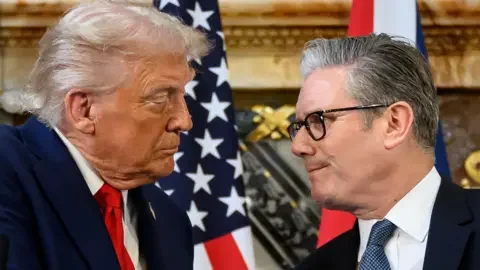
CALL FOLLOWS TRUMP'S PUBLIC CRITICISM OF UK'S MIDDLE EAST STANCE
Prime Minister Keir Starmer and US President Donald Trump engaged in a direct conversation Sunday, a development that arrived in the wake of pointed public criticism from Trump regarding the United Kingdom's perceived lack of overt support for US military actions against Iran. The discussion aimed to bridge a noticeable divide in foreign policy approaches concerning the escalating Middle East situation, particularly following the US’s use of British bases for operations.

The call’s timing is significant, occurring shortly after Trump voiced frustration, stating that UK assistance was not a necessity, even as American forces continued to leverage facilities within the United Kingdom for strikes targeting Iran. This occurred even as four US bombers landed at a British airbase on Sunday for "specific defensive operations" intended to counter Iranian missile threats, as stated by the Ministry of Defence.
Read More: Trump threatens to block all new bills until Senate passes SAVE America Act

"The Prime Minister also shared his heartfelt condolences with President Trump and the American people following the deaths of six US soldiers.”
Details emerging from Starmer’s office indicate the conversation touched upon the volatile Middle East scenario and ongoing military cooperation between the two nations. The two leaders reportedly expressed an intent to reconnect in the future.

INTERNAL LABOUR DEBATE OVER PAST POLICY ECHOES
The diplomatic engagement unfolded against a backdrop of internal political discourse within the Labour party. Former Prime Minister Tony Blair's recent assertion that the UK should have lent stronger backing to the initial US airstrikes on Iran has ignited debate. This stance has drawn comparisons to past foreign policy decisions, with some figures within the party drawing parallels to Robin Cook's resignation over the UK's involvement in the Iraq War.
A Labour MP, when asked if she was implying Blair acted as a "poodle," responded by stating, "I think the point is to make sure that, actually, we learn the lessons from some of the things that went wrong in Iraq, and I think that is exactly what Keir Starmer has done."
Labour MPs have largely coalesced behind Starmer's current position. Starmer has previously articulated that the UK would abstain from offensive actions but has assented to the use of British bases for defensive strikes against Iranian missile sites. This position represents a divergence from a direct request by the US for the use of UK bases for initial offensive operations against Iran.
Read More: UK Public Wants Defensive Stance on Iran Conflict, Poll Shows
The British aircraft carrier HMS Prince of Wales has been placed on advanced readiness, though confirmation of its deployment to the region remains unstated by the foreign secretary. This situation highlights a complex interplay between maintaining alliances, managing domestic political sensitivities, and responding to international crises. The diplomatic strain underscores the inherent challenges in aligning national interests and operational objectives between allied powers during periods of heightened geopolitical tension.