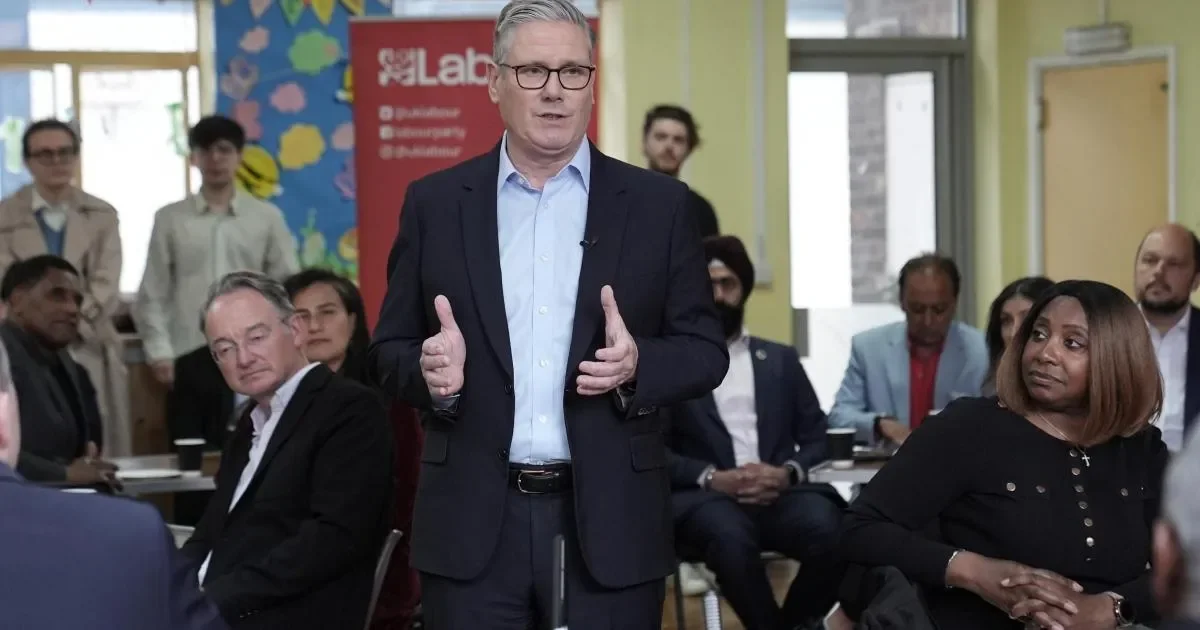
Sir Keir Starmer, the Prime Minister, has declared his resolve remains unshaken despite a decidedly tough showing in recent local elections. Early tallies indicate Labour has shed over 280 seats across 50 of 136 councils counted so far. This electoral bruising, however, has not swayed Starmer's stated intent to continue leading, even as Reform UK reported significant gains, capturing more than 400 council seats and taking control of Newcastle-under-Lyme and Havering.
The fragmentation of the political landscape is palpable, with early results underscoring a shift away from established parties. The Green Party, for instance, saw its vote share climb to an average of 18%, a seven-point increase from 2022. Simultaneously, the Conservatives have also experienced losses, while the Liberal Democrats have made inroads, reclaiming Westminster and emerging as the largest party in Wandsworth.
Starmer himself acknowledged the difficult outcomes, stating he takes responsibility for the results. He characterised the opposition's "message of change" as "destructive" and contrasted it with what he termed the Liberal Democrats' "build up" approach. Despite the pressure, with reports surfacing of potential calls for his departure, Starmer indicated he believes Labour could lose fewer than 1,500 seats overall.
Read More: Rubio visits Rome and Vatican to fix US ties after Trump comments
The electoral map appears redrawn in several key areas. Reform UK has made notable advances across Greater Manchester, securing 18 of 19 available seats in Tameside, wresting Labour's decades-long majority. Similar significant gains were reported in Halton, where Reform took 16 of 19 seats, though Labour managed to retain its majority there. Labour also lost control of Exeter, a seat held for 14 years.
The election results, still being tallied, paint a picture of a political environment in flux, with established parties facing challenges from a resurgent Reform UK and an emboldened Green Party, while Labour grapples with substantial seat losses.