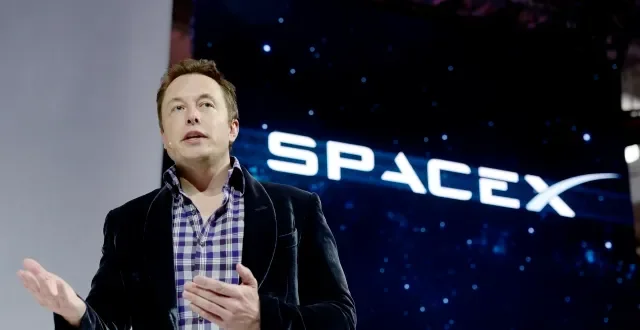
SpaceX is embarking on a massive initial public offering (IPO), aiming to raise a staggering $75 billion. The company has formally begun its roadshow, proposing to list on the Nasdaq under the ticker symbol "SPCX." This move could see over 555 million Class A ordinary shares offered, with an estimated price of $135 per share. Such a valuation would place SpaceX's overall market capitalization around $1.77 trillion.
The company's prospectus highlights its integrated approach across three core areas: space, connectivity, and artificial intelligence (AI). SpaceX claims to handle over 80% of global orbital payloads since 2023, with its Falcon 9 rocket achieving over 600 cumulative reuse instances. The Starship V3, still in its testing phase, is slated to begin delivering commercial payloads to orbit in the latter half of 2026, with a target capacity of 100 tons per launch. This ambitious endeavor aims to slash launch costs to a fraction of traditional methods.
Read More: Red Hat Intelligent Inference Scheduling for AI Today
Meanwhile, its Starlink satellite internet service is presented as the company's current revenue generator. With over 9,600 satellites in orbit, Starlink serves more than 10.3 million users across 164 countries and regions as of the first quarter of 2026. The company projects the total addressable market for Starlink broadband and mobile services to reach $1.6 trillion.
The AI division, launched in 2023, is already a significant focus, with substantial investment in infrastructure. SpaceX has established a gigawatt-class training cluster and a supercomputer. The Grok AI model has seen rapid iteration, and when combined with the X platform, it boasts approximately 550 million monthly active users. The company foresees a colossal AI market opportunity, estimating a total addressable market of $26.5 trillion, with enterprise applications accounting for $22.7 trillion.
Financial Projections and Cash Burn
Financial projections from lead underwriter Goldman Sachs suggest a substantial cash expenditure, with SpaceX expected to consume approximately $120 billion combined this year and next, and an additional $230 billion by 2030. A significant portion of this outlay is earmarked for AI initiatives. By 2028, cumulative capital expenditures are projected to reach roughly $360 billion, with AI accounting for about 80% of that sum.
Read More: Motorola Edge 70 Pro+ Launched in India With New Features
Despite the significant cash burn, Goldman Sachs anticipates considerable returns. By 2030, SpaceX's annual revenue is forecasted to reach $474 billion, a more than 25-fold increase from its 2025 revenue of $18.7 billion. AI is expected to contribute two-thirds of this revenue, approximately $316 billion, a figure that would surpass the annual sales of major tech companies like Apple or Alphabet in their most recent fiscal years.
Future Milestones and Vertical Integration
SpaceX's roadmap includes several key milestones within the next two to three years. By the second half of 2026, Starship V3 is expected to execute its first orbital payload delivery. Concurrently, broadband V3 satellites, capable of 1024 Gbps per satellite, will begin deployment via Starship, significantly increasing bandwidth capacity. In 2027, the company plans to deploy V2 satellites for its mobile service, offering 5G voice and data directly to standard mobile phones. The deployment of AI computing satellites is slated for 2028, aiming to provide 100 kilowatts of compute power per ton of payload in orbit.
Read More: Asia and MENA Games Market to Reach $103 Billion by 2030
This aggressive expansion is underpinned by SpaceX's strategy of extreme vertical integration. The company controls key aspects of its operations, from manufacturing and launch infrastructure to satellite development and AI software. This integration is credited with drastically reducing launch costs, with Starship targeting a cost reduction of over 99% compared to traditional methods.
Potential Challenges and Musk's Stake
The IPO documents also acknowledge that the Starship program is still in its testing phase. While atmospheric re-entry and controlled landing have been demonstrated, the vehicle's capture and subsequent rapid reuse are yet to be fully realized. Furthermore, the immense capital expenditure plans, particularly for AI, raise questions about the long-term financial sustainability and the reliance on continued innovation and market adoption.
Read More: Google Search Update May End Paid Transcription Services
Should the IPO proceed as planned, Elon Musk's stake in SpaceX, estimated at around 42% post-IPO, would be worth approximately $866.5 billion based on the proposed valuation. This, combined with his holdings in Tesla, could position him to become the first individual with a net worth exceeding $1 trillion. However, the prospectus notes that Musk has no obligation to retain his shares after a 366-day lock-up period, leaving the realization of this valuation subject to his discretion. He will maintain significant voting control, exceeding 82%, despite public shareholders' participation.
Background
SpaceX, founded by Elon Musk in 2002, has consistently pushed the boundaries of space exploration and technology. Its achievements include the development of reusable rockets, the deployment of the massive Starlink satellite constellation, and the ongoing development of the super heavy-lift Starship vehicle. The company has played a pivotal role in reducing the cost of space access and has been a key partner for government agencies like NASA. Recent activities, as reported in early May 2026, included the launch of 29 Starlink satellites shortly after a Blue Origin rocket experienced an explosion. The FAA had also recently declared a Starship V3 test flight a "mishap," necessitating an investigation before further flights.
Read More: Google Drive Free Space Tips for Users Running Out of Room