

Snap's developer ecosystem is providing tools for crafting more inclusive AR experiences. Central to this effort is the LocalizationSystem, a component that translates date and time data into user-specific string formats, adjusting based on the device's language settings. This system allows for dynamic localization, ensuring that temporal information is presented in a way that resonates with a global audience.
The LocalizationSystem class directly enables the conversion of date and time objects into localized string representations, keyed by the user's device language. This capability is fundamental for applications aiming for international appeal, where consistent and understandable data presentation is key.
The Lens Studio API broadly offers a vast array of classes and functionalities for developers building augmented reality applications. This extensive list encompasses components for everything from visual rendering and animation to user interaction and data management. Notably, the Built-In module within this API houses core functionalities like the LocalizationSystem, MappingSession, LocationService, and LocationCloudStore.
Read More: AI March Madness Brackets Finish Top Tier But Miss Chaos

Scripting Integration and Data Handling
Beyond direct localization, Snap's development environment integrates scripting, primarily through JavaScript and TypeScript, to provide custom logic. The Script Component serves as the nexus, binding Lens events to custom code. Developers can define and access script properties using the script keyword.

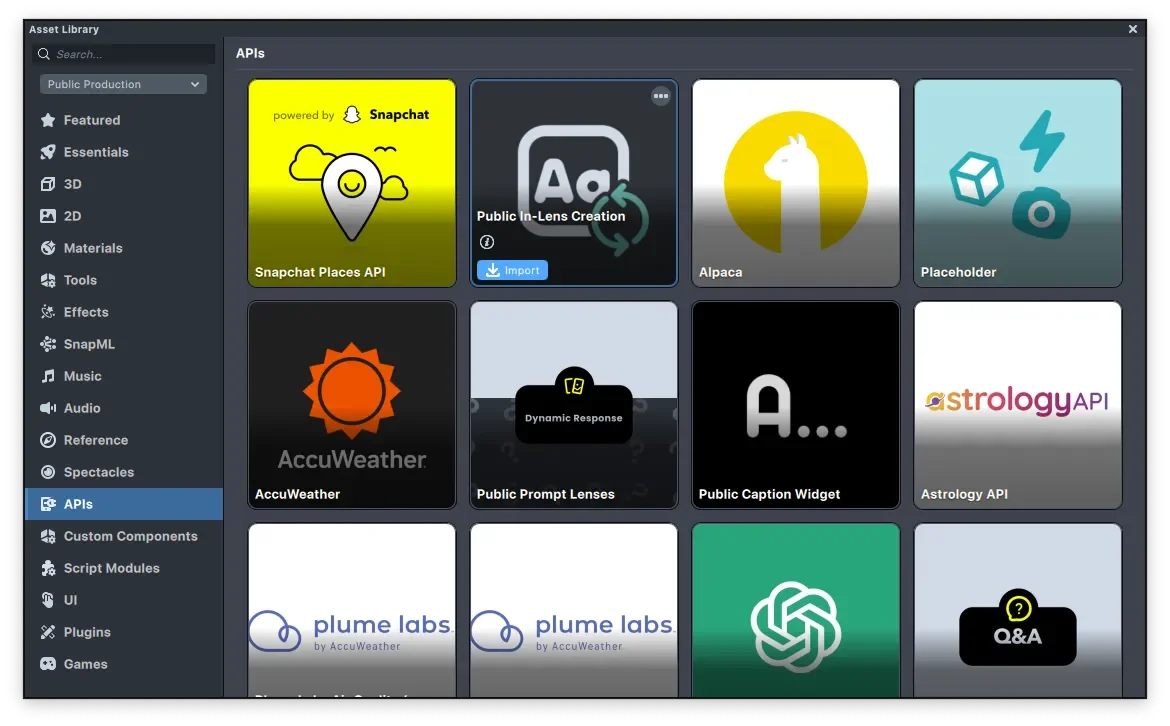
The Remote Service Module is another critical element, facilitating the integration of external API data into Lenses. This opens avenues for dynamic content driven by real-world information, as exemplified by the Snapchat Places API, which can retrieve location-specific data like latitude and longitude for place listings.
For persistent data needs, LocationCloudStore provides functionalities to create, get, and delete values within a location-aware cloud storage system. This is distinct from general data storage solutions that might also be available.
Read More: AI Training Copyright Lawsuits Cause Legal Fights in US and Europe
The Landscape of Lens Studio Development
Lens Studio itself is presented as a comprehensive platform for building AR experiences across various platforms, including iOS, Android, and web apps. It offers guides, tutorials, and API references to support creators. The Snap for Developers portal acts as the central hub for all these resources, encompassing not just Lens Studio but also Snap Kit for app development and resources for Spectacles.
The API documentation reveals a granular structure of classes, many of which are categorized under the Built-In module. This includes classes like MappingSession, which is marked as a "planned future extension," hinting at ongoing development and new features. MappingSession seems to relate to spatial mapping and progress tracking for such processes. LocationService, on the other hand, appears to focus on object type identification and reference comparison.
The sheer volume of classes listed in the Full API List underscores the depth and breadth of the Lens Studio development environment, covering areas such as body and hand tracking, complex transformations, various asset types, and intricate UI input systems like TextInputSystem. This indicates a robust framework for creating sophisticated AR applications.
Read More: Nvidia and AMD Stock Prices May Fall Due to Low Insider Buying
