

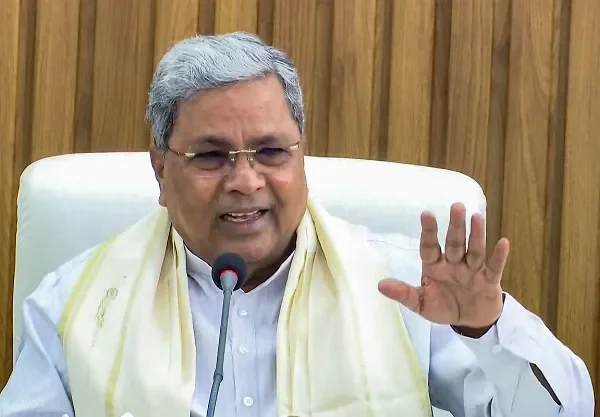
Siddaramaiah, the Chief Minister of Karnataka, recently claimed at a temple in Pillahalli village that divine presence is not a localized commodity but an everywhere occurrence. Speaking at the installation ceremony of the Sri Adishaktatmaka Dandimaramma Temple, he tied his political tenure to a mixture of metaphysical approval and mass consent. He asserted that the Chief Minister’s chair is occupied only through the blessings of the people, rather than mere bureaucratic shuffling.
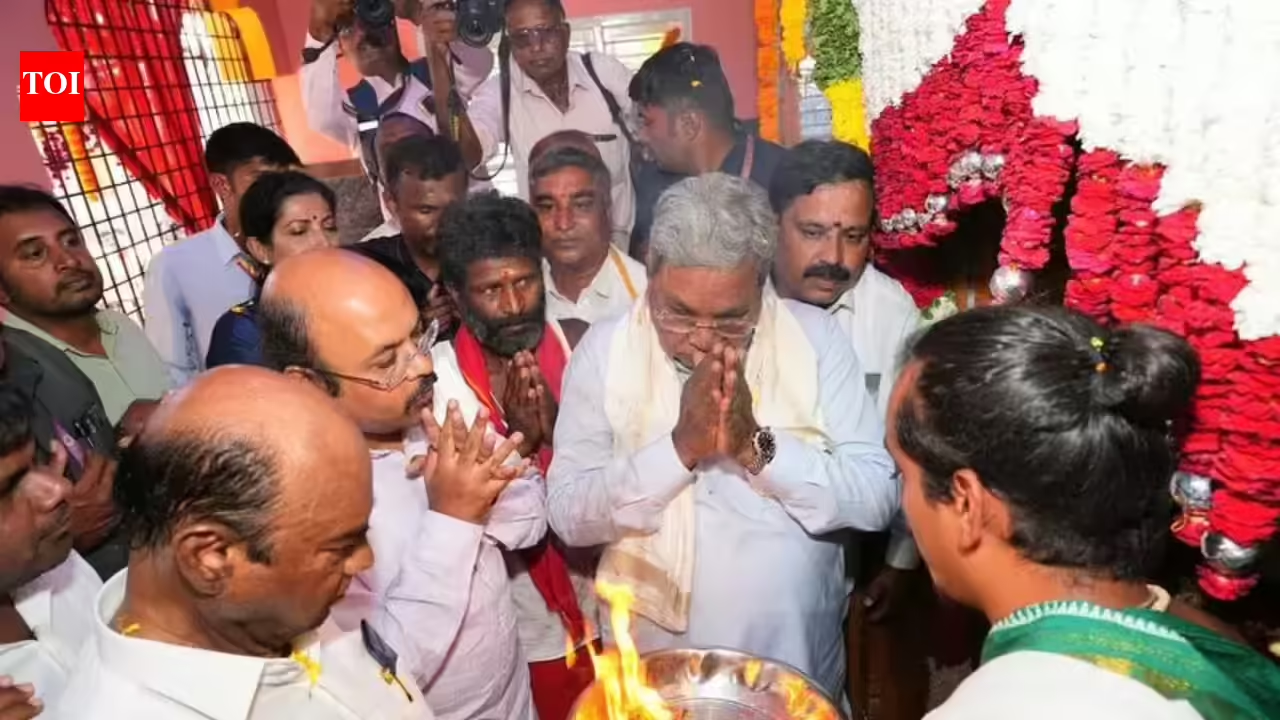
"God exists within us and everywhere… God should not be remembered only during times of difficulty, but in all circumstances."
The core signal: The Chief Minister is actively distancing himself from 'atheist' branding to align his socialist mission with universalist religious sentiment.

Reducing social friction through government schemes is framed as a moral necessity.
He maintains that while temples are centers of belief, his personal practice involves seeing the divine in the poor and the disadvantaged.
The administration’s focus remains on social justice as a ritualistic tool to flatten inequalities between castes and communities.
The Friction of Labels: Science vs. Superstition
The Chief Minister’s spiritual posture is a response to long-term accusations of godlessness. He argues that his anti-superstition stance—often viewed as a rejection of faith—is actually a scientific and "thoughtful" way of existing. He cites his childhood participation in Veera Makkala Kunita, a traditional folk dance performed at temples, as evidence of his early integration into religious life.

| Label | Political Friction | Stated Reality |
|---|---|---|
| Atheist | Used by rivals to alienate religious voters. | Rejected; claims it is a "branding" error. |
| Agnostic | Seen as indecisive or elitist. | Shifted toward a "universal believer" stance. |
| Rationalist | Linked to his mentor M.D. Nanjundaswamy. | Reframed as "scientific" thinking. |
| Believer | Historically absent in his tilak-free public life. | Confirmed via visits to Tirupati and building a Ram temple. |
Background: The Socialist Pedigree
The tension in Siddaramaiah’s public identity stems from his roots in the socialist movement of the 1980s. Influenced by Professor M.D. Nanjundaswamy, his early career was marked by a conspicuous lack of religious iconography. Observers noted he rarely wore a tilak or visited temples frequently during his ascent from a shepherd’s background to the state’s highest office.
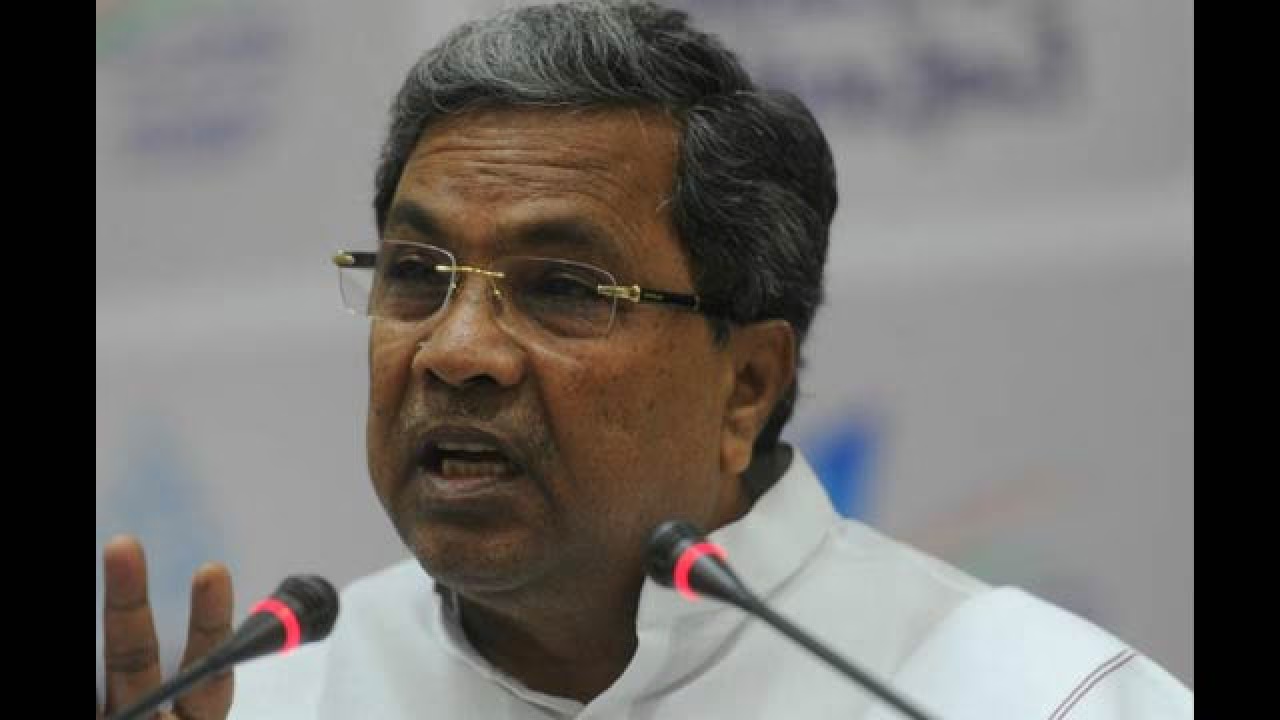
The current pivot—marked by visits to Mahadeshwara Betta and the publicizing of his village temple project—suggests a closure of the gap between his rationalist education and the electoral reality of a deeply religious constituency. He insists his mission remains the same: the economic and social empowerment of the vulnerable, now described as a duty sanctioned by a god who resides in everyone.