


Demands for Public Scrutiny Clash with Closed-Door Briefings
Senate Democrats are signaling a move toward significant disruption within the legislative body, threatening to halt proceedings unless public hearings are convened regarding the ongoing U.S. military engagement in Iran. The core of the dispute centers on transparency, with Democratic senators arguing that recent briefings on the operation, codenamed "Epic Fury," have been insufficient and conducted exclusively behind closed doors.
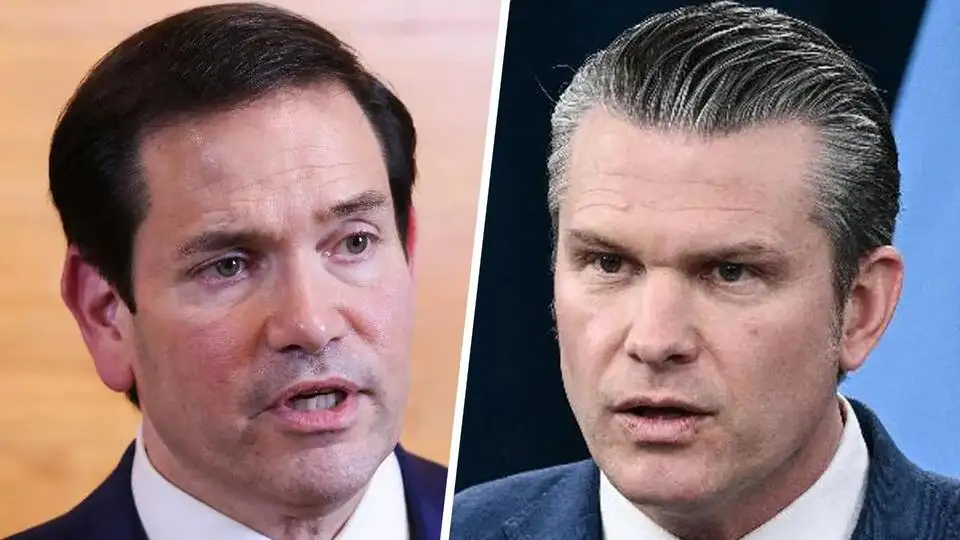
Key lawmakers, including Senators Cory Booker, Tim Kaine, Adam Schiff, Tammy Baldwin, and Chris Murphy, have introduced multiple War Powers Resolutions. These resolutions aim to compel the military's withdrawal from Iran unless Congress formally authorizes the conflict. The senators contend that a lack of public accountability from administration officials, specifically Secretary of Defense Pete Hegseth and Secretary of State Marco Rubio, is unacceptable. They insist that these officials must appear before Congress for public testimony to explain the rationale, objectives, and financial implications of the war.
Read More: Hegseth accused of spending £73 billion on food and furniture during war
The urgency of the Democrats' position is underscored by their stated intention to "use every lever" to disrupt normal Senate operations and force a reckoning on the war's legitimacy. They argue that current military action, undertaken without explicit congressional approval, appears to fall outside the narrow exceptions of immediate self-defense against ongoing or imminent attacks.
A Gambit for Visibility and Accountability
The Democratic strategy involves leveraging the War Powers Act to force a series of votes on the Iran conflict. These measures, filed last week, are eligible for floor action as early as next week, potentially consuming valuable legislative time.
"We are trying to force the Senate to do its job," stated Senator Chris Murphy. "We're going to use every lever that we have to stop business as usual and force the Senate to do what it should have done already."
This tactic, while potentially disruptive, serves as a potent tool for a minority party. It forces opposing senators, particularly those in vulnerable positions, to publicly declare their stance on a contentious issue, thereby consuming floor time and creating political pressure. Public opinion, as indicated by recent polls, appears to lean against the continuation of the war, a sentiment Democrats are attempting to harness.
Read More: Tehran Warns Diaspora: Assets May Be Taken If Supporting US Strikes
The demand for public testimony is a direct challenge to the current administration's approach. While Secretary Hegseth and Secretary Rubio have provided closed-door briefings to lawmakers since the conflict began, Democrats who attended have voiced significant dissatisfaction, reporting that their questions remained unanswered. The push for public hearings is thus framed as a necessary step to inform the American public about a conflict that is costing billions and is perceived by a significant portion of the electorate as unnecessary.
Background: The Shifting Sands of War Powers
The U.S. military engagement in Iran, coupled with joint operations alongside Israel under the banner of "Epic Fury," has escalated tensions and brought the executive branch's war-making powers under renewed scrutiny. The War Powers Act of 1973 was enacted to ensure congressional oversight over the deployment of U.S. armed forces abroad. It mandates that presidents inform Congress within 48 hours of introducing armed forces into hostilities and limits such commitments to 60 days without congressional authorization or a declaration of war.
Read More: Andhra Pradesh Government Checks West Asia Tensions Impact on Egg and LPG Prices
However, the interpretation and application of this act have been a recurring point of contention between the legislative and executive branches throughout modern American history. The current standoff in the Senate reflects a perennial struggle over the balance of power in matters of war and foreign policy, with Democrats attempting to reclaim a more robust role for Congress in decisions that have profound national and international consequences. The administration's preference for closed-door briefings suggests a desire to manage information flow and potentially avoid the political fallout associated with open debate and public scrutiny.