The sudden death of Seif al-Islam Gadhafi, son and erstwhile heir apparent of the late Libyan dictator Moammar Gadhafi, has sent ripples of uncertainty across a nation still grappling with its fractured identity. Reports of his killing, attributed to "four masked men" and a "cowardly and treacherous assassination," paint a picture of brutal violence. But in a country long mired in complex power struggles and shrouded in ambiguity, one must ask: are these official narratives the whole truth, or are they a carefully constructed facade hiding a deeper, more calculated truth? The circumstances surrounding his demise demand rigorous scrutiny, as the echoes of his father's tyrannical reign continue to cast a long shadow over Libya.
A Shadowy Heir and a Nation in Turmoil
Seif al-Islam Gadhafi, born in 1972, was once positioned as the modern face of Libya, groomed to succeed his iron-fisted father. Educated in Vienna and London, he projected an image of reform and international engagement, even serving as a key figure in his father’s regime and engaging in UN-brokered dialogues. Yet, this facade crumbled during the 2011 uprising that ultimately led to his father's brutal overthrow and death.
Read More: Iran Zagros Mountain Nuclear Site Construction Update April 2026
Key Moments in Seif al-Islam's Trajectory:
Early Promise: Initially seen as a potential modernizer of Libya.
Regime Consolidation: Played a significant role in his father's government, shaping policy and undertaking diplomatic missions.
2011 Uprising: Accused of playing a role in suppressing dissent, leading to international warrants for his arrest.
Post-Gadhafi Era: Vanished from public view, later reported to have been detained in Zintan for years.
Presidential Ambitions: Announced a bid for the presidency in 2021, though elections were postponed.
His whereabouts had been largely unknown for years, adding an aura of mystery to his existence. Then, in 2021, he re-emerged, announcing his intention to run for president. This move, seemingly aimed at reclaiming a political future, has now been violently cut short. But who precisely orchestrated this end, and why now? Was this a spontaneous act of retribution, or a strategically timed elimination to prevent his resurgence?
Conflicting Accounts and Cryptic Declarations
The news of Seif al-Islam’s death has been met with a confusing tapestry of confirmations and vague details. While his lawyer, Khaled al-Zaidi, and his political team’s leader, Abdullah Othman Abdurrahim, have confirmed his demise via social media, the specifics remain disturbingly sparse.
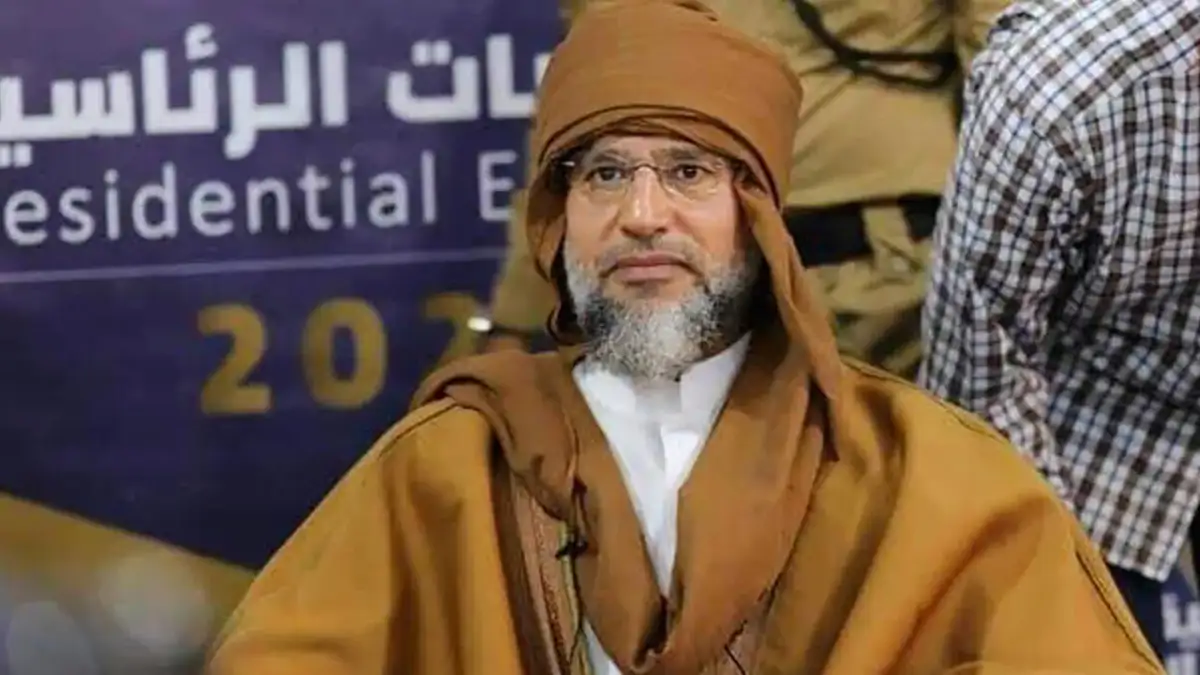
"four masked men" stormed his house and killed him in a “cowardly and treacherous assassination.”
This statement from his political team, lamenting the "cowardly and treacherous assassination" and mentioning disabled CCTV cameras, suggests a pre-meditated attack, meticulously planned to obscure the perpetrators. Yet, the narrative quickly shifts. Other reports, including those citing Libyan news outlet Fawasel Media, suggest he was killed by "armed men" in his home, while France24 and Al-Monitor point towards a "gunfight" and mention he was killed in Zintan, a town where he had reportedly been based for the past decade.
Read More: Fikra API Africa Mobile Money AI Access for Developers
Key Discrepancies in Reports:
Motive: Assassination vs. Gunfight.
Perpetrators: Four masked men vs. armed men vs. unknown individuals.
Location of Death: His home vs. Zintan (specifics within Zintan unclear).
Timing of Death: Tuesday (all reports) vs. unspecified "day ago" for some outlets.
This muddled information raises critical questions: Why the lack of concrete evidence? Who benefits from such a hazy confirmation of death? And is the "gunfight" narrative a plausible alternative, or a convenient way to deflect blame from a more organized entity?
The Specter of Past Reprisals and Unresolved Justice
Seif al-Islam Gadhafi was not merely the son of a dictator; he was a significant figure in his father's regime, implicated in alleged crimes against Libyans. He faced international prosecution, with the International Criminal Court (ICC) issuing an arrest warrant for his alleged crimes against humanity during the 2011 uprising. His detention in Zintan for six years after the revolution speaks to the deep animosity and unresolved justice that still plague Libya.
Read More: 40 Die in Quetta to Peshawar Bus Crash in Balochistan on April 3 2026
| Actor | Allegations | Status |
|---|---|---|
| Seif al-Islam Gadhafi | Crimes against humanity during the 2011 Libyan uprising. | Confirmed killed. Whereabouts were previously unknown, reportedly in Zintan. |
| International Criminal Court (ICC) | Issued arrest warrant for Seif al-Islam for alleged crimes against humanity. | Warrant remains outstanding, though prosecution is now impossible. |
| Libyan Justice System | Unclear if domestic charges were ever pursued or resolved for Seif al-Islam. | Libya remains fragmented with competing judicial authorities. |
| Zintan Militias | Held Seif al-Islam for six years following his capture in 2011. | Role in his death, if any, remains speculative. |
His potential return to the political arena via a presidential run was already a polarizing prospect. It reignited old wounds and fears for those who suffered under his father’s rule. Could his death be a posthumous form of justice, delivered by those who felt the legal system had failed them? Or was it an act by a faction seeking to eliminate a rival and prevent a potential resurgence of the old order, however unlikely?
The Shadow of the Zintan Factor
The persistent mention of Zintan as his base and the site of his alleged death is significant. The Zintan Revolutionaries, a powerful militia group, were responsible for capturing Seif al-Islam in November 2011 and holding him for years. Their role in his custody, and potentially in his death, cannot be overlooked.
Zintan's Historical Role:
Capture of Seif al-Islam: A pivotal moment in the post-Gadhafi era.
Detention: Held him in their territory, defying central government authority.
Handover to ICC: Eventually handed him over, but their influence remained.
Their complex relationship with various Libyan factions, and their own internal power dynamics, make them key players in understanding the narrative of Seif al-Islam’s final moments. Did elements within the Zintan militias, perhaps with external backing, carry out this act to settle scores, or to send a message to any who would seek to resurrect the Gadhafi legacy? The fact that his whereabouts were "long unknown" prior to this event, and now his death is confirmed from a place they controlled, is a critical detail demanding further investigation.
Read More: WHO Spends $518 Million on Ebola Plan for DRC and Uganda
A Political Vacuum and a Fragile Future
Seif al-Islam's death leaves a gaping hole, not necessarily in Libyan governance, but in the ongoing, albeit stalled, political transition. His bid for the presidency was an outlier, a challenge to the established, albeit deeply divided, political landscape. His elimination removes a wildcard, a figure who represented a complex and often contradictory past.
"He wanted a united, sovereign Libya, safe for all its people."
This statement, attributed to him, highlights the paradoxical image he tried to cultivate. Yet, for many, he was the embodiment of the regime that had plunged Libya into decades of autocracy and international isolation. His death, regardless of the perpetrator, is a stark reminder of the ongoing instability and violence that characterize Libya.
Read More: Ayatollah Ali Khamenei Funeral Schedule in Iran and Iraq April 2026
Implications of his Death:
Eliminates a Potential Presidential Candidate: Removes a disruptive force from the political equation.
Raises Questions of Retribution: Could embolden or deter those seeking vengeance.
Deepens Uncertainty: Adds another layer of complexity to Libya's already convoluted path forward.
Underscores Ongoing Violence: Highlights the persistent danger and instability within the country.
Ultimately, the killing of Seif al-Islam Gadhafi is more than just the end of a controversial figure's life. It is a potent symbol of Libya's unresolved past and its uncertain future. The lack of clear answers, the conflicting accounts, and the deep-seated political fragmentation mean that the truth behind this assassination, if that is what it was, may remain buried in the sands of time, leaving Libya to grapple with yet another ghost from its turbulent history. Who truly holds power in Libya, and to what lengths will they go to maintain it? These questions remain unanswered, echoing ominously in the wake of this latest tragedy.
Sources:
NBC News - Seif al-Islam Gadhafi, son of the late dictator, killed in Libya, officials say
France24 - Libya: Saif al-Islam Gaddafi killed in Zintan city by gunmen
Al-Monitor - Saif Islam Gadhafi, son of late Libyan ruler, killed in gunfight: What to know
NDTV - Ex-Libyan Leader Muammar Gaddafi's Son Killed By Armed Gang
Al Jazeera - Saif al-Islam Gaddafi, son of former leader, killed in Libya