


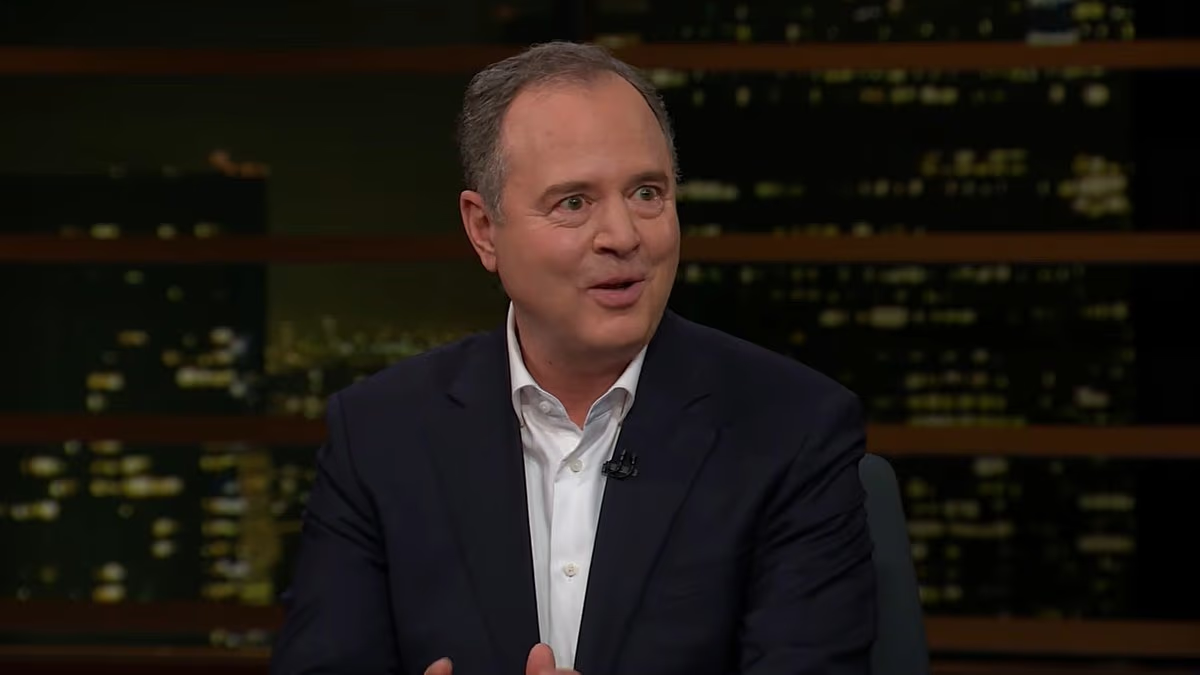
During a televised exchange on March 7, 2026, Senator Adam Schiff condemned a legal justification for military force, believing it originated from the Trump administration's recent actions in Iran. Host Bill Maher revealed the text was actually a 2011 memo from the Obama administration regarding the intervention in Libya. The document argued that the executive branch holds constitutional authority to direct military force if the president deems it in the national interest, bypassing a vote in Congress.
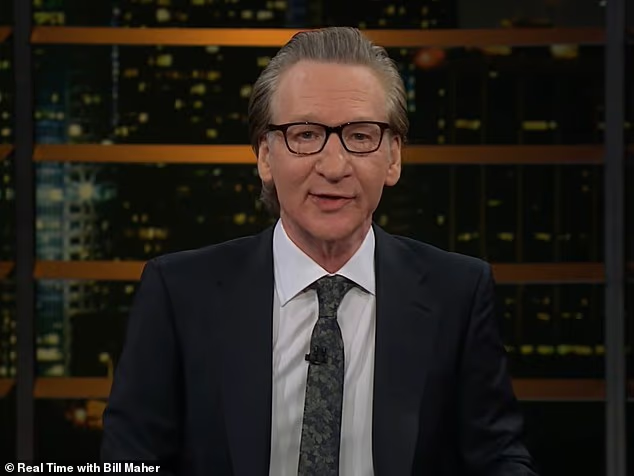
Schiff, who has been a vocal critic of the February 28 strikes against Iranian targets, initially characterized the logic as an "abuse of power." After the reveal, the senator attempted to pivot his critique toward former President Obama's 2013 stance on Syria, noting that Obama eventually sought a vote because he feared losing it.
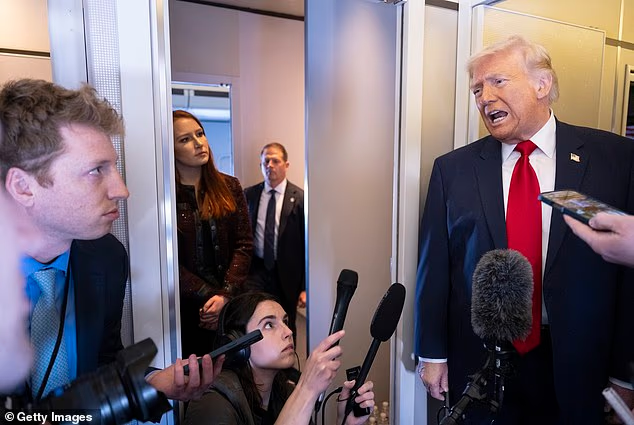
"The president had the constitutional authority to direct the use of military force because he could reasonably determine that such use of force was in the national interest."— The Obama-era quote used to trap Schiff.
THE KINETIC REALITY AND THE RHETORICAL FOG
The interaction highlights a persistent friction in Washington where legal definitions of "imminent threat" fluctuate based on the party in the White House. While Schiff insisted on X (formerly Twitter) that there was no imminent threat to justify starting a war with Iran, his momentary inability to distinguish between the justifications of two different administrations suggests that the language of executive power has become a interchangeable tool.
Read More: West Bengal Ex-Governor Ananda Bose Meets Omprakash Mishra After Resignation

Schiff's backpedal: After being informed of the quote's origin, the senator scrambled to re-align his position, eventually landing on a critique of Obama's initial Syria strategy.
The Maher Tactic: The segment functioned as a "blind taste test" for partisan policy, exposing how political actors react to the source of information rather than the substance of the law.
Constitutional Gray Zones: The debate centers on the War Powers Resolution and the degree to which a President can initiate "kinetic actions" without a formal declaration from the legislature.
| Administration | Target | Justification Cited | Congressional Vote? |
|---|---|---|---|
| Obama (2011) | Libya | National Interest / Regional Stability | No |
| Trump (2026) | Iran | Response to Aggression / Israel Defense | No |
| Obama (2013) | Syria | Chemical Weapons Red Line | Requested (then abandoned) |
FRONTLINE FRAGMENTS AND ECONOMIC FRICTION
The verbal sparring occurs against a backdrop of escalating violence. Recent reports indicate that the United States and Israel have struck over 15,000 targets inside Iran. This expansion of the conflict into a "Week 3" phase has moved beyond targeted strikes into a broader disruption of the global landscape.
Internal MAGA Dissent: Small fissures are appearing within the Republican base; some "MAGA" influencers are reportedly pushing back against the scale of the Iran war.
The Vance Silence: Vice President JD Vance has refused to disclose the specific advice he provided to Trump regarding the strikes, citing fears of legal reprisal or imprisonment.
Resource Strain: The FBI and Justice Department are reportedly facing personnel shortages and resignations as the domestic "terrorism threat" level is elevated due to the overseas conflict.
BACKGROUND: THE FEBRUARY 28 CATALYST
The current cycle of escalation was triggered by a massive joint strike by the U.S. and Israel on February 28. Since then, the conflict has widened to include Hezbollah in Lebanon and maritime disruptions in the Gulf. Energy prices in the UK and Europe are climbing as markets react to the potential closure of the Strait of Hormuz. In Iran, the transition of power to Mojtaba Khamenei has added a layer of instability to the region's response. Schiff's appearance on Real Time was intended to challenge the legality of these strikes, but the segment instead became a recording of the irregular, often contradictory nature of political memory.
Read More: Canada Invests $35 Billion in Arctic Defense Due to Geopolitical Tensions