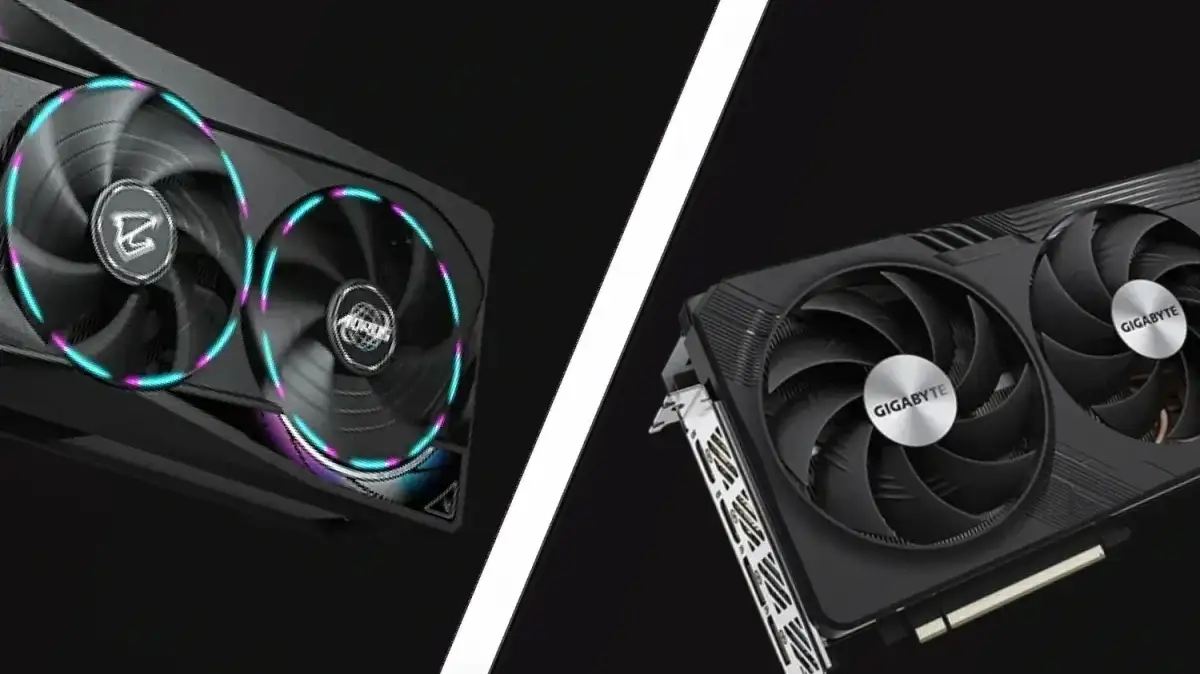
In the persistent skirmish between graphical processing units, the AMD Radeon RX 7900 XT and the Nvidia GeForce RTX 5070 present a complex dichotomy for consumers navigating the March 2025 landscape. While raw gaming benchmarks, particularly at 1440p resolution and with ray tracing enabled, show the RX 7900 XT delivering superior frame rates—sometimes by a significant margin like an 18.8% improvement in lowest 1% performance—the underlying architectures and technological underpinnings invite a more nuanced examination. The RX 7900 XT, leveraging the RDNA 3.0 architecture, boasts a considerable 20GB of GDDR6 memory with an 800 GB/s bandwidth, contrasting with the RTX 5070's 12GB of GDDR7 memory and 672 GB/s bandwidth. This memory advantage for the AMD card is a recurring theme in performance analyses, especially in demanding scenarios.
However, the RTX 5070, built on Nvidia's Blackwell 2.0 architecture, introduces features like DLSS 4.0 and AI-enhanced multi-frame generation. While the RX 7900 XT counters with FSR 3.0, the RTX 5070's architectural innovations are positioned to offer advantages in specific computing tasks and potentially future-proof certain applications. Benchmarks, while generally favoring the RX 7900 XT in raw gaming output, don't always tell the whole story, especially when considering specialized workloads. Furthermore, the Nvidia card appears to offer more performance per watt, a critical consideration for thermal management and overall system efficiency.
Read More: Chrome mimeHandler API lets extensions handle file types

Performance Discrepancies and Value Propositions
The debate over which GPU offers better value is complicated by pricing and market positioning. While the RX 7900 XT was initially released in November 2022, the RTX 5070, launched in March 2025, comes in at a considerably lower price point—$549 for the RTX 5070 versus an original MSRP of $899 for the RX 7900 XT. This price difference makes the RX 7900 XT's continued competitiveness in gaming all the more notable. User benchmarks indicate the RX 7900 XT has a "much better value for money" in certain contexts, alongside an "insanely higher market share" for the RTX 5070, suggesting a complex interplay of performance, price, and consumer perception.
Read More: Street Fighter 6 Year 4 Pass adds Tifa and 3 new fighters in 2026
Technical Specifications and Architectural Differences
The technical specifications paint a picture of distinct design philosophies. The RX 7900 XT features a higher core count in terms of AMD Stream Processors (5376) compared to the RTX 5070's CUDA Cores (6144), though direct comparison is not straightforward due to architectural dissimilarities. The RX 7900 XT also exhibits a higher TDP of 300W against the RTX 5070's 250W, implying a greater power draw and heat output for the AMD card. This difference can translate into the need for larger cooling solutions or potentially increased noise levels.

The generational leap in Nvidia's architecture is evident in the RTX 5070's adoption of GDDR7 memory, a newer standard offering potential bandwidth and efficiency improvements over the RX 7900 XT's GDDR6. Despite the RX 7900 XT's larger memory buffer and higher bandwidth, the architectural design of the RTX 5070, including its Blackwell 2.0 architecture, is touted for accelerated computing capabilities and advanced AI features.
Read More: BEREC Asks for Mobile Network API Ideas from Developers
Market Reception and User Sentiment
User ratings and market share data reveal a dynamic consumer response. The RTX 5070, despite being a newer entrant, shows an "insanely higher market share" and is "hugely more popular" according to some user benchmark aggregators. This suggests that factors beyond raw gaming performance, such as brand loyalty, perceived technological advancement, or aggressive pricing strategies, play a significant role in purchasing decisions. The availability of the RX 7900 XT has also been noted as an issue, potentially influencing its market penetration.
Ongoing Comparisons and Future Considerations
The continued existence of benchmarks and discussions comparing these cards, even with the release of newer models like the rumored AMD Radeon RX 9070 XT, highlights the ongoing relevance of the RX 7900 XT. Its ability to compete effectively against newer architectures, particularly in gaming, ensures its place in conversations about the current GPU market. For users prioritizing raw gaming frames per second and substantial memory capacity, the RX 7900 XT remains a compelling option, even with its older architecture. Conversely, those investing in advanced AI workloads, seeking power efficiency, or anticipating future architectural advantages may lean towards the RTX 5070.
Read More: Steam Machine GPU failure causes Red Line of Death on 7 April 2026





/content/opengraph/MTG-Top-10-Best-Commander-Cards-From-Magic-The-Gathering-Marvel-Super-Heroes-MSC-MSH.png)