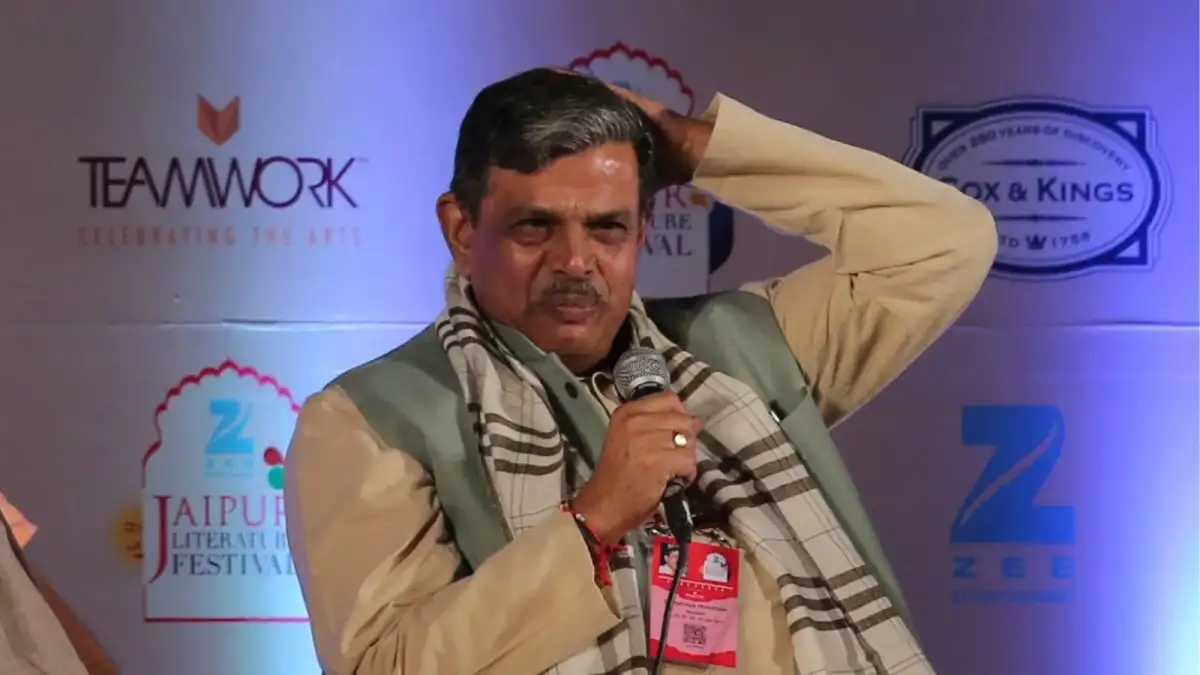
New Delhi - A recent call for continued dialogue with Pakistan by Dattatreya Hosabale, a senior leader of the Rashtriya Swayamsevak Sangh (RSS), has stirred considerable discussion, drawing reactions from across the political spectrum in India and Pakistan. Hosabale, widely considered the second-in-command of the RSS, stated in an interview that India should maintain efforts towards dialogue with its neighbour, even while upholding a firm stance against cross-border terrorism.

The RSS, often seen as the ideological backbone of the ruling BJP, has historically balanced a hardline posture on security issues with an openness to people-to-people engagement, a strategy that appears to be re-emerging. This nuanced approach, suggesting that a window for dialogue should remain open despite ongoing security concerns, has found unexpected endorsements. Former Indian Army Chief Gen. M.M. Naravane has lent his support, emphasizing the importance of "people-to-people contact" and suggesting avenues like 'track two' diplomacy or sporting events to foster understanding.
Read More: Supreme Court Voting Rights Changes Affect Black Voters in Southern States

Broad Strokes of Hosabale's Statement
Hosabale's remarks, made public on May 17, 2026, highlighted the idea that civil society could play a crucial role in bridging the divide. He posited that ordinary citizens on both sides of the border share common concerns such as livelihood and daily life, suggesting that increased interaction at this level could help break the existing stalemate in bilateral relations. This sentiment was echoed by other voices within India, including former R&AW chief AS Daulat, and was positively received by Pakistani officials. A spokesperson for Pakistan's Foreign Ministry indicated that such calls from within India were viewed as a "positive development," while also noting the hope for an official response from New Delhi.
Read More: FIFA talks Iran World Cup participation after US entry concerns

Historical Context and Shifting Rhetoric
The RSS's stance on Pakistan has not been monolithic, often adapting to prevailing circumstances. Historically, particularly before the current political era, the Sangh's approach had, at times, been notably conciliatory, even following significant terror incidents. This latest articulation appears to hark back to such periods, referencing the approach of former Prime Minister Atal Bihari Vajpayee, who famously pursued dialogue while simultaneously maintaining a strong security posture.

However, the present call has also drawn scrutiny. Political parties in Jammu and Kashmir have reacted, and the Indian opposition has questioned what has fundamentally changed to warrant such a proposition, particularly in the context of ongoing security challenges. Some analyses suggest that such overtures from the RSS might be intended to provide a political buffer, enabling the government to explore diplomatic avenues without alienating its core support base, which often expects a more rigid stance towards Pakistan. The recent Operation Sindoor and its aftermath, for instance, have been cited as indicators that the government's relationship with its Hindutva base is not without conditions, requiring what some describe as "RSS cover" for any moves perceived as softening towards Pakistan.
Read More: Cambria CEO faces questions on Trump tariff request
Wider Reactions and Implications
The reverberations of Hosabale's statement have extended beyond immediate political circles. Reactions from Pakistan have been mixed, with official pronouncements expressing optimism while refraining from direct comments on back-channel diplomacy. The articulation by a prominent RSS figure advocating for dialogue, alongside a former military chief, presents a complex narrative, challenging the perception of a uniformly hardline stance from the Sangh. This development invites a deeper examination of the evolving strategies in India-Pakistan relations and the intricate dynamics between ideological organizations and governmental policy.