

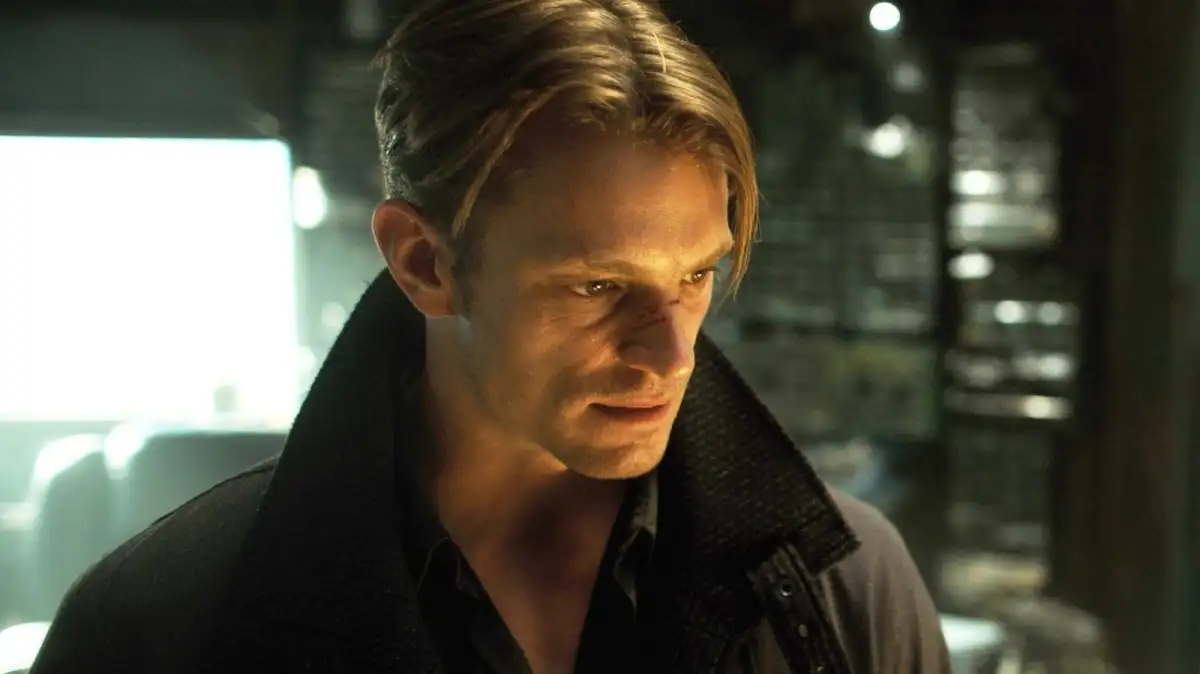
Richard Morgan, known for conjuring the complex, consciousness-bending world of 'Altered Carbon,' has resurfaced with a new narrative project, 'No Man's Land.' This latest endeavor plunges back into the grim aesthetics of detective noir, but with a stark, unsettling alteration: the muddy, ravaged landscape of World War I.
The core of 'No Man's Land' appears to be a deliberate fusion of historical brutality and the genre's characteristic cynicism, hinting at a narrative that probes themes of identity, trauma, and the persistence of mystery even amidst widespread desolation. The excerpt provided features an almost hallucinatory invocation, with disembodied voices calling for a character named Duncan, suggesting a descent into psychological unease or a confrontation with the spectral echoes of the conflict. This stylistic choice, a departure from the hyper-technological vistas of 'Altered Carbon,' signals Morgan's intent to explore different textures of darkness.
Read More: The Art of Star Wars Andor book reveals show production secrets
'Altered Carbon,' the series that brought Morgan broader recognition, itself delved into the malleability of human existence through a futuristic lens. It explored a society where consciousness could be digitized and transferred between bodies, effectively redefining death and identity.' The show, available on Netflix, garnered critical attention and nominations, including for its main title design and visual effects. Despite its critical reception, however, the series faced cancellation by Netflix, a move some analyses have attributed to the inherent complexities of its 'cyberpunk' framework—a genre often engaged with critiques of capitalist ideology and humanity's relationship with technology.
'No Man's Land' thus represents a significant pivot, trading the synthetic futures for a historically charged, physically brutal past. The whispers and unsettling apparitions in the narrative excerpt suggest a noir investigation where the usual urban shadows are replaced by the fog and mud of a world war, and the usual psychological scars are amplified by the literal battlefield. The emphasis shifts from transhumanism to post-humanism in a very different, more visceral sense.
Read More: New Fiction Explores Dark Relationships and Crime Aftermath
Background
Morgan's prior work, particularly 'Altered Carbon,' established him as a storyteller interested in the philosophical implications of advanced technology on the human condition. The series, based on his novel of the same name, was celebrated for its intricate plotlines and its exploration of a society where death was merely an inconvenience for the wealthy, allowing for a persistent form of immortality through consciousness transfer. This narrative, however, proved to be a double-edged sword, contributing to both its acclaim and, perhaps, its eventual discontinuation. The underlying critique of societal structures and the very nature of being 'human' in a technologically saturated world was a hallmark of the show's appeal.


