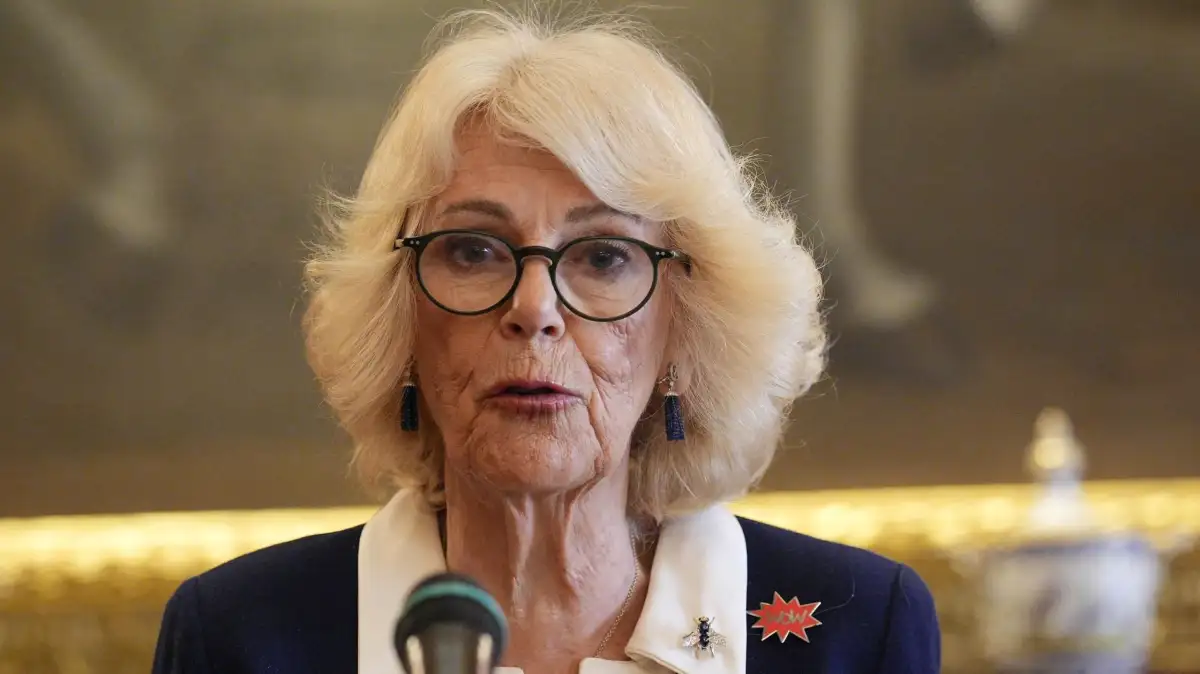
Queen Camilla delivered a pointed message of support to survivors of sexual violence on International Women's Day, stating, "Please know that you are not alone." This declaration, made during a reception at St James's Palace, is being widely interpreted as a significant moment, especially given the ongoing fallout surrounding her brother-in-law, Prince Andrew, and his associations with the late Jeffrey Epstein. While the Queen did not name Andrew or Epstein directly, the timing and focus of her remarks—emphasizing victims who have not been believed—have drawn considerable attention and raised questions about perceived double standards within the royal family.

The Queen's speech articulated solidarity, sorrow, and sympathy, proclaiming, "We stand with you and alongside you, today and every day." She specifically addressed survivors of "every kind of violence," acknowledging that many have struggled to tell their stories or have faced disbelief. This public stance, coinciding with continued investigations and scrutiny of Prince Andrew's past connections, has led observers to see her words as a delicate, yet direct, nod to the wider issues at play. A palace spokesperson indicated that the Queen's remarks "speak for themselves," further amplifying their significance.
Read More: Princess Kate Returns to Public Events After Cancer Treatment

A Longstanding Campaigner, Now Amplified
Queen Camilla's engagement with issues of violence against women and girls is not new. For years, she has been a vocal campaigner, visiting women's refuges and actively challenging societal taboos surrounding discussions of domestic violence and abuse. Her role as president of the 'Women of the World' (WOW) group, a global alliance advocating for equality for women, girls, and non-binary people, underscores this long-term commitment. Her address on International Women's Day served as a powerful platform to reinforce her advocacy, a message amplified by her prominent position. The inclusion of a WOW pin and another reading "Shame Must Change Sides" on her attire further reinforced the symbolic weight of her participation.
Read More: WNBA Players Face Online Harassment Increases in April 2026
Her engagement extended to meeting individuals like Gisèle Pelicot, a French rape survivor, whose memoir the Queen described as leaving her "speechless." This personal connection, highlighted in her speech, underscores a deepening engagement beyond mere pronouncements. Some attendees, like Penny Lancaster, found the Queen's message particularly powerful due to its perceived relatability, stemming perhaps from references to personal experiences, though these were not explicitly detailed in the provided reports.
The Shadow of Andrew and Epstein
The context of Prince Andrew's diminished royal standing—having lost his military titles and patronages under Queen Elizabeth II—is central to the interpretation of Camilla's speech. His association with Jeffrey Epstein, and the subsequent release of Epstein's files, has cast a long shadow. Authorities have not filed charges against Andrew, and he maintains his innocence regarding any wrongdoing. However, the public discourse surrounding the allegations, and the broader discussion of sexual abuse, creates a charged atmosphere where the Queen's words carry added resonance.
Read More: Royal Wedding: Niece Georgina Joins Bridesmaids Savannah and Isla
The timing of the speech, coupled with its thematic focus, has inevitably led to speculation about its intended audience and implicit messages. While the Queen herself has not directly commented on Prince Andrew or Epstein in relation to this specific speech, the confluence of events makes such interpretations difficult to avoid. The "double standards" mentioned by some observers within the Royal Family point to the complex and often delicate balancing act inherent in royal public statements, particularly when personal and familial matters intersect with broader societal issues.
A Wider Call for Change
Beyond the immediate context of Prince Andrew, Queen Camilla's speech also touched upon the need for more positive influences on young men, particularly in the digital sphere. This broader call for societal change, while perhaps less politically charged, speaks to a holistic approach to tackling violence and abuse. The reception itself included a diverse group of individuals and organizations dedicated to these causes, highlighting the network of support the Queen is actively championing.
Read More: Supreme Court Allows States to Ban Transgender Girls from Female Sports