The descent into airborne aggravation often begins before the plane even leaves the ground, with passenger conduct during boarding emerging as a prime source of friction. Key transgressions include blocking the aisle while stowing luggage or attempting to organize belongings, failing to have boarding passes readily accessible, and an insufficient awareness of personal space, whether through physical contact or encroaching with carry-on items. These actions, consistently flagged across recent reports, disrupt the flow of boarding and generate unnecessary stress for both fellow travelers and the cabin crew.

ON THE MOVE, OR ON THE NERVES
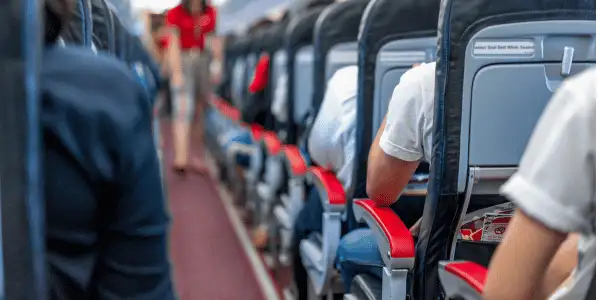
Navigating the cramped confines of an aircraft, particularly during the boarding process, seems to trigger a cascade of minor, yet potent, social affronts. Several sources highlight the impropriety of reclining seats the instant one is seated, suggesting a need for consideration of passengers behind, or at least a polite query. Similarly, placing limbs—arms, legs, or feet—into the aisle or encroaching on adjacent seat spaces is deemed particularly inconsiderate. The efficiency of securing oneself and luggage is paramount, with delays caused by unpreparedness or a lack of focus on immediate seating responsibilities compounding the issue.
Read More: Travel Back Pain: How to Avoid It on Your Next Trip
LOGISTICAL LAPSES
Beyond the physical occupation of space, traveler preparedness emerges as a critical factor.Familiarity with one's seat number and the general layout of the aircraft before boarding can significantly expedite the process. The need to constantly locate items or ask for directions contributes to delays. Flight attendants, often described as being in a state of constant task juggling, find their work further complicated by passenger indecision and a lack of pre-flight readiness.

THE BROAD SPECTRUM OF DISREGARD
The tapestry of in-flight annoyances extends beyond the boarding gate. Polls and expert opinions point to a range of behaviors deemed unacceptable:
Audio Intrusions: Watching videos or listening to music without headphones stands out as a significant disturbance, according to multiple reports.
Sensory Overload: Bringing or consuming pungent food items that permeate the cabin air is frequently cited as a rude imposition.
Bodily Boundaries: Hogging both armrests when sharing a row and allowing children to play unsupervised in the aisle are marked as particularly egregious.
Crew Interaction: An overarching sentiment suggests a need to avoid treating flight attendants as mere servants, with direct physical contact being universally discouraged.
Hygiene and Habits: Poor personal hygiene and behaviors that suggest a disregard for shared spaces, such as leaving trash in seatback pockets, also draw ire.
UNDERLYING TENSIONS
The shared experience of air travel, with its inherent constraints on personal space and privacy, often amplifies everyday social norms, or the lack thereof. The artificial environment of an airplane appears to be a space where established social etiquette is either forgotten or disregarded by a significant number of passengers. This is further exacerbated by the anxiety many travelers experience, leading to heightened irritability and less-than-courteous interactions. The notion of being a "guest" in a shared, confined environment, a concept more explicitly discussed in the context of international travel, seems to be largely absent in the domestic aerial sphere.
Read More: Paraglider Survives Plane Near-Miss Over City
CONTEXT AND CONSEQUENCES
While specific instances of rudeness may vary, the underlying theme is a deficit in considerate behavior. The advice often boils down to simple principles: preparedness, awareness of one's surroundings and the impact of one's actions on others, and a basic acknowledgment of the shared, limited nature of the airplane cabin. The desire for a "harmonious plane journey" seems to be perpetually at odds with the reality of individual passenger conduct.