

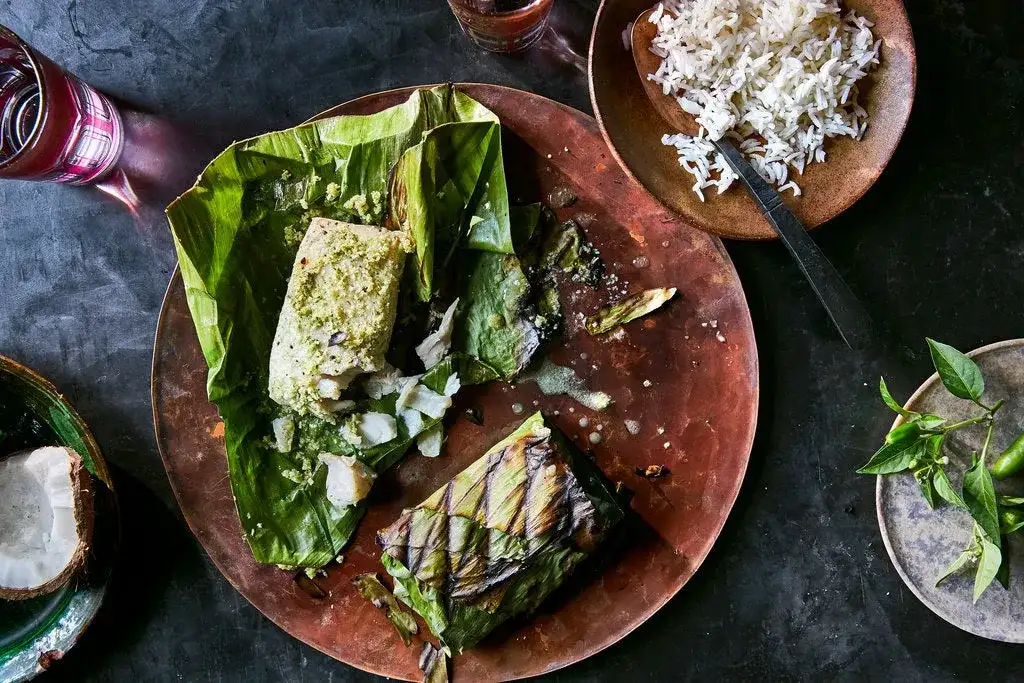
A centuries-old Parsi preparation, Patra ni Machhi, finds renewed attention, featuring mild white fish enrobed in a vibrant chutney and encased within the pliable embrace of banana leaves. This dish, a tapestry of textures and tastes, hinges on the careful assembly of its components: a spicy, herb-infused coconut paste and the delicate steaming of the fish. The cooking method itself, packet-style, is central to its character, promising a moist and flavorful outcome.
The essence of Patra ni Machhi lies in the combination of a piquant green chutney and the method of packet-steaming fish in banana leaves. The chutney, a medley of ingredients like coconut, coriander, mint, and green chilies, forms the flavor backbone. This is then applied to firm white fish fillets, which are subsequently wrapped in softened banana leaves. The wrapping is not merely aesthetic; it's a functional element that traps moisture and infuses a subtle aroma as the fish steams.
Read More: Paella Recipe Updates: Bomba Rice and No Stir Rule
The Anatomy of the Chutney and Wrap
The preparation of the chutney typically involves grinding fresh ingredients into a smooth, spreadable paste. Key elements include:

Coconut: Usually fresh and grated, providing a creamy base.
Herbs: Coriander leaves are prominent, often accompanied by mint, contributing freshness and a touch of astringency.
Spice: Green chilies offer heat, with the quantity adjusted according to preference.
Binding Agents: Ingredients like cumin seeds are ground in, and sometimes tamarind pulp is added for a tangy counterpoint.
The banana leaves, a crucial vessel, are often softened over a flame to render them pliable and less prone to tearing. Some techniques suggest brushing the leaves with oil to prevent sticking, a small but potentially significant detail for the final presentation.
Assembly and Execution
The process of creating the Patra ni Machhi packets involves a sequence of steps:
Leaf Preparation: Banana leaves are cleaned and softened, sometimes lightly oiled.
Chutney Application: A portion of the prepared chutney is spread onto the prepared leaf.
Fish Placement: Fish fillets are laid atop the chutney.
Chutney Topping: More chutney is generously applied over the fish.
Packet Formation: The leaves are folded around the fish to create a sealed parcel, secured with twine or even strips of banana leaf.
Steaming: The packets are then steamed until the fish is cooked through, a process that typically takes between 10 to 20 minutes, depending on the size of the fish and the steaming setup.
Variations and Historical Context
While the core components remain consistent, subtle variations exist. Some recipes highlight a "sour mango chutney" as a variation, adding another layer of acidity to the mix. The practice of using two banana leaves for wrapping is noted as a technique employed by experienced cooks, where the outer leaf might char to impart a smoky nuance while the inner leaf maintains the fish's moisture.
Read More: Meera Sodha's new spaghetti recipe uses gochujang and mozzarella
Patra ni Machhi is described as a "400-year-old Parsi delicacy," indicating a long-standing culinary tradition. The dish is often served with lemon wedges and rice, particularly a preparation known as "Patra rice," which may involve cooking rice with banana leaf strips, further integrating the aromatic essence of the leaf into the meal. The citrus serves to cut through the richness of the coconut, creating a balanced flavor profile.
:max_bytes(150000):strip_icc()/image-460-7bdc9b0a055246f0b95bfb1b800773ec.jpg)



:max_bytes(150000):strip_icc()/2435672-black-bean-and-corn-quesadillas-Allrecipes-Magazine-1x1-1-2e864f6d676f4645936ff27ca1021db6.jpg)