An explosion occurred early Sunday at the Consular Affairs entrance of the U.S. Embassy in Oslo, Norway. While authorities report no casualties and only minor structural damage to the facility, the incident has triggered a high-priority investigation by local police, who are actively seeking one or more perpetrators.
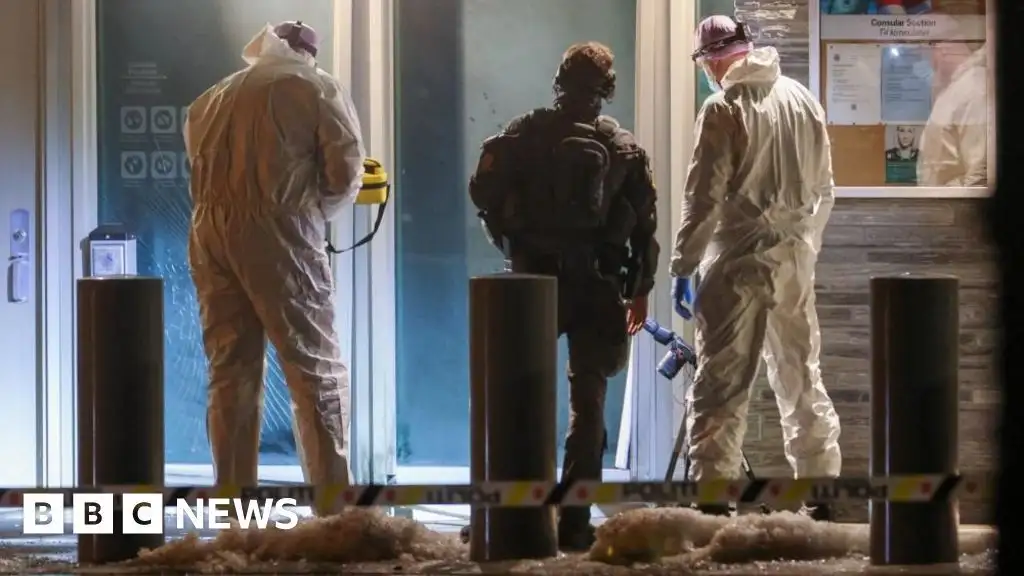
"We have not committed to any single hypothesis." — Oslo Police representative regarding the ongoing investigation.
| Detail | Status |
|---|---|
| Incident Type | Explosion |
| Location | Morgedalsvegen, Oslo |
| Casualties | None |
| Threat Level | Unchanged |
A U.S. official confirmed an incendiary device was housed inside a backpack detonated at the entrance.
Police are vetting tips from the public while collaborating directly with U.S. diplomatic staff.
Despite the location, the Norwegian Police Security Service (PST) has not adjusted the national terror threat level.
Contextual Divergence
The event has drawn varied framings across reporting bodies. While police emphasize the early, speculative nature of the inquiry, certain sources have introduced potential connections to the U.S.-Israeli war on Iran, speculating on a deliberate motive. Such narratives remain unconfirmed by forensic evidence.
The investigation, currently in its formative stage, involves tactical deployments in the surrounding Morgedalsvegen district. Authorities maintain a non-committal stance, refusing to rule out terrorism while avoiding definitive attribution.
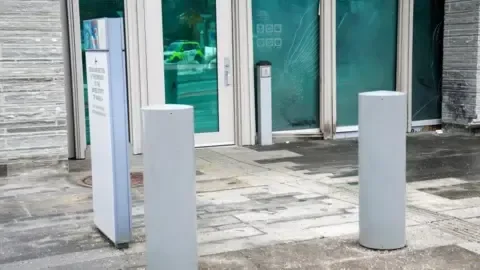
Infrastructure and Protocol
The U.S. Embassy, located roughly 7km from the Oslo city center, remains a site of restricted access. The blast occurred during the early morning hours, minimizing human risk. Diplomatic communication channels between the embassy and local authorities, led by chargé d'affaires Eric Meyer, are the primary mechanism for information exchange.
Read More: Secret Service Promotions After Butler Attack Criticized by Congress
The event functions as a friction point in the wider geopolitical tension landscape, though the local response reflects a methodical, bureaucratic containment rather than a shift in national security posture. Investigation teams continue to treat the scene as an active crime site, waiting for further analysis of the incendiary materials recovered.