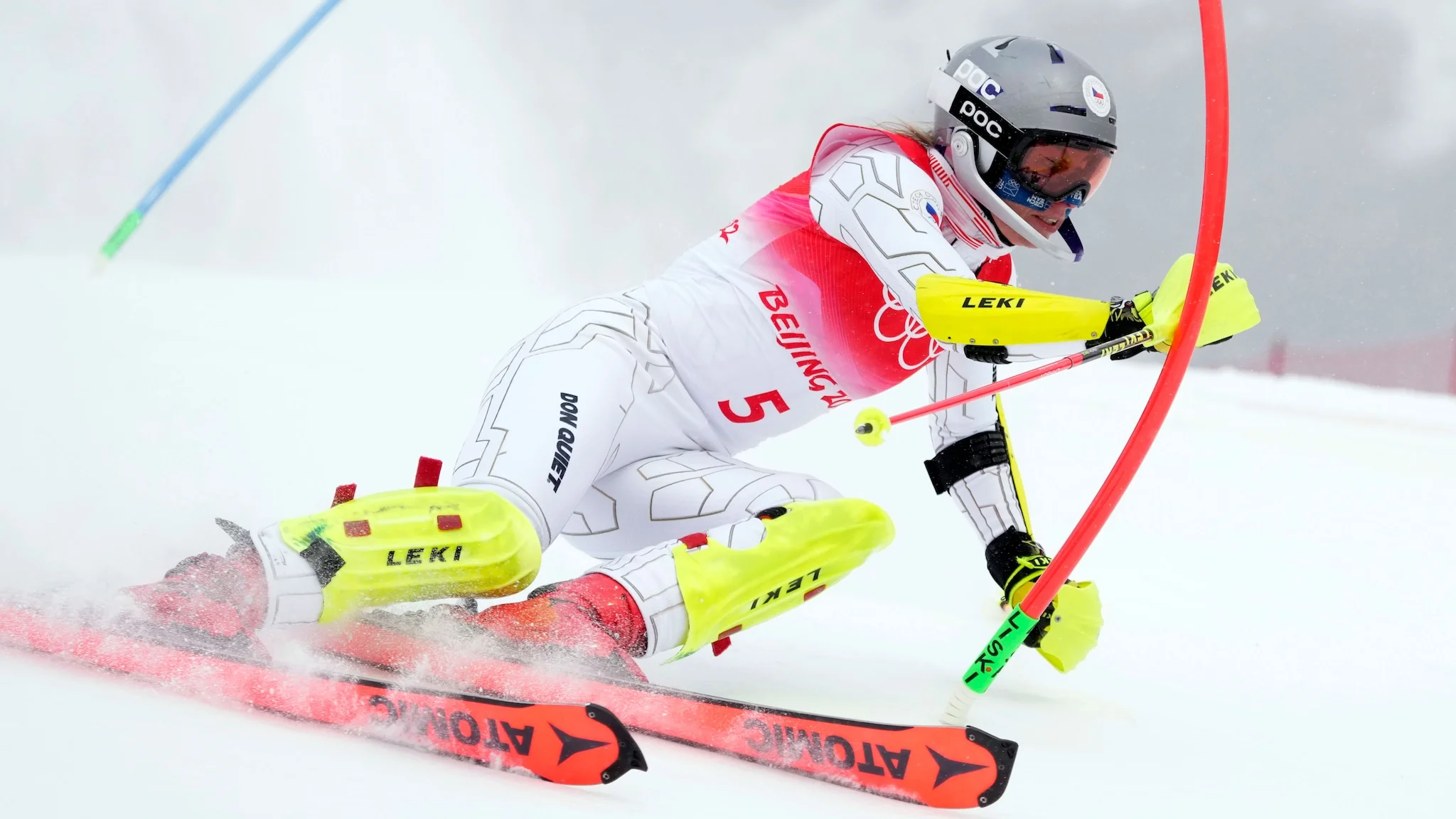
Olympic alpine skiing, a sport known for its high speeds and challenging courses, relies on a complex interplay of advanced equipment and safety measures. Recent events and ongoing discussions highlight the critical role of these elements, particularly the use of airbags and the design of protective nets, in safeguarding athletes.

Understanding Alpine Skiing's Protective Gear
Alpine skiing competitions, such as those seen at the Olympics, involve athletes navigating treacherous courses at speeds that can reach 70-80 mph. The sport's inherent risks have led to the development and implementation of various safety features.

Protective Nets: Two main types of nets are used: A-net and B-net.
A-net is more rigid and often permanent, designed to prevent skiers from veering off the course and into hazardous areas like cliffs or rocky terrain.
B-net is a more temporary, webbing-like structure intended to absorb the kinetic energy of a skier who has fallen.
Airbag Technology: Skiers are increasingly equipped with airbag systems integrated into their racing suits. These airbags are designed to deploy automatically in situations where a significant impact or near-crash is detected.
The deployment of these airbags, such as the one worn by Marco Odermatt in a recent incident, aims to mitigate potential injuries, particularly to the spine.
However, the effectiveness of airbags in preventing all types of injuries, especially knee injuries which are common in alpine sports, remains a point of discussion.
Equipment Tailored for Performance and Safety
The design of ski equipment is intricately linked to the specific demands of different alpine skiing disciplines.
Read More: Winter Olympians Use Lucky Items and Habits for Games
Ski Dimensions:
Slalom skis are shorter, allowing for greater agility and quicker turns on courses with frequent changes in direction.
Downhill and other speed event skis are built for maximum speed and stability, featuring wider and heavier constructions to enhance control at high velocities.
This contrasts with cross-country skis, which are thinner and more flexible.
Material and Design: Alpine skis are engineered for "carving," a technique that uses the ski's sidecut to create clean turns. The weight and width are crucial for maintaining grip and control on steep, icy slopes.
Ongoing Debates Surrounding Airbag Use
The integration of airbag technology into competitive skiing has not been without controversy.
Athlete Trust and Pressure: While FIS (International Ski Federation) states its commitment to athlete safety, the effectiveness and reliability of airbags are subjects of ongoing debate among skiers.
Some athletes express a lack of trust in the systems, leading to added psychological pressure.
Conversely, those who choose not to wear airbags may feel pressured to do so, creating a complex dynamic within teams and the sport.
The experience of Romen Baumann, who reportedly stopped using an airbag after witnessing a teammate's severe crash, exemplifies the deep-seated concerns some athletes have.
Scope of Protection: A key point of contention is whether airbags offer comprehensive protection.
While they may safeguard against certain types of impacts, they do not appear to prevent common injuries like those to the knee. This limitation raises questions about the overall benefit versus the complexity and potential drawbacks of the technology.
Expert Analysis
"The nets are there to keep you from going off the course and into dangerous situations. The B-net is designed to slow you down more gently if you do fall, acting like a cushion." - Report Summary, Los Angeles Times
"The controversy around the airbags is significant. Athletes have different levels of trust, and the FIS is trying to balance innovation with proven safety. The debate highlights that no single piece of equipment can eliminate all risks in such a demanding sport." - Analysis of Skiersplanet Article
Conclusion
The evolution of safety features in Olympic alpine skiing, particularly the introduction of airbags and refined net systems, reflects a continuous effort to enhance athlete protection. However, these advancements are accompanied by critical discussions regarding their efficacy, athlete acceptance, and the inherent risks of the sport. Equipment design, from ski length to airbag integration, is carefully calibrated for performance, yet the question of complete safety remains a subject of ongoing scrutiny and debate within the alpine skiing community.
Read More: Mikaël Kingsbury Wins Silver in Moguls Skiing
Sources:
Los Angeles Times: "Airbags, blue lines and good underwear: 6 features of Olympic skiing you should know"
Published: February 15, 2026
Link: https://www.latimes.com/sports/olympics/story/2026-02-15/six-features-of-olympic-skiing-that-you-should-know
nbcolympics.com: "Alpine Skiing 101: Equipment"
Published: June 30, 2025
Link: https://www.nbcolympics.com/news/alpine-skiing-101-equipment
bluewin.ch: "How does the ski airbag work and why did it deploy in Odermatt's case?"
Published: December 30, 2024
Link: https://www.bluewin.ch/en/sport/ski/how-does-the-ski-airbag-work-and-why-did-it-deploy-in-odermatts-case-2503231.html
skiersplanet.com: "The Airbag Controversy"
Published: January 18, 2025